


How often do we think about the people who walked alongside Jesus, witnessing His miracles and hearing His teachings firsthand? The 12 disciples of Jesus were ordinary men chosen for an extraordinary purpose. Their stories are not just historical accounts; they are lessons in faith, doubt, and redemption that speak to us today. By exploring the lives of these disciples, we can find inspiration for our own faith journeys. Their experiences remind us that discipleship is not about perfection but about following Jesus despite our flaws and failures.
In this article, we’ll delve into the stories of each of the 12 disciples of Jesus, exploring their backgrounds, their encounters with Jesus, and the lessons we can learn from their lives. We’ll also reflect on the common themes that emerge from their journeys and how they relate to our lives as modern Christians. To better understand the context of the 12 disciples’ journey, check out 👉 What Was Jesus’ Ministry?
Peter: The Rock of the Church
Peter, originally named Simon, was a fisherman by trade before becoming one of the 12 disciples of Jesus. His journey began when Jesus called him to be a disciple, changing his life forever. Known for his impulsive nature, Peter was the first to recognize Jesus as the Messiah, proclaiming his faith with fervor. This boldness, however, would often lead him to moments of doubt and fear, most notably when he denied knowing Jesus during the trial leading up to the crucifixion. Yet, Peter’s story is one of redemption and leadership, as he became foundational in establishing the early Christian Church.
As one of the closest followers of Jesus, Peter witnessed many miracles and profound teachings, including the Transfiguration and the Last Supper. His experiences shaped not only his faith but also his role as a leader among the disciples. After Jesus’ resurrection, Peter was tasked with shepherding the flock, famously affirmed by Christ’s words, “Feed my sheep.” This responsibility was both a privilege and a challenge, as he navigated the complexities of spreading the Gospel in a world often resistant to its message.
Despite facing persecution and challenges, Peter’s unwavering faith and dedication to Jesus’ ministry left an indelible mark on Christianity. He is often referred to as “the Rock,” symbolizing his steadfastness and the foundation upon which the Church was built. His letters in the New Testament continue to inspire millions, highlighting themes of hope, perseverance, and love. Peter’s transformation from a simple fisherman to a pillar of the Church is a testament to the power of faith and the impact one individual can have on the world.
Key Lesson: Peter’s journey reminds me that even when we stumble, Jesus is always ready to restore us and use us for His purposes.

John: The Beloved Disciple
John, often referred to as the “Beloved Disciple,” holds a unique place among the 12 apostles. A fisherman by profession and the brother of James, he was known for his close relationship with Jesus, which is beautifully illustrated in the Gospel of John. This Gospel offers a profound and intimate portrayal of Jesus’ life and teachings, emphasizing love, light, and the divine nature of Christ. John’s perspective as a disciple provides insight into the emotional and spiritual depth of Jesus’ ministry, making it a vital part of the New Testament.
John’s commitment to Jesus was evident in many of the pivotal moments of His ministry. He was present at the crucifixion, where Jesus entrusted the care of His mother, Mary, to him. This act signifies the deep bond between Jesus and John, highlighting the trust and love that characterized their relationship. John’s faithfulness during the darkest hours of Jesus’ life reflects a loyalty that transcended fear and despair, solidifying his role as a steadfast disciple.
After the resurrection, John continued to spread the message of Jesus, playing a crucial role in the early Church. His writings, including the Book of Revelation, showcase his theological insights and prophetic visions. John’s legacy is one of love and community, urging believers to live out their faith authentically. His life reminds us that love is at the core of the Christian message, and through his example, we see the transformative power of a relationship with Christ.
Key Lesson: John’s story teaches us that love and faithfulness are central to our walk with Jesus, even in the face of suffering.
James (Son of Zebedee): The Son of Thunder
James, the son of Zebedee and brother of John, was one of the first disciples called by Jesus. His fiery personality earned him the moniker “Son of Thunder,” reflecting his passionate nature and zeal for the Kingdom of God. James was a fisherman like his brother, and together they formed a close-knit partnership in their ministry. His boldness is evident in several Gospel accounts, including his request to sit at Jesus’ right hand in glory, showcasing his ambition and desire for prominence in Christ’s Kingdom.
As one of the inner circle of disciples, James had the privilege of witnessing some of the most significant moments in Jesus’ ministry, including the Transfiguration and the Agony in Gethsemane. These experiences shaped his understanding of Jesus’ mission and the cost of discipleship. James’ commitment to Christ ultimately led him to become one of the leaders in the early Church, where he played a crucial role in guiding and encouraging fellow believers.
James’ legacy is marked by his martyrdom, as he became the first apostle to be executed for his faith. This ultimate sacrifice reflects the depth of his devotion to Christ and the message of the Gospel. His life challenges believers to consider the cost of following Jesus, inspiring them to embrace courage and conviction in their own faith journeys. Through his example, James the Son of Thunder reminds us that true discipleship often requires boldness and a willingness to stand firm in the face of adversity.
Key Lesson: James’ story encourages us to be bold in our faith, even when it comes with a cost.
Andrew: The First Disciple
Andrew, the brother of Peter, is often recognized as the first disciple called by Jesus. His journey begins at the Jordan River, where he was initially a follower of John the Baptist. Upon encountering Jesus, Andrew immediately recognized Him as the Messiah and made the pivotal decision to follow. His eagerness to bring others to Christ is evident in his actions, as he was the one who brought Peter to Jesus, demonstrating his deep desire to share the good news with those closest to him.
Throughout the Gospels, Andrew’s character is marked by humility and a servant’s heart. He is often seen in the background, facilitating the ministry of others rather than seeking the spotlight for himself. This is particularly evident in the feeding of the five thousand, where he is the one who brings the boy with the loaves and fish to Jesus. Andrew’s actions remind us that even the seemingly small contributions can lead to extraordinary outcomes when placed in the hands of Christ.
Though Andrew’s life may not be as prominently featured as some of the other disciples of Christ, his influence is undeniable. His legacy as a bringer of souls to Christ continues to inspire believers to actively share their faith with others. Andrew’s story encourages us to recognize the importance of our roles within the body of Christ, reminding us that each disciple, regardless of their visibility, plays a vital part in the unfolding story of salvation.
Key Lesson: Andrew’s humility and evangelism inspire us to share the Gospel, knowing that even small acts can have a big impact.
Philip: The Practical Disciple
Philip, another of the 12 disciples of Jesus, is often characterized by his practicality and inquisitive nature. He was called to follow Jesus shortly after Andrew and Peter, and his journey reflects a deep desire for understanding. Philip’s role as a practical disciple is highlighted during key moments in the Gospels, particularly when he questions Jesus about feeding the five thousand. His concerns about the logistics of providing for the crowd emphasize his realistic approach to challenges, showcasing a blend of faith and reason.
Philip’s inquisitiveness is also evident in his interaction with Jesus during the Last Supper. When Philip asks to see the Father, Jesus responds with a profound revelation about His divine nature. This moment illustrates the importance of seeking understanding and the transformative potential of asking questions in faith. Philip’s journey is a reminder that doubt and inquiry can lead to deeper revelations about God’s character and purpose.
After the resurrection, Philip played a significant role in the early Church, preaching the Gospel and performing miracles. His missionary work, particularly in Samaria and with the Ethiopian eunuch, highlights his commitment to spreading the message of Christ beyond the Jewish community. Philip’s legacy encourages believers to embrace their questions and seek understanding while actively sharing their faith. His life serves as a testament to the importance of both faith and reason in the journey of discipleship.
Key Lesson: Philip’s story shows us that it’s okay to ask questions in faith, as they can lead to deeper understanding.
Bartholomew (Nathanael): The Honest Disciple
Bartholomew, also known as Nathanael, is often described as an honest and straightforward disciple. His initial skepticism about Jesus, famously questioning, “Can anything good come out of Nazareth?” reflects his desire for authenticity and truth. However, upon meeting Jesus, Bartholomew experienced a profound transformation, as Jesus called him “an Israelite indeed, in whom there is no deceit.” This encounter illustrates the importance of honesty in the pursuit of faith and the ability to overcome doubts through personal experience.
Bartholomew’s character is marked by a deep commitment to following Jesus and spreading the Gospel. Though he is not as prominently featured as some of the other followers of Jesus, his presence in the early Church was significant. Tradition holds that he traveled far and wide as a missionary, sharing the message of Christ and establishing communities of believers. His dedication and faithfulness to his calling exemplify the spirit of discipleship.
The legacy of Bartholomew serves as a reminder that honesty and a desire for truth are essential components of faith. His story encourages believers to approach their relationship with God authentically, bringing their questions and doubts before Him. Bartholomew’s life exemplifies the transformative power of encountering Christ, as well as the importance of sharing that experience with others in the pursuit of truth and understanding.
Key Lesson: Bartholomew’s honesty teaches us to approach God with authenticity, knowing that He meets us in our doubts.
Matthew: The Tax Collector Turned Disciple

Matthew, also known as Levi, was a tax collector before he became one of the 12 disciples of Jesus. In the eyes of the Jewish people, tax collectors were often viewed as traitors, collaborating with the oppressive Roman regime. However, Jesus’ call to Matthew signifies the transformative power of grace and redemption. When Jesus invited him to follow, Matthew immediately left his lucrative position, demonstrating a profound response to the call of Christ. This act of leaving everything behind highlights the radical nature of discipleship and the willingness to embrace a new life in faith.
Matthew’s Gospel is particularly significant as it provides a bridge between the Old and New Testaments. It emphasizes Jesus as the fulfillment of Jewish prophecy and presents a detailed account of His teachings, parables, and miracles. The Gospel showcases Matthew’s unique perspective, highlighting themes of repentance, forgiveness, and the Kingdom of Heaven. His background as a tax collector likely influenced his understanding of grace, making his writings resonate with those who felt marginalized or unworthy.
In addition to his role as a Gospel writer, Matthew’s journey reflects the broader message of Jesus—inviting the outcasts and sinners into the fold of God’s love. His life serves as a reminder that no one is beyond the reach of grace, and that true transformation is possible through faith in Christ. Matthew’s legacy continues to inspire believers to embrace the call to discipleship, regardless of their past, and to share the message of hope and redemption with others.
Key Lesson: Matthew’s transformation reminds us that Jesus calls us as we are, offering grace and a new purpose.
Thomas: The Doubting Disciple
Thomas, often referred to as “Doubting Thomas,” is a disciple whose journey embodies the struggles of faith and belief. His skepticism became most evident after the resurrection of Jesus when he declared that he would not believe until he saw and touched the wounds of Christ. This moment of doubt resonates with many, as it reflects the universal human experience of questioning and seeking assurance in times of uncertainty. However, Thomas’ story does not end with doubt; it culminates in profound faith and recognition of Jesus as Lord.
When Jesus appeared to Thomas, He invited him to touch His wounds, providing the evidence Thomas sought. This encounter led to Thomas’ powerful declaration, “My Lord and my God!” His response encapsulates the essence of faith, illustrating that doubt can lead to deeper understanding and conviction. Thomas’ transformation from skepticism to belief serves as a reminder that questions and struggles are a natural part of the faith journey, and that seeking truth can lead to profound revelations.
After the events of the resurrection, tradition holds that Thomas traveled to India to spread the Gospel, where he faced challenges and persecution. His legacy as a missionary reinforces the idea that even those who wrestle with doubt can become powerful witnesses for Christ. The story of Thomas encourages believers to embrace their questions and uncertainties, reminding them that faith often grows in the soil of doubt and inquiry, ultimately leading to a deeper relationship with God.
Key Lesson: Thomas’ journey teaches us that doubt can be a pathway to deeper faith when we seek Jesus honestly.
James (Son of Alphaeus): The Lesser-Known Disciple
James the Lesser, often overshadowed by other disciples, is a figure whose story is marked by humility and faithfulness. Identified as the son of Alphaeus, little is known about his life and ministry, but his inclusion among the twelve signifies the importance of every disciple in the broader narrative of the Gospel. His lesser-known status serves as a reminder that not all followers of Jesus need to be in the spotlight to make a significant impact.
Despite the limited details surrounding his life, James the Lesser’s legacy is one of steadfastness. He remained with the other disciples through the trials and challenges of early Christian life. His presence during critical moments, including the Ascension and Pentecost, highlights the unity and commitment of the early Church. James’ journey encourages believers to embrace their unique callings, regardless of how visible they may be to the world.
The story of James the Lesser emphasizes that every disciple plays a vital role in the body of Christ. His life challenges us to recognize the value of faithfulness and dedication in our own journeys, even when we do not receive recognition or accolades. James the Lesser’s legacy is a testament to the power of humility and the importance of remaining steadfast in our commitment to follow Christ, regardless of our circumstances.
Key Lesson: James the Lesser reminds us that faithfulness, even in obscurity, is valuable in God’s Kingdom.
Thaddeus (Jude): The Courageous Disciple
Thaddeus, also known as Jude, is one of the lesser-known disciples of Christ, yet his story is one of courage and conviction. While the Gospels provide limited information about him, tradition suggests that he was a man of deep faith who boldly proclaimed the Gospel in challenging regions. His courage in the face of adversity reflects the heart of a true disciple, willing to risk everything for the sake of Christ.
One of the most notable moments involving Thaddeus is his question to Jesus during the Last Supper: “Lord, how is it that you will manifest yourself to us, and not to the world?” This inquiry reveals his desire to understand the nature of Jesus’ mission and the exclusivity of His revelation to the disciples. Jesus’ response emphasizes the importance of love and obedience, underscoring the intimate relationship between Christ and His followers.
Thaddeus’ legacy is one of courage and evangelism. Tradition holds that he preached in Mesopotamia and Persia, facing persecution and ultimately martyrdom for his faith. His life serves as a powerful example of the courage required to follow Jesus, especially in hostile environments. Thaddeus’ story encourages believers to stand firm in their faith, even when faced with opposition, and to boldly share the message of Christ with the world.
Key Lesson: Thaddeus’ courage inspires us to boldly live out our faith, even in difficult circumstances.
Simon the Zealot: The Zealous Disciple
Simon the Zealot, often referred to simply as Simon, was a disciple characterized by his passionate zeal for the Jewish faith and the liberation of his people. The designation “Zealot” suggests that he may have been involved in the political movements of his time, advocating for Jewish independence from Roman rule. His background offers a unique perspective on the transformative nature of discipleship, as Simon transitioned from a revolutionary mindset to one centered on the Kingdom of God.
Simon’s zeal is indicative of the fervor that many of Jesus’ disciples exhibited in their desire for change and redemption. However, Jesus’ teachings challenged Simon to redirect his passions toward a different kind of revolution—a spiritual one rooted in love, forgiveness, and reconciliation. This shift reflects the broader message of Jesus, inviting disciples to abandon earthly ambitions for a higher calling that transcends worldly boundaries.
The legacy of Simon the Zealot serves as a reminder that passionate commitment can be harnessed for the cause of Christ. His life challenges believers to examine their own motivations and to align their passions with the mission of the Gospel. Through Simon’s story, we see that true zeal for God can lead to transformative action in the world, as we seek to embody the love and teachings of Christ in our daily lives.
Key Lesson: Simon’s transformation shows us how Jesus redirects our passions for His Kingdom purposes.
Judas Iscariot: The Betrayer
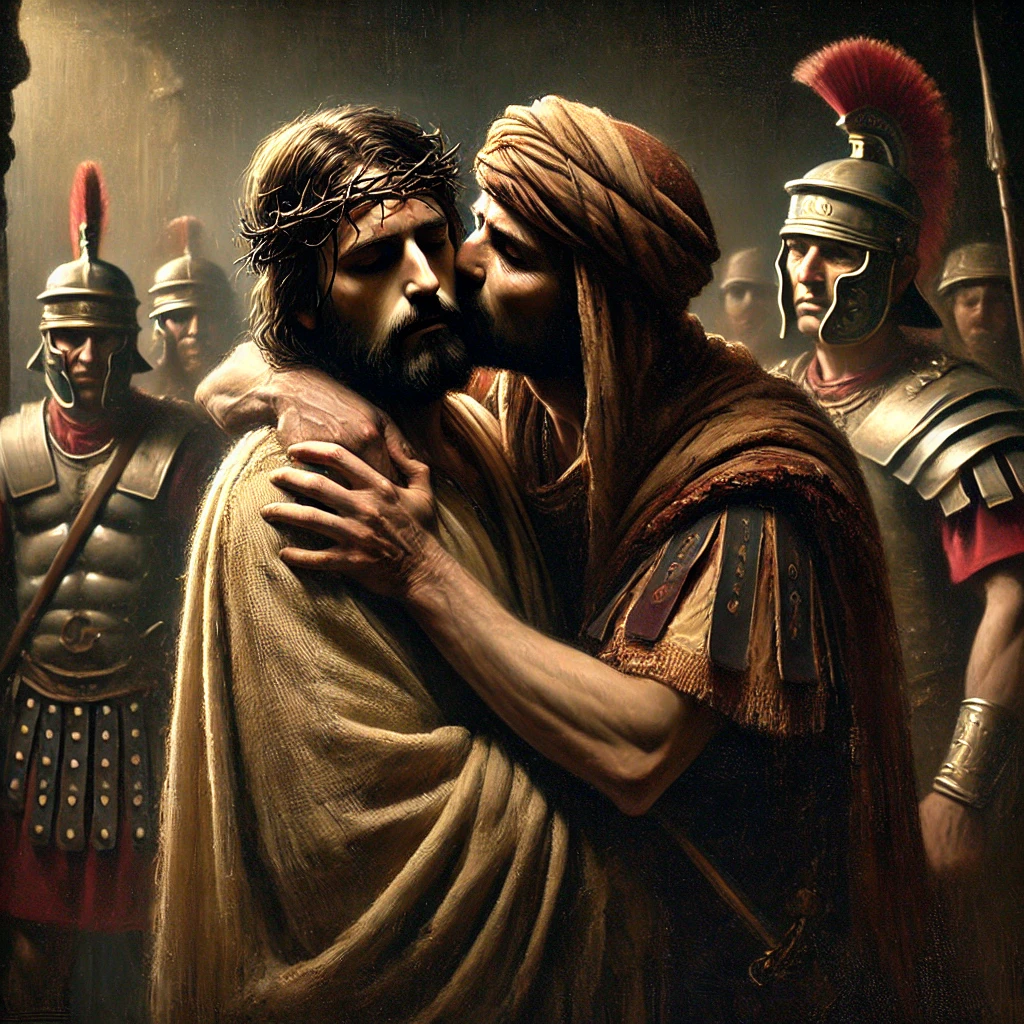
Judas Iscariot is perhaps one of the most controversial figures among the 12 disciples of Jesus. As the keeper of the group’s finances, he initially appeared to be a trusted member of the inner circle. However, his story took a dark turn as he succumbed to temptation and betrayal. Judas’ decision to betray Jesus for thirty pieces of silver marked a pivotal moment in the Gospel narrative, leading to the arrest and crucifixion of Christ. His actions raise profound questions about loyalty, greed, and the human capacity for sin.
Despite being one of the chosen twelve, Judas struggled with his motives and desires. The Gospels suggest that he was not only greedy but also disillusioned with Jesus’ ministry. His betrayal can be viewed through the lens of despair and misguided expectations, reflecting a tragic conflict between human ambition and divine purpose. Judas’ actions serve as a cautionary tale about the dangers of allowing worldly desires to overshadow spiritual truths.
The legacy of Judas Iscariot is a complex one, as it challenges believers to confront the darker aspects of human nature. His story is not just about betrayal but also about the consequences of choices made apart from faith and conviction. In the Christian narrative, Judas is often seen as a foil to the other disciples, representing the ultimate failure to recognize and embrace the truth of Jesus’ mission. His life and actions remind us of the importance of remaining steadfast in faith, even in the face of temptation and doubt. Read more here on 👉 Why Judas betrayed Jesus
Key Lesson: Judas’ betrayal warns us of the dangers of letting worldly desires eclipse our commitment to Christ.
Note: After Judas’ death, Matthias was chosen to replace him among the twelve disciples (Acts 1:26).
Lessons from the 12 Disciples
The stories of the 12 disciples of Jesus illustrate a rich tapestry of faith, doubt, redemption, and commitment. Each disciple brought their unique background, personality, and experiences to the table, contributing to the early Christian movement in profound ways. From Peter’s unwavering leadership to Thomas’ honest skepticism, the lessons learned from their journeys resonate with believers today, emphasizing the complexities of faith and the transformative power of encountering Christ.
Common themes emerge from their lives:
- Faith and Doubt: Many disciples, like Peter and Thomas, experienced moments of doubt but ultimately grew stronger in their faith.
- Betrayal and Redemption: Judas’ betrayal contrasts with Peter’s denial and subsequent restoration, showing both the consequences of sin and the power of forgiveness.
- Humility and Service: Disciples like Andrew and James the Lesser remind us that faithful service, even without recognition, is valuable in God’s Kingdom.
- Courage and Sacrifice: James (Son of Zebedee) and Thaddeus exemplify the courage required to follow Jesus, even unto death.
These themes relate directly to modern Christian life. We all face doubts, temptations, and the need for courage in our faith journeys. The disciples’ stories encourage us to persevere, knowing that Jesus meets us in our weaknesses and uses us for His glory. Want to dive deeper into the strengths and flaws that made these disciples so relatable?👉 Check out this complete guide.
Conclusion: The Legacy of the 12 Disciples
The stories of the 12 disciples of Jesus are not just historical accounts; they are living testimonies of faith, redemption, and the transformative power of Christ. Their journeys remind us that discipleship is a diverse and deeply personal experience, shaped by our unique encounters with Jesus. As we reflect on their lives, we are encouraged to embrace our own paths, knowing that each of us has a role to play in God’s unfolding story.
The legacy of these disciples invites us to examine our own faith, seek a deeper relationship with Christ, and share His message of hope with the world. Their commitment to spreading the Gospel, despite their flaws and failures, inspires us to do the same. As we honor the 12 apostles, may we strive to embody their devotion and passion, carrying forward the message of love and salvation for generations to come.
For further insights, check this article to Discover what happened to the 12 disciples after Jesus’ ascension — their roles, teachings, and ultimate fates
Recommended Reading: Deepen Your Understanding of the 12 Disciples
f you’re inspired by the stories of the 12 disciples of Jesus and want to explore their lives even further, I highly recommend this insightful book. It dives deep into their backgrounds, faith journeys, and the lasting impact they had on Christianity.
Twelve Ordinary Men: How God Shaped the Disciples

By John MacArthur / Thomas Nelson
In Twelve Ordinary Men, John MacArthur dives into the **personal stories of Jesus’ 12 disciples**, exploring their **strengths, weaknesses, and transformations**. Discover how Jesus chose **ordinary people with struggles just like ours**—and turned them into world-changing leaders.
Buy Now