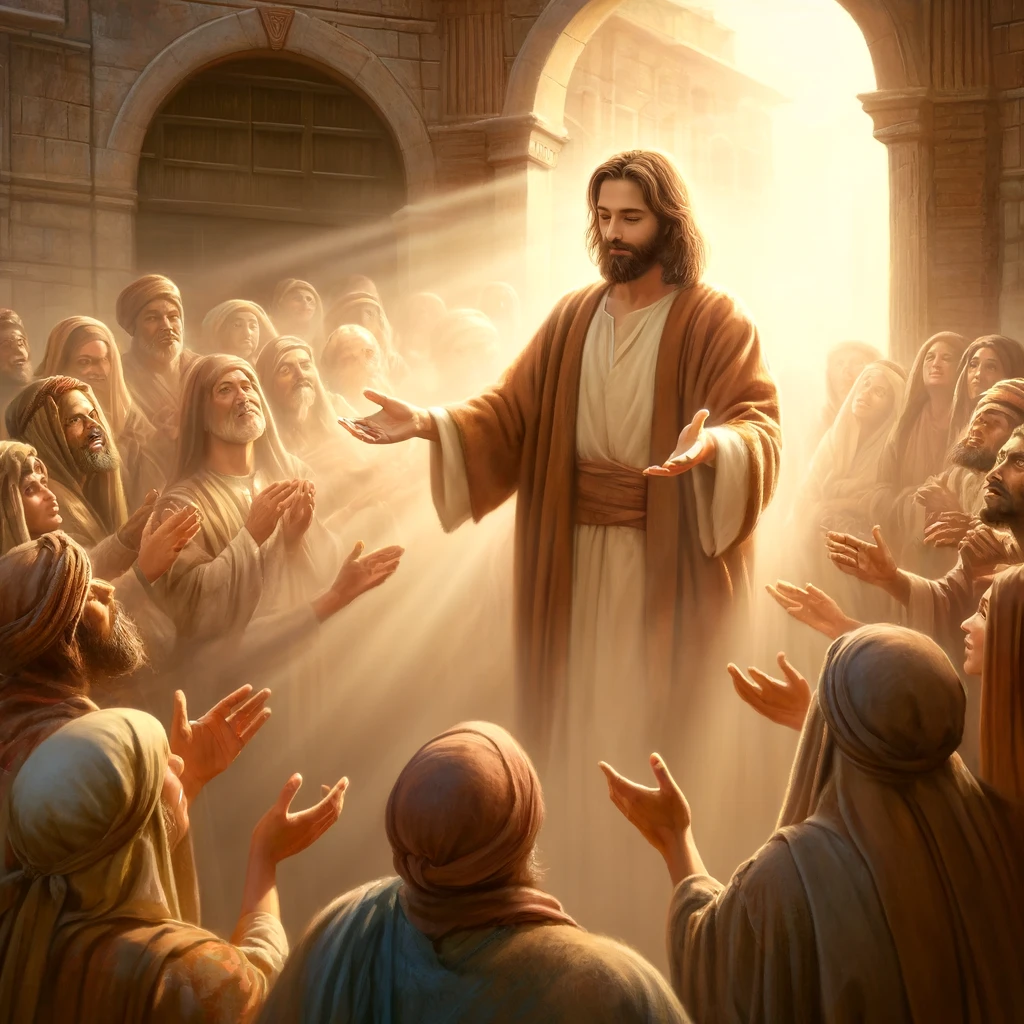
Introduction: Who Is Jesus?
If you’ve ever found yourself asking, “Who is Jesus?”—you’re not alone. This question has echoed through history, stirring hearts, sparking debates, and changing lives.
For me, Jesus isn’t just a historical figure or a religious teacher. He’s the most important person in my life. He is my Savior, my Friend, and my source of hope. The more I’ve learned about Him, the more I’ve realized that He is so much more than just a good man—He is the Son of God, the Messiah, and the answer to our deepest longings.
Maybe you’re here because you’re curious. Or maybe you’re searching for something real—something that goes beyond the chaos of life, something that fills the emptiness inside. I believe you’re here for a reason.
This article isn’t just about facts—it’s about truth. The truth about who Jesus is, what He taught, why He came, and why His life, death, and resurrection still matter today.
If you’ve ever wondered:
- Was Jesus really the Son of God?
- Did He actually rise from the dead?
- What does it mean to follow Him?
Then I invite you to keep reading. Because when you truly understand who Jesus is, it changes everything.
Who Is Jesus According to the Bible?
One of the first places we can look to answer the question “Who is Jesus?” is the Bible.
The Bible isn’t just a religious book—it’s a historical record of Jesus’ life, teachings, miracles, death, and resurrection. It’s also God’s revelation to us, showing us the true identity of Jesus.
Through Scripture, we see that Jesus isn’t just another prophet or moral teacher—He is the Son of God, the Messiah, and the fulfillment of centuries-old prophecies.
Jesus as the Son of God and the Messiah
From the very beginning, the Bible declares Jesus as the Son of God. One of the most well-known verses in the Bible, John 3:16, tells us:
“For God so loved the world that He gave His one and only Son, that whoever believes in Him shall not perish but have eternal life.”
This verse alone reveals three powerful truths:
- God loves us deeply—so much that He was willing to send His own Son to save us.
- Jesus is more than just a man—He is God’s Son.
- Through faith in Jesus, we receive eternal life.
Jesus Himself boldly claimed this identity. He didn’t shy away from declaring who He was:
- John 10:30 → “I and the Father are one.”
- John 14:9 → “Anyone who has seen me has seen the Father.”
These weren’t the words of just a great teacher—these were the words of God in the flesh.
Throughout the New Testament, His disciples and followers also recognized Him as the Messiah—the promised Savior.
- Matthew 16:16 → Peter declared, “You are the Messiah, the Son of the living God.”
- John 11:27 → Martha proclaimed, “I believe that you are the Messiah, the Son of God, who is to come into the world.”
Jesus didn’t come just to teach us good morals—He came to save us from sin and restore our relationship with God.
Jesus in Old Testament Prophecy
One of the most incredible things about Jesus is that His coming was prophesied hundreds of years before His birth.
The Old Testament, written long before Jesus walked the earth, contains over 300 prophecies that pointed to the coming of the Messiah.
Here are just a few of them:
- Born of a virgin → Isaiah 7:14: “The virgin will conceive and give birth to a son, and will call him Immanuel.”
- Born in Bethlehem → Micah 5:2: “But you, Bethlehem… out of you will come for me one who will be ruler over Israel.”
- Rejected by His people → Isaiah 53:3: “He was despised and rejected by mankind.”
- Pierced for our sins → Isaiah 53:5: “He was pierced for our transgressions, he was crushed for our iniquities.”
What amazes me the most is that Jesus fulfilled every single one of these prophecies. The chances of one person fulfilling even a handful of them are almost impossible—but Jesus fulfilled all of them.
This isn’t coincidence. This is God’s divine plan.
Jesus’ Birth and Early Life
Jesus wasn’t born in a palace. He wasn’t born into wealth or power. Instead, He came into the world in the humblest of circumstances.
- Born in a manger → His first bed was an animal feeding trough.
- Born to a poor family → His earthly parents, Mary and Joseph, were simple, everyday people.
- Hunted from birth → King Herod tried to kill Him as an infant.
To discover more fascinating details about the miraculous birth of Jesus, check out our article: 👉 7 Astonishing Facts About the Miraculous Birth of Jesus.
I’ve always found it so beautiful that God chose to send His Son in such humility. It shows us that Jesus didn’t come for the rich and powerful—He came for the broken, the humble, and the lost.
Even as a child, Jesus stood out. At just twelve years old, He amazed the religious teachers in the temple with His wisdom and understanding (Luke 2:46-47).
He was already on a divine mission, preparing for the work He would one day accomplish.
Why Jesus’ Birth Fulfilled Prophecy
When I first realized how Jesus’ birth fulfilled so many Old Testament prophecies, it strengthened my faith in an incredible way.
Let’s take a look at how His birth aligned perfectly with God’s promises:
| Prophecy | Old Testament Reference | Fulfillment in Jesus |
| Born of a Virgin | Isaiah 7:14 | Matthew 1:23 |
| Born in Bethlehem | Micah 5:2 | Matthew 2:1 |
| Descendant of David | Jeremiah 23:5 | Luke 3:31 |
| Called “Immanuel” (God with Us) | Isaiah 7:14 | Matthew 1:23 |
These prophecies weren’t random. They were God’s way of saying, “This is my Son. This is the One I promised.”
Every detail of Jesus’ birth was orchestrated by God to fulfill His perfect plan.
Who Is Jesus According to His Own Words?

When I was first exploring my faith, one thing stood out to me: Jesus wasn’t vague about who He was. He made bold, direct claims about His identity—claims so radical that they left people in awe, confusion, or anger.
Many people today say, “Jesus was a great teacher,” or “He was a wise man.” But Jesus didn’t just claim to be a teacher. He claimed to be the Son of God, the Savior, and the only way to eternal life.
His words demand a response. Either He was telling the truth, lying, or completely delusional—but He couldn’t have been just a good moral teacher.
So, let’s look at what Jesus said about Himself.
Jesus’ “I AM” Statements
One of the most profound ways Jesus revealed His identity was through His “I AM” statements in the Gospel of John.
In Jewish tradition, “I AM” was a sacred name—the name of God Himself (Exodus 3:14). When Jesus used this phrase, He was declaring His divinity.
Here are seven times Jesus made these powerful statements:
- “I am the Bread of Life” (John 6:35) → Jesus satisfies our deepest spiritual hunger.
- “I am the Light of the World” (John 8:12) → He brings truth, guidance, and hope.
- “I am the Gate” (John 10:9) → He is the way into God’s Kingdom.
- “I am the Good Shepherd” (John 10:11) → He loves, leads, and protects His followers.
- “I am the Resurrection and the Life” (John 11:25) → He has power over death.
- “I am the Way, the Truth, and the Life” (John 14:6) → The only path to God is through Him.
- “I am the True Vine” (John 15:5) → We must remain connected to Him to thrive.
Each of these statements tells us something incredible about Jesus’ nature, mission, and relationship with us.
What amazes me the most is how personal these statements are. Jesus didn’t just say He knew the way to God—He said, “I AM the Way”. He didn’t just offer resurrection—He IS the Resurrection.
This means that knowing Jesus isn’t just about following teachings—it’s about knowing Him personally.
What Jesus Said About His Identity
Beyond the “I AM” statements, Jesus made other direct claims about who He was.
1. Jesus Claimed to Be Equal with God
Some people argue that Jesus never claimed to be divine—but the religious leaders of His time certainly understood that He did.
- John 10:30 → “I and the Father are one.”
- John 8:58 → “Before Abraham was born, I AM.”
- John 14:9 → “Anyone who has seen me has seen the Father.”
The reaction? The religious leaders picked up stones to kill Him (John 10:31).
They knew exactly what Jesus was claiming—He was saying He was God in the flesh.
2. Jesus Claimed to Have Authority to Forgive Sins
Only God can forgive sins. Yet, Jesus forgave people openly.
- Mark 2:5 → “Son, your sins are forgiven.”
- Luke 7:48 → “Your sins are forgiven.”
The religious leaders were furious, asking, “Who can forgive sins but God alone?” (Mark 2:7).
They understood the significance—Jesus was claiming divine authority.
3. Jesus Claimed to Be the Only Way to God
In today’s world, many people believe that all religions lead to God. But Jesus didn’t say that. Instead, He made one of the most exclusive claims in history:
John 14:6 → “I am the way and the truth and the life. No one comes to the Father except through me.”
Not a way. Not one of many. The way.
This means that following Jesus isn’t just an option—it’s the only path to eternal life.
Why This Matters Today
What Jesus said about Himself forces us to make a decision.
If Jesus really is who He claimed to be, then:
✔ He is God.
✔ He is the Savior.
✔ He is the only way to eternal life.
C.S. Lewis, the famous Christian author, put it this way:
“You can shut Him up for a fool, you can spit at Him and kill Him as a demon, or you can fall at His feet and call Him Lord and God. But let us not come with any patronizing nonsense about His being a great human teacher. He has not left that open to us. He did not intend to.”
I remember when I first encountered these words. They hit me hard. If Jesus is truly the Son of God, then ignoring Him isn’t an option. The real question is: What will we do with Jesus?
We can either:
- Accept Him as Lord and Savior.
- Reject Him and walk away.
But we can’t just call Him a “good teacher” and leave it at that.
Jesus’ Ministry and Mission on Earth

Jesus didn’t come into the world to live an ordinary life. He had a clear mission, and every step He took was part of a divine plan. From His baptism to His miracles, teachings, and ultimate sacrifice, Jesus was on a rescue mission—to bring salvation, truth, and redemption to the world.
For a deep dive into Jesus’ mission, His teachings, and His impact, read:👉 What Was Jesus’ Ministry? The Truth About His Purpose.
For me, understanding why Jesus came deepened my faith in ways I never expected. It’s one thing to know about Jesus, but it’s another to truly grasp the depth of His purpose.
Let’s take a closer look at why He came and what He accomplished.
Why Did Jesus Come?
If I had to sum it up in one verse, I’d choose Luke 19:10:
“For the Son of Man came to seek and to save the lost.”
Jesus didn’t come for the righteous—He came for the broken, the hurting, the sinners (people like me and you).
But how did He save us? His mission had several key purposes:
- To reveal God’s love → “For God so loved the world that He gave His one and only Son…” (John 3:16)
- To call people to repentance → “Repent, for the kingdom of heaven has come near.” (Matthew 4:17)
- To destroy the works of the devil → “The reason the Son of God appeared was to destroy the devil’s work.” (1 John 3:8)
- To give His life as a ransom for many → “The Son of Man did not come to be served, but to serve, and to give his life as a ransom for many.” (Mark 10:45)
Jesus came on purpose, with a purpose—and that purpose was our salvation.
The Baptism of Jesus: The Start of His Public Ministry
Before Jesus started preaching, teaching, and performing miracles, He did something unexpected—He got baptized.
At first, this confused me. Why would the sinless Son of God need baptism? But then I realized—He wasn’t baptized because He needed to repent; He was baptized to identify with us.
What Happened at Jesus’ Baptism?
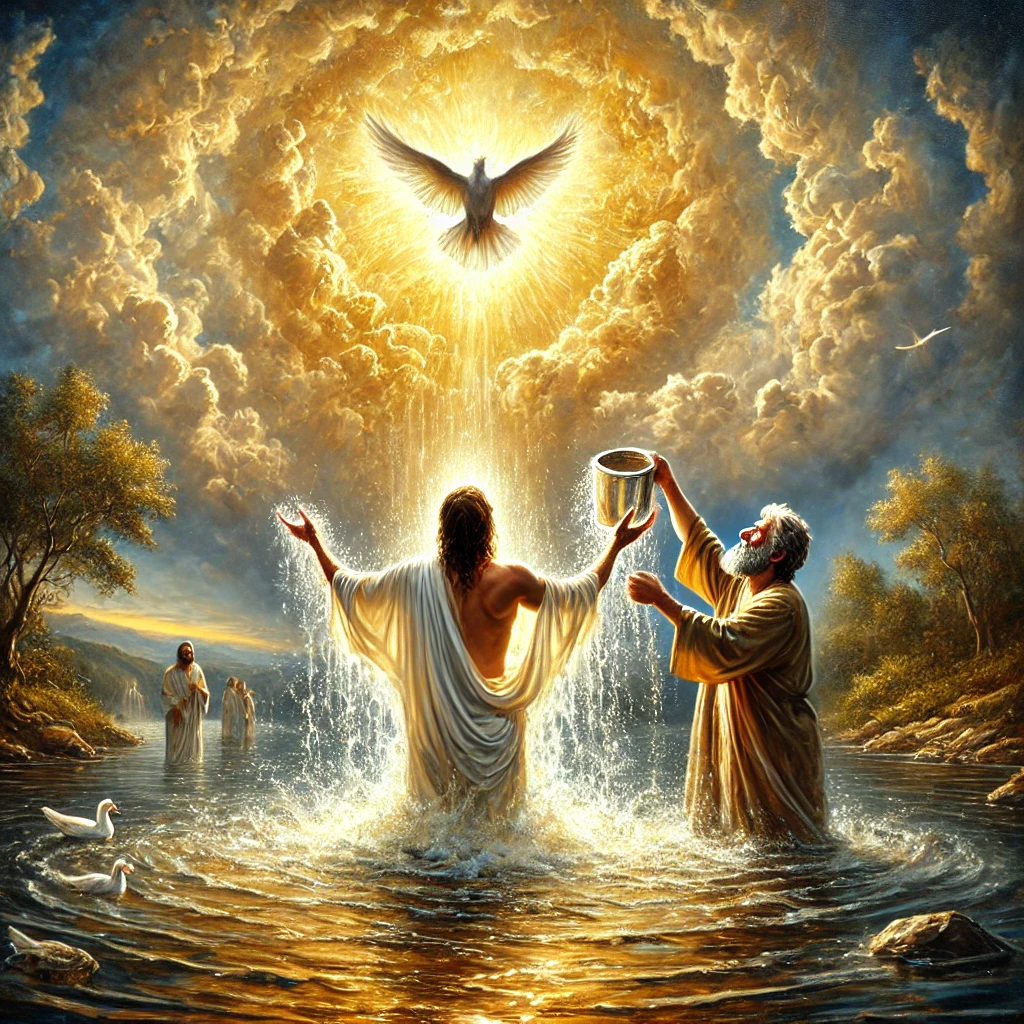
- Jesus came to John the Baptist at the Jordan River.
- John hesitated, saying “I need to be baptized by you, and yet you come to me?” (Matthew 3:14)
- Jesus responded, “Let it be so now; it is proper for us to do this to fulfill all righteousness.” (Matthew 3:15)
- As Jesus was baptized, something incredible happened:
“At that moment heaven was opened, and he saw the Spirit of God descending like a dove and alighting on him. And a voice from heaven said, ‘This is my Son, whom I love; with him I am well pleased.’” (Matthew 3:16-17)
John the Baptist played a crucial role in preparing the way for Jesus, fulfilling prophecy and calling people to repentance. To learn more about his mission and unwavering faith, read:👉 Unshakable Faith: How John the Baptist Prepared the Way.
This moment marked the beginning of Jesus’ ministry. God the Father publicly affirmed Him, and the Holy Spirit descended upon Him.
👉 If you’d like to dive deeper into why Jesus’ baptism was necessary and how it fulfilled prophecy, I’ve written an entire post on it here.
Want to understand why Jesus waited until the age of 30 to be baptized? Read more in our article:👉 Why Did Jesus Get Baptized at 30? A Powerful Revelation.
Why Does Jesus’ Baptism Matter?
- It was an act of obedience—Jesus showed us what it means to submit to God’s will.
- It was a picture of His mission—Just as He went into the water and rose again, He would one day die and rise again for our salvation.
- It confirmed His identity—God Himself declared, “This is my Son.”
For me, Jesus’ baptism is a reminder that He fully stepped into His mission—for our sake.
40 Days in the Wilderness: How Jesus Overcame Temptation
Right after His baptism, Jesus was led into the wilderness to be tempted by Satan (Matthew 4:1-11). This always amazed me—why would the Son of God need to go through temptation?
The answer? To show us how to fight temptation and win.
The Three Temptations Jesus Faced
- Turning stones into bread (temptation of the flesh) → Satan tried to get Jesus to use His power for personal gain.
- Jesus replied: “Man shall not live on bread alone, but on every word that comes from the mouth of God.” (Matthew 4:4)
- Throwing Himself from the temple (temptation of pride) → Satan twisted Scripture, tempting Jesus to force God’s protection.
- Jesus answered: “Do not put the Lord your God to the test.” (Matthew 4:7)
- Worshiping Satan for the kingdoms of the world (temptation of power) → Satan offered Jesus the world in exchange for worship.
- Jesus declared: “Away from me, Satan! For it is written: ‘Worship the Lord your God, and serve Him only.’” (Matthew 4:10)
Each time, Jesus fought back with Scripture. He didn’t argue or negotiate—He used God’s Word as a weapon.
What This Teaches Us About Fighting Temptation
- Satan twists God’s Word → We need to know Scripture well.
- Temptation is not sin—but giving in is → Jesus was tempted, but He never sinned.
- God’s Word is our defense → Every time Satan attacked, Jesus responded with Scripture.
This passage reminds me that when I face temptation, I can stand firm by clinging to God’s Word—just like Jesus did.
Discover the deeper significance in our article: 👉 Why Did Jesus Need to Be Tempted?
Jesus’ Ministry: A Life of Humility and Service
The act of Jesus washing His disciples’ feet is a profound demonstration of humility, love, and servanthood. But this moment was just one example of the greater mission that defined Jesus’ ministry. His entire life was dedicated to teaching, healing, and ultimately sacrificing Himself for humanity.
If you want to explore the full purpose of Jesus’ ministry, including His teachings, miracles, and the message He carried, read our in-depth guide:
➡️ What Was Jesus’ Ministry? The Truth About His Purpose
The Twelve Disciples: Jesus’ Chosen Messengers
As Jesus carried out His ministry, He chose twelve disciples—ordinary men from different backgrounds—to learn from Him, witness His miracles, and eventually carry the Gospel to the world. These men walked with Jesus daily, yet they struggled, doubted, and even failed at times. Still, Jesus patiently taught them, preparing them for their mission.
But what happened to them after Jesus’ resurrection? Did they remain faithful, and how did they spread the message?
The twelve disciples played a crucial role in spreading Christianity, facing persecution, and demonstrating what it truly means to be a follower of Christ. Their lives continue to inspire us today to live boldly for our faith.
What This Means for Us Today
Jesus’ ministry wasn’t just about what He did—it was about what it means for us today.
1. Jesus Came to Save, Not Condemn
Many people see Jesus as a judge, but He said:
“For God did not send His Son into the world to condemn the world, but to save the world through Him.” (John 3:17)
This gives me so much hope—Jesus isn’t here to shame us, but to rescue us.
2. Jesus Showed Us How to Live in Obedience
- His baptism teaches us to submit to God’s will.
- His victory over temptation teaches us to stand firm on God’s Word.
3. Jesus Invites Us Into His Mission
Jesus didn’t come just to do great things—He came to change lives, and He invites us to be a part of that mission.
I love how He called ordinary fishermen and tax collectors to be His disciples. It reminds me that He calls people like you and me to follow Him too.
Jesus’ Teachings: What Did He Preach?
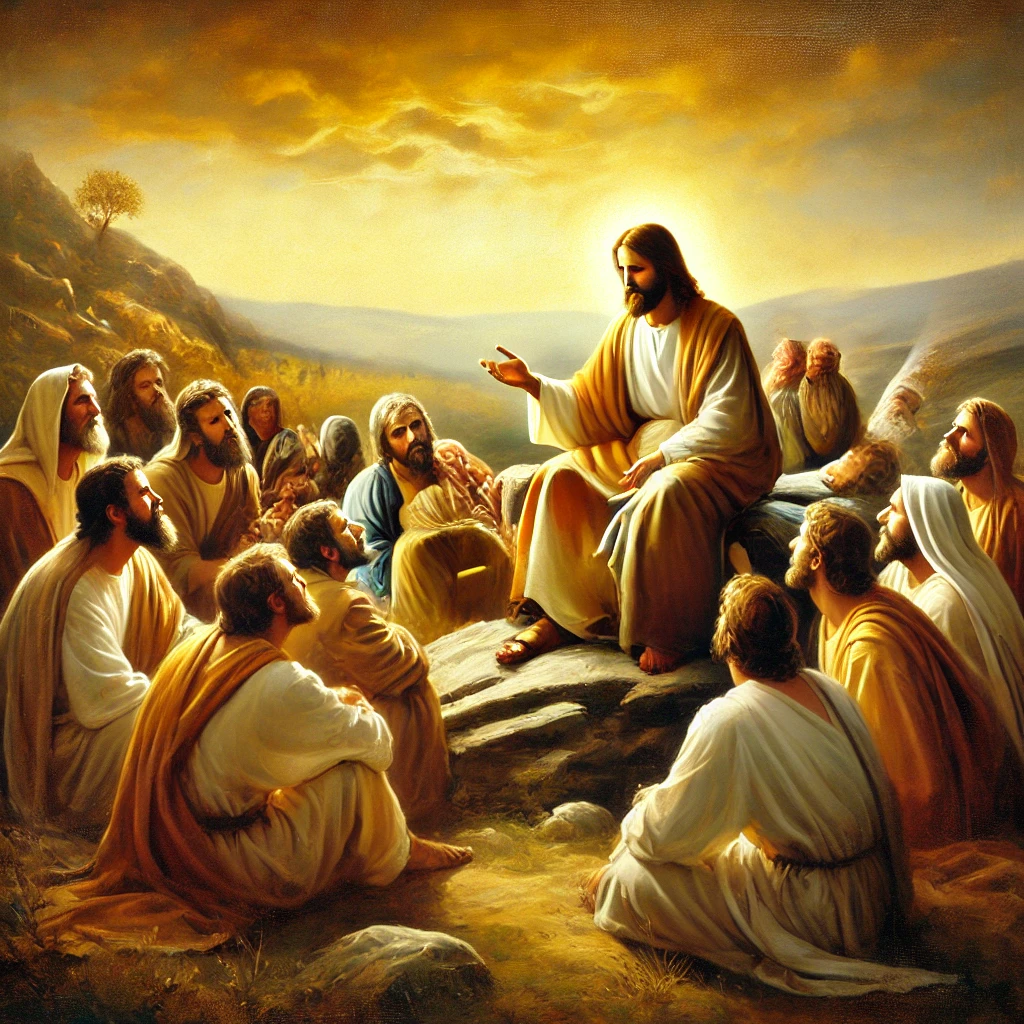
One of the things that first drew me to Jesus was His teachings. His words weren’t just wise sayings or philosophical ideas—they were life-changing truths that cut straight to the heart.
Jesus didn’t just speak to people’s minds; He spoke to their souls. His words carried authority, power, and divine wisdom. Crowds followed Him because His teachings were different from those of the religious leaders—He taught with compassion and truth.
In this section, we’ll look at what Jesus preached, why He taught in parables, and how His words still change lives today.
Why Did Jesus Teach in Parables?
One of the most fascinating things about Jesus’ teaching style is that He often used parables—short, powerful stories with deep spiritual truths.
At first, I wondered why He didn’t just explain things plainly. But then I realized—parables invite us to seek truth.
Jesus’ Own Explanation for Using Parables
In Matthew 13:10-11, the disciples asked Jesus why He taught in parables. His response?
“The knowledge of the secrets of the kingdom of heaven has been given to you, but not to them.”
Jesus used parables because:
- They revealed truth to those with open hearts.
- They concealed truth from those who were spiritually blind.
Parables are like spiritual tests—if we truly seek God, we’ll understand them. If our hearts are hardened, we won’t.
Examples of Jesus’ Most Famous Parables
Here are just a few parables that have shaped my faith:
- The Parable of the Sower (Matthew 13:1-23)
- A lesson on how people receive God’s Word—some embrace it, others reject it.
- The Parable of the Prodigal Son (Luke 15:11-32)
- A beautiful picture of God’s love and grace for sinners.
- The Parable of the Good Samaritan (Luke 10:25-37)
- A lesson on loving others—even our enemies.
- The Parable of the Lost Sheep (Luke 15:3-7)
- A reminder that God seeks after every lost soul.
Every time I read these parables, I find new insights. Jesus’ words are alive and active, constantly speaking to my heart.
The Sermon on the Mount: Jesus’ Most Famous Teaching

If there’s one sermon that defines who Jesus is and what He stands for, it’s the Sermon on the Mount (Matthew 5-7).
This sermon isn’t just a collection of teachings—it’s a radical call to live differently. It challenges our hearts, our actions, and our faith.
The Beatitudes: The Heart of a Disciple
Jesus began the Sermon on the Mount with the Beatitudes, a list of blessings that turn the world’s values upside down:
“Blessed are the poor in spirit, for theirs is the kingdom of heaven.” (Matthew 5:3)
“Blessed are those who mourn, for they will be comforted.” (Matthew 5:4)
“Blessed are the meek, for they will inherit the earth.” (Matthew 5:5)
These statements go against everything the world teaches. Society tells us to be strong, rich, and powerful, but Jesus says:
✔ The humble are blessed.
✔ The merciful are blessed.
✔ Those who hunger for righteousness are blessed.
The Beatitudes challenge me to see life the way Jesus does—through the lens of humility, love, and dependence on God.
Key Teachings from the Sermon on the Mount
Beyond the Beatitudes, Jesus gave some of His most challenging teachings:
- Love your enemies and pray for those who persecute you (Matthew 5:44).
- Do not store up treasures on earth, but in heaven (Matthew 6:19-20).
- Seek first the kingdom of God, and everything else will be provided (Matthew 6:33).
- Forgive others, so that God will forgive you (Matthew 6:14-15).
When I first read these verses, they hit me hard. Jesus doesn’t just call us to believe in Him—He calls us to live differently.
One of the most convicting passages is Matthew 7:21, where Jesus says:
“Not everyone who says to me, ‘Lord, Lord,’ will enter the kingdom of heaven, but only the one who does the will of my Father who is in heaven.”
Following Jesus isn’t about just knowing His words—it’s about living them out.
The Core of Jesus’ Teachings: Love, Grace, and Forgiveness
Jesus’ teachings always come back to three powerful themes:
✔ Love → Loving God and loving others.
✔ Grace → God’s unearned favor for sinners.
✔ Forgiveness → The heart of the Gospel.
The Greatest Commandment: Love God and Love Others
When Jesus was asked what the greatest commandment was, He answered:
“Love the Lord your God with all your heart and with all your soul and with all your mind. This is the first and greatest commandment. And the second is like it: Love your neighbor as yourself.” (Matthew 22:37-39)
At the core of Christianity is love—love for God and love for people.
The Power of Forgiveness: A Call to Mercy
Jesus’ teaching on forgiveness was radical.
When Peter asked, “How many times should I forgive my brother? Seven times?” Jesus answered:
“Not seven times, but seventy-seven times.” (Matthew 18:22)
Jesus also warned:
“If you do not forgive others their sins, your Father will not forgive your sins.” (Matthew 6:15)
This truth challenges me daily. Forgiveness isn’t just about letting go—it’s about reflecting God’s mercy.
What Jesus’ Teachings Mean for Us Today
Jesus’ words aren’t just ancient wisdom—they are timeless truths that still shape our lives today.
- Faith over worry → Instead of stressing, we trust God.
- Love over hate → Instead of resentment, we choose grace.
- Forgiveness over revenge → Instead of holding grudges, we let go.
His teachings challenge us to think, to grow, and to live differently.
The Miracles of Jesus: His Divine Power Revealed

Jesus wasn’t just a great teacher—He performed miracles that proved His divine authority.
When I first read about His miracles, I was in awe. He didn’t just talk about God’s power—He demonstrated it. People who were blind suddenly could see, the lame walked, storms obeyed His voice, and even the dead were raised to life.
But Jesus’ miracles weren’t just about displaying power. Every miracle carried a deeper message—revealing who He was, why He came, and what it means for us today.
Let’s explore the different types of miracles Jesus performed and why they still matter.
Why Did Jesus Perform Miracles? Understanding Their Significance
Many people today wonder: Why did Jesus do miracles? Was it just to impress people?
Not at all. Jesus’ miracles had a clear purpose:
- To prove His identity as the Son of God
- John 10:25 → “The works I do in my Father’s name testify about me.”
- To fulfill Old Testament prophecy
- Isaiah 35:5-6 prophesied that the Messiah would heal the blind, the deaf, and the lame. Jesus fulfilled this perfectly.
- To show compassion and reveal God’s love
- Jesus was moved by compassion when He healed and helped people.
- To demonstrate the power of faith
- Many miracles happened because people believed in Him.
- To foreshadow His ultimate mission
- Healing physical sickness pointed to His greater mission—to heal our souls from sin.
Every miracle was a sign pointing to something greater.
Miracles of Healing: Restoring the Broken
Jesus healed people from every kind of disease and condition—blindness, paralysis, leprosy, and even demonic possession.
Some of His Most Famous Healing Miracles
✔ Healing the blind man (John 9:1-7) → He restored sight with just a touch.
✔ Healing the paralyzed man (Mark 2:1-12) → He forgave his sins before making him walk.
✔ Healing the woman with the issue of blood (Mark 5:25-34) → Her faith made her well.
✔ Healing ten lepers (Luke 17:11-19) → Only one returned to thank Him.
These stories show that Jesus has power over sickness, but also that faith plays a key role in healing.
I love how Jesus never healed in the same way twice. Sometimes He touched people, sometimes He spoke, and sometimes He told them to do something first (like the blind man washing in the pool). It reminds me that God works in different ways in our lives.
Miracles Over Nature: Demonstrating His Divine Authority
Jesus didn’t just heal people—He had power over creation itself.
Some of His Greatest Nature Miracles
✔ Calming the storm (Mark 4:35-41) → With a word, He stilled the wind and waves.
✔ Feeding the 5,000 (Matthew 14:13-21) → He multiplied five loaves and two fish.
✔ Walking on water (Matthew 14:22-33) → He showed Peter the power of faith.
✔ Turning water into wine (John 2:1-11) → His first miracle at a wedding.
These miracles prove that Jesus wasn’t just a man—He had authority over the laws of nature.
The story of Jesus calming the storm is one of my personal favorites. The disciples were terrified, thinking they were going to die. But Jesus?
He got up, rebuked the wind and said to the waves, ‘Quiet! Be still!’ Then the wind died down and it was completely calm.” (Mark 4:39)
Their reaction?
“Who is this? Even the wind and the waves obey Him!” (Mark 4:41)
It’s a powerful reminder that no matter how big our storms are, Jesus is in control.
Miracles of Resurrection: Power Over Death
One of the most jaw-dropping miracles Jesus performed was raising the dead.
Three Major Resurrections Jesus Performed
✔ Raising Jairus’ daughter (Mark 5:35-43) → “Little girl, get up!” And she did.
✔ Raising the widow’s son (Luke 7:11-17) → In the middle of a funeral, Jesus stopped and raised the boy.
✔ Raising Lazarus (John 11:1-44) → After four days in the grave, Jesus called Lazarus back to life.
The story of Lazarus is one of the most powerful. Jesus stood in front of the tomb and declared:
“I am the resurrection and the life. The one who believes in me will live, even though they die.” (John 11:25)
Then He called out:
“Lazarus, come out!” (John 11:43)
And Lazarus walked out of the tomb—alive.
These miracles weren’t just amazing demonstrations—they were signs of something greater. They pointed to Jesus’ own resurrection, which would change the world forever.
What Jesus’ Miracles Mean for Us Today
It’s easy to read about miracles and think, “That was amazing… but what about now?”
Here’s why Jesus’ miracles still matter today:
✔ They remind us of who Jesus is → He is God in the flesh, with authority over all things.
✔ They remind us that Jesus cares → Every healing, every miracle, every act of power was rooted in compassion.
✔ They strengthen our faith → If Jesus could calm storms, heal diseases, and raise the dead—He can handle anything we face.
✔ They remind us that miracles still happen → Jesus is alive today, and He is still in the business of doing the impossible.
I’ve personally seen prayers answered, people healed, and situations turned around in ways that only God could do.
Jesus is the same yesterday, today, and forever (Hebrews 13:8). His power has not changed—and His love has not changed.
The Death and Resurrection of Jesus: The Ultimate Victory

If there’s one event that defines who Jesus is and why He came, it’s His death and resurrection.
For me, this is where everything changes. Jesus didn’t just come to teach, heal, or perform miracles—He came to die for our sins and rise again, conquering death itself.
This is the heart of the Gospel: Jesus took our punishment, died in our place, and defeated death so we could have eternal life.
Let’s dive deep into the crucifixion, the suffering He endured, and the power of His resurrection.
The Crucifixion: Why Did Jesus Have to Die?
The cross is the greatest act of love in history.
“But God demonstrates His own love for us in this: While we were still sinners, Christ died for us.” (Romans 5:8)
But why did Jesus have to die?
1. To Take the Punishment for Our Sins
We’ve all sinned. Every one of us. And sin separates us from God.
“For the wages of sin is death, but the gift of God is eternal life in Christ Jesus our Lord.” (Romans 6:23)
God is holy, and His justice demands payment for sin. Instead of us suffering that penalty, Jesus took it upon Himself.
2. To Fulfill Prophecy
Long before Jesus came, the Old Testament foretold His suffering:
“He was pierced for our transgressions, He was crushed for our iniquities; the punishment that brought us peace was on Him, and by His wounds, we are healed.” (Isaiah 53:5)
Every detail of Jesus’ death was prophesied centuries before it happened—from the betrayal by Judas to His suffering on the cross.
One of the most shocking prophecies was fulfilled when Judas Iscariot, one of the Twelve, betrayed Jesus for thirty pieces of silver. But why did Judas do it? What led him to turn against the very Messiah he followed?
👉 Uncover the powerful truth behind Judas’ betrayal and what it means for us today.
3. To Show the Depth of God’s Love
Jesus willingly went to the cross. He could have stopped it. He could have called down legions of angels (Matthew 26:53). But He didn’t—because He loved us too much to leave us in sin.
The Suffering of Jesus on the Cross
When I think about what Jesus endured, it brings me to tears.
✔ He was betrayed → One of His own disciples, Judas, sold Him for 30 pieces of silver.
✔ He was falsely accused → The religious leaders held an illegal trial and condemned Him unjustly.
✔ He was mocked and beaten → Roman soldiers spat on Him, hit Him, and put a crown of thorns on His head.
✔ He was whipped → He was flogged with a Roman whip that tore His flesh.
✔ He carried His own cross → He was forced to carry the heavy wooden cross up to Golgotha.
✔ He was nailed to the cross → Large spikes were driven through His hands and feet.
Hanging there, suffering, Jesus still prayed for those who crucified Him:
“Father, forgive them, for they do not know what they are doing.” (Luke 23:34)
And in His final moments, He declared:
“It is finished.” (John 19:30)
With those words, the price for sin was paid in full.
The Resurrection: Jesus Defeated Death

If Jesus had stayed dead, our faith would be meaningless.
But on the third day, something incredible happened—the tomb was empty!
“Why do you look for the living among the dead? He is not here; He has risen!” (Luke 24:5-6)
Jesus’ resurrection is the greatest victory in history. It proved that:
✔ He is who He claimed to be—the Son of God.
✔ Sin and death have been defeated.
✔ We can have eternal life through Him.
Evidence for the Resurrection
Some people claim Jesus’ resurrection was a myth or that His disciples stole His body. But history and Scripture give us compelling proof that Jesus really did rise from the dead.
1. The Empty Tomb
- Roman guards were stationed at Jesus’ tomb to prevent anyone from stealing His body.
- A huge stone blocked the entrance.
- Yet, on the third day, the stone was rolled away, and the tomb was empty (Matthew 28:2-6).
2. Jesus Appeared to Over 500 People
After rising from the dead, Jesus appeared to:
✔ Mary Magdalene at the tomb (John 20:16).
✔ His disciples in the upper room (John 20:19-20).
✔ More than 500 people at once (1 Corinthians 15:6).
If this were a hoax, how could so many witnesses have seen Him?
3. The Transformation of the Disciples
Before the resurrection, Jesus’ disciples were scared and in hiding. After they saw the risen Jesus, they boldly preached the Gospel—even though it meant persecution and death.
They went from cowards to fearless leaders. Why? Because they saw Jesus alive!
Why Does the Resurrection Matter?
The resurrection isn’t just a historical event—it’s a personal reality.
Because Jesus rose again:
It Proves Jesus Is Who He Said He Is
Jesus made radical claims about Himself. If He stayed dead, those claims would be false. But He rose, proving that He truly is the Son of God.
It Means Sin and Death Have Been Defeated
Before Jesus, death was the final enemy. But because He conquered the grave, we no longer have to fear death.
“Death has been swallowed up in victory.” (1 Corinthians 15:54)
It Gives Us Eternal Life
Because Jesus is alive, we can have eternal life through faith in Him.
“I am the resurrection and the life. The one who believes in me will live, even though they die.” (John 11:25)
This means that when we put our trust in Jesus, death is not the end—it’s the beginning of eternal life with Him.
What the Cross and Resurrection Mean for Us Today
For me, the cross and resurrection are more than just stories—they are the foundation of my faith.
✔ The cross shows me God’s love.
✔ The resurrection gives me hope.
✔ Through Jesus, I have eternal life.
And the best part? This isn’t just for me—it’s for you too.
No matter who you are or what you’ve done, Jesus’ sacrifice covers your sins. His resurrection means you can have new life today.
Who Is Jesus to Us Today?
Jesus’ life, death, and resurrection didn’t just impact the people who lived 2,000 years ago—His influence is still transforming lives today.
For me, Jesus isn’t just a historical figure or a religious leader—He’s alive. He is my Savior, my Friend, and my Guide through life’s challenges. But the question is: Who is Jesus to you?
Let’s explore how Jesus continues to shape our lives today and why our response to Him matters.
Jesus Is Our Savior
At the core of the Christian faith is this truth:
✔ Jesus came to save us.
✔ Jesus died in our place.
✔ Jesus rose again to give us new life.
Without Him, we are lost in sin. But because of Him, we can be forgiven and restored.
“Salvation is found in no one else, for there is no other name under heaven given to mankind by which we must be saved.” (Acts 4:12)
Jesus didn’t come just to teach good morals—He came to rescue us. His death and resurrection paved the way for eternal life.
Jesus Is Our Lord
Jesus isn’t just our Savior—He’s also our Lord.
That means following Him isn’t just about believing—it’s about living for Him.
“If you love me, keep my commands.” (John 14:15)
For me, surrendering to Jesus as Lord has been a journey. It means:
✔ Letting Him lead my life instead of trying to control everything.
✔ Trusting His plans even when I don’t understand.
✔ Obeying His teachings even when it’s hard.
It’s not always easy, but it’s worth it.
Jesus Is Our Friend
One of the most beautiful things about Jesus is that He calls us friends.
“I no longer call you servants… Instead, I have called you friends.” (John 15:15)
This isn’t just a religious concept—it’s deeply personal.
Jesus walks with us through life’s ups and downs. He’s there in our struggles, our doubts, our victories. When I feel alone or discouraged, I remember:
✔ Jesus listens to me when I pray.
✔ Jesus understands my struggles because He walked this earth.
✔ Jesus never leaves me, no matter what I face.
Having a relationship with Jesus is not about rules—it’s about knowing Him personally.
Jesus Still Transforms Lives
I’ve seen firsthand how Jesus changes lives.
✔ People weighed down by guilt and shame find freedom in His grace.
✔ Those battling addiction and brokenness find healing in His power.
✔ The hopeless find purpose in Him.
Even today, miracles happen. Hearts are changed, prayers are answered, and people encounter the real Jesus in life-changing ways.
“If anyone is in Christ, the new creation has come: The old has gone, the new is here!” (2 Corinthians 5:17)
Jesus Is the Only Way to God
Many people believe there are many ways to God—but Jesus made it clear:
“I am the way and the truth and the life. No one comes to the Father except through me.” (John 14:6)
This is why what we believe about Jesus matters. He wasn’t just a good teacher—He is the only way to eternal life.
That means:
✔ We can’t earn salvation on our own.
✔ Good works won’t save us—only faith in Jesus can.
✔ Accepting Him means trusting in His grace, not our efforts.
What Does It Mean to Follow Jesus?
Knowing about Jesus is one thing—but following Him is a life-changing commitment.
✔ It means surrendering our lives to Him.
✔ It means trusting Him even when things don’t make sense.
✔ It means walking in faith, obedience, and love.
Knowing Jesus Personally
Jesus doesn’t just want us to believe in Him from a distance—He invites us into a relationship.
“Come to me, all you who are weary and burdened, and I will give you rest.” (Matthew 11:28)
To know Jesus personally means:
✔ Talking to Him in prayer.
✔ Reading His Word to hear His voice.
✔ Trusting Him with our lives.
For me, knowing Jesus isn’t just about attending church—it’s about walking with Him daily.
Growing in Faith
Faith isn’t a one-time decision—it’s a journey.
✔ We grow in faith by reading the Bible.
✔ We grow in faith by praying and seeking God.
✔ We grow in faith by living out His teachings.
The more I’ve walked with Jesus, the more I’ve realized that faith isn’t just about believing—it’s about living differently.
“Whoever wants to be my disciple must deny themselves and take up their cross daily and follow me.” (Luke 9:23)
The Impact of Jesus in the World Today
Jesus walked this earth over 2,000 years ago, yet His influence is stronger than ever. No other figure in history has shaped humanity, culture, and lives like Jesus Christ.
From art and literature to human rights and social movements, His teachings continue to transform the world. But beyond history books, Jesus still changes lives today—mine included.
Let’s explore how His presence remains alive in our world.
Jesus in Culture and Society
It’s impossible to ignore Jesus’ influence in global culture. Even those who don’t follow Him recognize His impact.
1. The Calendar Revolves Around Jesus
- B.C. (Before Christ) & A.D. (Anno Domini, “In the Year of Our Lord”) → The entire Western calendar is centered on His birth.
- Many historians now use BCE/CE (Before Common Era/Common Era), but the timeline is still based on Jesus’ life.
2. Art, Music, and Literature Are Filled with Jesus’ Influence
- Some of the greatest paintings—Leonardo da Vinci’s The Last Supper, Michelangelo’s Pietà—were inspired by Jesus.
- Music from Handel’s Messiah to modern worship songs proclaims His name.
- Books from The Chronicles of Narnia to The Pilgrim’s Progress point back to Him.
Jesus’ message has inspired generations of artists, poets, and thinkers to create works that uplift and challenge humanity.
3. Jesus’ Teachings Have Shaped Morality and Human Rights
Many of the values we cherish today—human dignity, compassion, forgiveness—stem directly from Jesus’ teachings.
- The idea of “loving your neighbor” (Matthew 22:39) is the foundation of social justice.
- Hospitals, orphanages, and charities were pioneered by Christians who followed Jesus’ command to care for the poor.
- Abolition of slavery—Many abolitionists, like William Wilberforce, were motivated by their Christian faith.
Without Jesus, the world would not be the same. His influence has been the driving force behind positive societal change.
Jesus Still Transforms Lives
Beyond culture and history, Jesus’ greatest impact is on individual hearts.
1. Millions Continue to Follow Him
Christianity remains the largest faith in the world, with over 2 billion followers. Why? Because Jesus still changes lives.
“Jesus Christ is the same yesterday and today and forever.” (Hebrews 13:8)
2. Testimonies of Transformed Lives
Even today, people encounter Jesus personally.
✔ Addicts are set free.
✔ Broken families are restored.
✔ People find purpose, peace, and eternal hope.
I’ve personally seen lives radically changed by Jesus—including my own. His love has healed my heart, guided my steps, and given me peace that nothing else in this world can offer.
3. Miracles Still Happen
Some might argue that Jesus’ miracles ended with the Bible, but I’ve seen prayers answered, sick people healed, and impossible situations turned around.
Jesus is still alive and active in the world today.
Who Is Jesus to You?
At this point, we’ve explored who Jesus is according to the Bible, His own words, His miracles, His death and resurrection, and His impact on the world today. But now comes the most personal and important question of all:
👉 Who is Jesus to YOU?
This isn’t just an academic or historical question—it’s a question that affects your eternity.
The truth is, everyone must make a decision about Jesus. There’s no middle ground. Either He is who He claimed to be—the Son of God and the Savior of the world—or He isn’t.
Jesus’ Question to His Disciples
Even when Jesus was on earth, people had different opinions about Him. Some thought He was just a prophet. Others saw Him as a great teacher. Some outright rejected Him.
So one day, Jesus asked His disciples a crucial question:
“Who do people say the Son of Man is?” (Matthew 16:13)
They answered, “Some say John the Baptist; others say Elijah; and still others, Jeremiah or one of the prophets.”
But then, Jesus turned to them and asked:
“But what about you? Who do you say I am?” (Matthew 16:15)
That same question echoes today.
Not just who does the world say Jesus is?
Not just who do your family or friends say He is?
But who do YOU say He is?
Peter boldly responded:
“You are the Messiah, the Son of the living God.” (Matthew 16:16)
This is the answer that changes lives.
Your Response to Jesus Matters
At the end of the day, knowing about Jesus isn’t enough. You could have all the knowledge in the world about Him, but until you decide to follow Him personally, that knowledge won’t save you.
The Bible makes it clear:
✔ Jesus is the only way to God. → “No one comes to the Father except through me.” (John 14:6)
✔ Salvation is found in Jesus alone. → “Everyone who calls on the name of the Lord will be saved.” (Romans 10:13)
✔ We must decide what to do with Jesus. → “Whoever is not with me is against me.” (Matthew 12:30)
The truth is, Jesus already made His decision about you—He chose the cross. He chose to die for you, to rise again, and to offer you eternal life.
But now, the choice is yours.
What Does It Mean to Accept Jesus?
Maybe you’re wondering, “How do I respond to Jesus?”
The Bible teaches that accepting Jesus isn’t about religious rituals or trying to be perfect. It’s about:
✔ Believing → Acknowledging that Jesus is the Son of God who died for your sins and rose again.
✔ Repenting → Turning away from sin and surrendering your life to Him.
✔ Trusting → Placing your faith in Jesus alone for salvation.
“If you declare with your mouth, ‘Jesus is Lord,’ and believe in your heart that God raised Him from the dead, you will be saved.” (Romans 10:9)
If you’ve never made that decision before, Jesus is inviting you today.
A Personal Invitation
If Jesus is speaking to your heart right now, I encourage you to say this prayer—not as a magic formula, but as a genuine response to God:
Lord Jesus, I believe You are the Son of God. I believe You died for my sins and rose again. I confess that I am a sinner in need of Your grace. I ask You to forgive me, to be my Savior, and to lead my life. I surrender to You. Thank You for Your love and salvation. Amen.
If you prayed that prayer with a sincere heart, the Bible says:
“Therefore, if anyone is in Christ, the new creation has come: The old has gone, the new is here!” (2 Corinthians 5:17)
You now belong to Jesus. 🎉
Conclusion: Jesus Is the Answer
After everything we’ve explored in this article—who Jesus is, what He taught, why He performed miracles, His death and resurrection, and His ongoing impact today—one truth remains:
👉 Jesus is the answer.
The world is full of questions:
- What is my purpose?
- Does God love me?
- Is there life after death?
- How can I be saved?
And Jesus answers them all.
“I am the way and the truth and the life. No one comes to the Father except through me.” (John 14:6)
Jesus Is the Answer to Our Deepest Needs
✔ If you feel lost, Jesus is the way.
✔ If you’re searching for truth, Jesus is the truth.
✔ If you long for purpose and eternal life, Jesus is the life.
His invitation is for everyone—no matter your past, your doubts, or your struggles.
“Come to me, all you who are weary and burdened, and I will give you rest.” (Matthew 11:28)
This isn’t just about religion—it’s about a real, life-changing relationship with Jesus Christ.
What Will You Do with Jesus?
Now that you’ve read about who Jesus is, the most important question remains:
👉 What will YOU do with Jesus?
Will you:
- Accept Him as your Savior and Lord?
- Seek to know Him more?
- Share His love with others?
Or will you walk away unchanged?
Jesus isn’t just someone to admire from a distance—He’s someone to follow, love, and surrender to.
A Final Prayer of Commitment
If you’re ready to take a step of faith, here’s a simple prayer:
Lord Jesus, I believe You are the Son of God. I believe You died for my sins and rose again. I accept You as my Savior and Lord. Help me to follow You, grow in faith, and share Your love. Amen.If you prayed that prayer, you are now a child of God! 🎉
Deepen Your Relationship with Jesus – Recommended Study
Knowing about Jesus is one thing, but truly experiencing His heart transforms your faith.
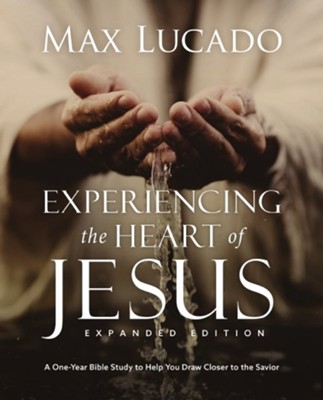
In Experiencing the Heart of Jesus, Expanded Edition, Max Lucado invites you on a one-year journey to know Jesus more intimately. This 52-week Bible study helps believers move beyond head knowledge into a personal, life-changing relationship with Christ.
Key Insights from the Study:
✅ 52 lessons on the person of Christ, drawn from Lucado’s best-selling books.
✅ “Heart of the Matter” sections with key takeaways.
✅ A leader’s guide for deeper reflection and group study.
If you desire to walk closer with Jesus, this study will guide and encourage you every step of the way.