


Idolatry might seem like an ancient problem—something we associate with the Golden Calf in the book of Exodus—but it’s just as relevant today as it was thousands of years ago. While we may not bow before statues or carvings, modern idols have taken on different forms, often sneaking into our lives unnoticed. As I reflect on the story of the Golden Calf, I’m reminded of how easily we can lose sight of God and place other things at the center of our hearts.
In this article, I want to explore what idolatry looks like in our modern world. Together, we’ll uncover the subtle ways it manifests, the dangers it poses, and how we can replace these “golden calves” with a deeper, more meaningful relationship with God.
What Is Idolatry? A Biblical Perspective
The Meaning of Idolatry in Scripture
Idolatry, at its core, is anything that takes God’s rightful place in our hearts. The Bible warns against idolatry repeatedly, emphasizing the importance of worshiping God alone. In Exodus 20:3-4, the first two of the Ten Commandments clearly state, “You shall have no other gods before me” and “You shall not make for yourself an image in the form of anything in heaven above or on the earth beneath or in the waters below.”
In the New Testament, idolatry is expanded beyond physical idols to include anything that becomes more important than God. Paul writes in Colossians 3:5, “Put to death, therefore, whatever belongs to your earthly nature: sexual immorality, impurity, lust, evil desires, and greed, which is idolatry.” These verses remind us that idolatry isn’t just about objects—it’s about misplaced priorities.
The Story of the Golden Calf
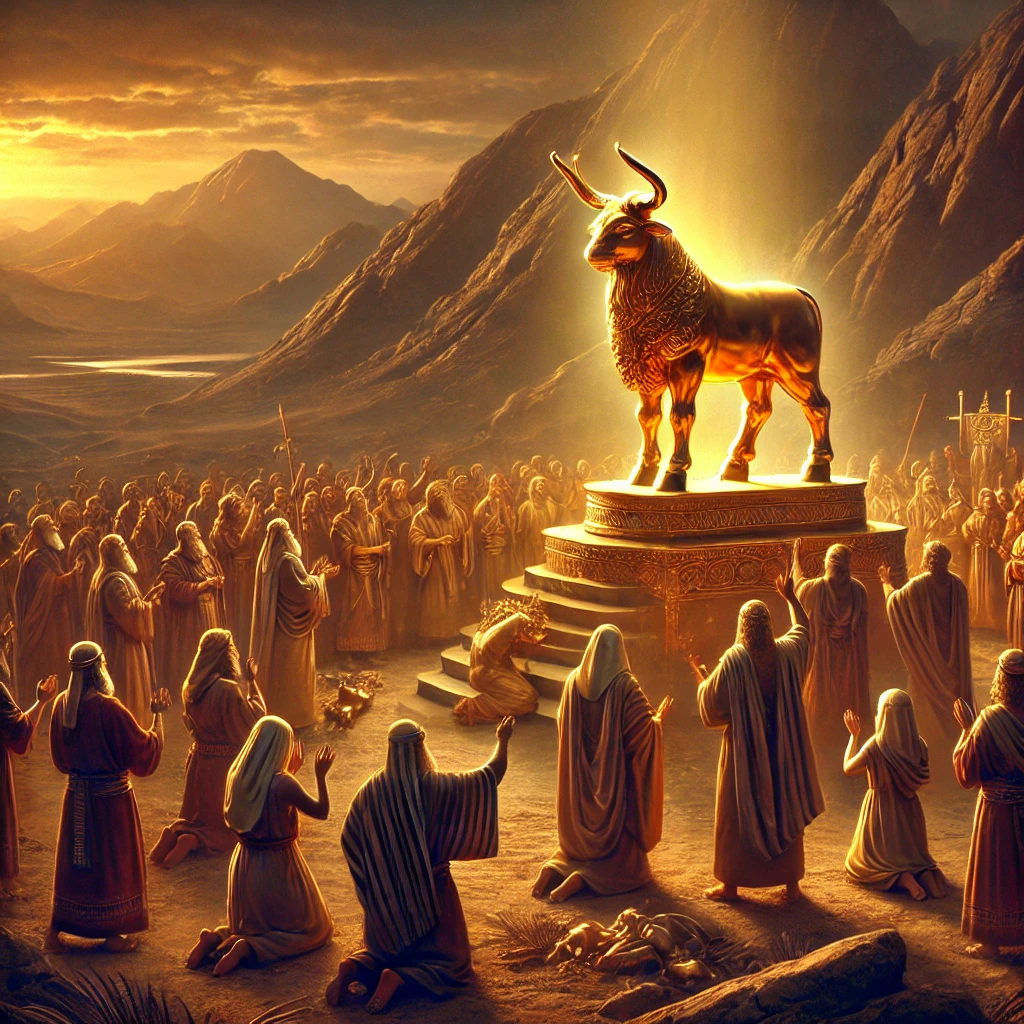
The story of the Golden Calf in Exodus 32 is one of the most vivid examples of idolatry in the Bible. While Moses was on Mount Sinai receiving God’s law, the Israelites grew impatient and asked Aaron to make them a god they could see and worship. Aaron fashioned a calf out of gold, and the people celebrated around it, declaring it as the god who had brought them out of Egypt.
This story is a sobering reminder of how quickly we can turn away from God when we rely on our own understanding. It also shows how idolatry leads to destructive behavior, broken relationships, and a fractured connection with God. Reflecting on this, I’m challenged to examine my own life: what “golden calves” might I be holding onto without realizing it?
Modern Idolatry: The Golden Calves of Today
Materialism and Consumerism
In today’s world, it’s easy to fall into the trap of materialism. We’re constantly bombarded with advertisements promising happiness and fulfillment through the latest gadgets, designer clothes, or luxurious lifestyles. While owning nice things isn’t inherently wrong, it becomes problematic when we start placing our identity and security in them.
I’ve noticed in my own life how easy it is to get caught up in the desire for more—more possessions, more comfort, more recognition. But Jesus reminds us in Luke 12:15, “Watch out! Be on your guard against all kinds of greed; life does not consist in an abundance of possessions.” When we prioritize material things over our relationship with God, they become modern-day idols that distract us from true contentment and purpose.
Technology and Social Media
Another common “golden calf” in our modern lives is technology, particularly social media. While these tools can be used for good, like staying connected or spreading the Gospel, they can also consume our time and attention in unhealthy ways. How often do we find ourselves endlessly scrolling through feeds, comparing our lives to others, or seeking validation through likes and comments?
Personally, I’ve found that when I spend too much time on social media, it leaves little room for quiet moments with God. Psalm 46:10 says, “Be still, and know that I am God.” Yet, in a world where we’re constantly connected, stillness can feel almost impossible. Reflecting on this, I’m learning the importance of setting boundaries with technology to ensure my focus remains on God rather than fleeting distractions.
Success and Ambition
In our culture, success is often measured by titles, achievements, and wealth. While there’s nothing wrong with working hard or striving for excellence, the danger lies in making success the ultimate goal. When our identity becomes tied to our accomplishments, we risk turning ambition into an idol that overshadows our reliance on God.
I’ve experienced this temptation firsthand, especially when I’ve equated my worth with how much I achieve. Yet, Jesus reminds us in Matthew 6:33, “But seek first his kingdom and his righteousness, and all these things will be given to you as well.” This verse challenges me to keep my priorities aligned with God’s will, trusting Him to guide my steps.
Relationships and People-Pleasing
Another subtle form of idolatry is placing relationships above our devotion to God. While loving and valuing others is essential, it becomes problematic when we seek approval or fulfillment from people instead of God. Whether it’s a romantic partner, family member, or friend, putting them on a pedestal can lead to disappointment and strain our spiritual connection.
I’ve often found myself seeking validation from others, only to realize that true affirmation comes from God alone. Galatians 1:10 challenges us: “Am I now trying to win the approval of human beings, or of God? If I were still trying to please people, I would not be a servant of Christ.” This reminder helps me refocus on finding my worth in God’s love rather than in human approval.
Self-Image and Vanity
In today’s image-driven culture, the pursuit of physical perfection can easily become an idol. Whether it’s obsessing over appearances, chasing fitness goals for validation, or constantly seeking affirmation through selfies and compliments, self-image can take a dangerous priority.
I’ve struggled with this myself, especially in moments when I felt that my worth depended on how I looked. But the Bible reminds us that our value lies in being created in God’s image (Genesis 1:27). 1 Peter 3:3-4 also teaches, “Your beauty should not come from outward adornment… Rather, it should be that of your inner self, the unfading beauty of a gentle and quiet spirit, which is of great worth in God’s sight.” These verses challenge me to focus on cultivating inner beauty that reflects God’s character rather than worldly standards.
The Dangers of Idolatry in Modern Times
How Idolatry Separates Us from God
One of the greatest dangers of idolatry is that it creates a barrier between us and God. When we place something else at the center of our lives, our spiritual connection weakens, and our trust in God diminishes. It’s easy to rely on idols for comfort, security, or identity, but they ultimately leave us feeling empty.
Isaiah 42:8 declares, “I am the Lord; that is my name! I will not yield my glory to another or my praise to idols.” This verse is a powerful reminder that God alone deserves our worship and devotion. Reflecting on this, I’ve learned that idols not only separate us from God but also hinder the joy and peace that come from fully trusting Him.
The Impact on Our Spiritual Growth
Idolatry doesn’t just disrupt our relationship with God; it also stifles our spiritual growth. When we devote our time and energy to modern idols, we lose opportunities to deepen our faith and draw closer to God. Over time, this can lead to spiritual stagnation or even drifting away from our walk with Christ.
I’ve noticed that when I allow distractions like social media or career goals to consume me, my prayer life and time in God’s Word suffer. Ephesians 5:15-16 reminds us to “Be very careful, then, how you live—not as unwise but as wise, making the most of every opportunity, because the days are evil.” These words encourage me to evaluate how I’m spending my time and whether it aligns with my desire to grow spiritually.
Recognizing and Overcoming Modern Idols

Identifying the Idols in Your Life
The first step in overcoming idolatry is to recognize the idols in our lives. This requires honest self-reflection and prayer. Ask yourself: What consumes most of my thoughts and time? What do I turn to for comfort or security? These questions can help reveal areas where something may have taken God’s place.
Psalm 139:23-24 is a prayer I turn to often: “Search me, God, and know my heart; test me and know my anxious thoughts. See if there is any offensive way in me, and lead me in the way everlasting.” This verse reminds me that only God can truly show me where I need to refocus and surrender.
Replacing Idols with True Worship
Once we’ve identified the idols in our lives, the next step is to replace them with genuine worship and devotion to God. This means intentionally prioritizing time in His Word, prayer, and worship. Instead of seeking fulfillment in temporary things, we can turn to God, who offers lasting peace and joy.
One of the verses that inspires me is Romans 12:1, which says, “Offer your bodies as a living sacrifice, holy and pleasing to God—this is your true and proper worship.” This reminds me that worship isn’t limited to church on Sundays; it’s a daily act of surrendering our lives to Him. By focusing on God, we can break free from the grip of modern idols and experience the fullness of His presence.
Practicing Contentment and Gratitude
Another powerful way to overcome idolatry is by cultivating contentment and gratitude. When we’re thankful for what God has already provided, it becomes easier to resist the temptation to seek satisfaction in other things. Contentment shifts our focus from what we lack to the abundance of God’s blessings.
Philippians 4:12-13 speaks to this beautifully: “I have learned the secret of being content in any and every situation… I can do all this through him who gives me strength.” These words challenge me to trust in God’s provision and find joy in His faithfulness, even in challenging seasons. Gratitude transforms our hearts and helps us stay grounded in His love.
Conclusion
Modern idolatry may not involve physical statues, but it’s just as real and dangerous as the worship of the Golden Calf in Exodus. By identifying the “golden calves” in our lives—whether it’s materialism, social media, success, or self-image—we can take intentional steps to refocus our hearts on God. Through repentance, worship, and gratitude, we can break free from idolatry and grow deeper in our relationship with Christ.
As I reflect on my own journey, I’m reminded that letting go of idols isn’t a one-time decision; it’s a daily commitment to seek God first in all areas of life. I encourage you to examine your heart and take that first step toward freedom and renewed faith. Together, let’s strive to live fully devoted to the One who deserves all our worship and praise.
Explore More on the Golden Calf and Idolatry
For a deeper understanding of the Golden Calf story and its lessons on idolatry and atonement, check out my article, Golden Calf: A Lesson on Idolatry and Atonement. It offers valuable insights into how this ancient event continues to teach us about God’s mercy and our need for repentance.
Visit Christianbook.com for all your Christian Books and Gifts