


Have you ever felt unqualified for the work God might be calling you to do? Maybe you’ve thought, “I’m not good enough,” or “I’ve made too many mistakes.” If so, you’re in good company. Throughout the Bible, God repeatedly chooses people who seem the least qualified—ordinary, flawed, and broken individuals to fulfill His extraordinary purposes. Walking through a season of doubt? Deepen your faith with our 52-Week Devotional & Prayer Journal
God doesn’t call the qualified; He qualifies the called.
This truth is evident in the stories of countless men and women in Scripture who didn’t fit the mold of greatness. Some struggled with fear, others with doubt, sin, or a messy past. Yet, God still used them in powerful ways.
You might wonder, “Who did God use in the Bible that was unqualified?” In this article, we’ll explore 12 unqualified people God used in the Bible—individuals who felt inadequate but became key players in God’s divine plan. Their stories remind us that God values the heart more than the resume, and His strength shines brightest through our weaknesses.
Let’s dive into these inspiring examples and see how God’s grace turned the unqualified into world changers.
12 Unqualified People God Used in the Bible
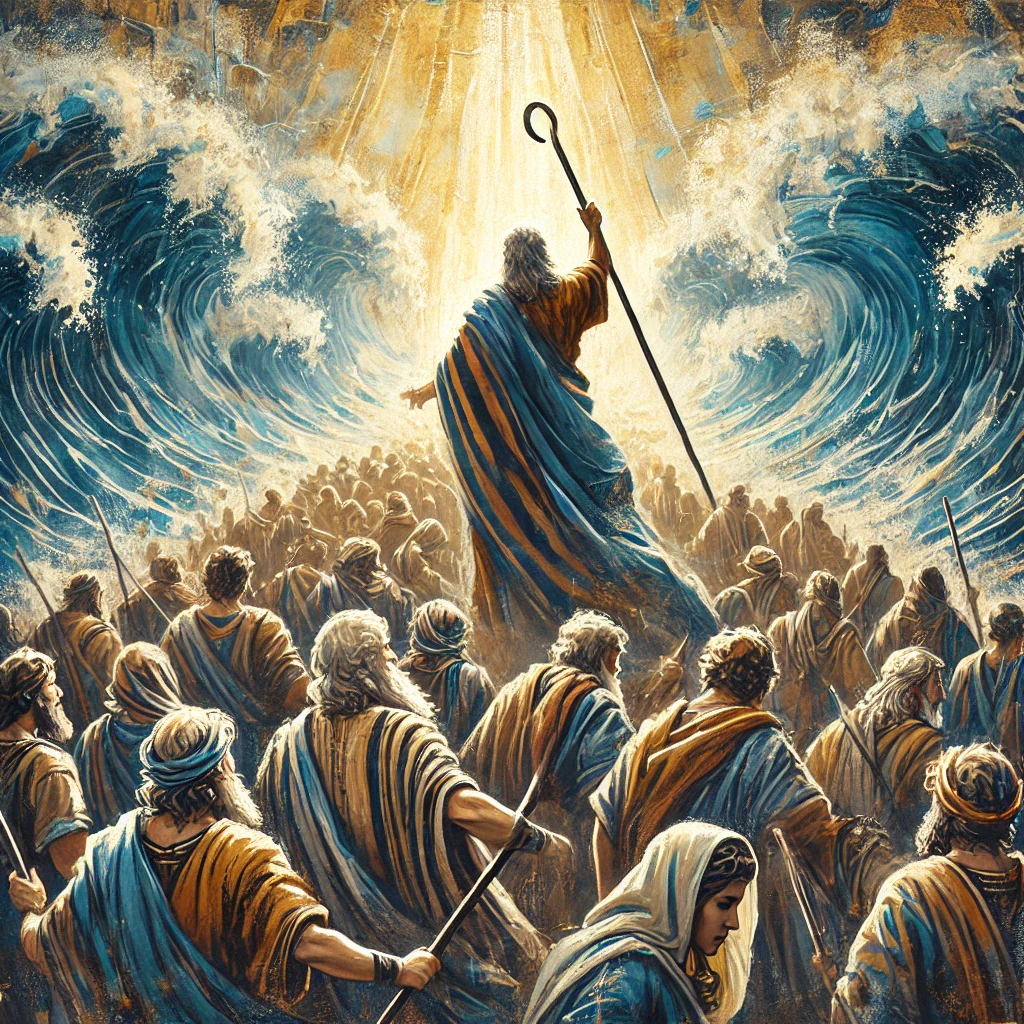
1. Moses – The Reluctant Leader
When we think of Moses, we often picture the strong leader who parted the Red Sea and led the Israelites out of slavery. But Moses didn’t see himself that way. When God called him from the burning bush, Moses’ first reaction was doubt—not just in God’s plan, but in himself.
Moses argued with God, saying, “Who am I that I should go to Pharaoh and bring the Israelites out of Egypt?” (Exodus 3:11). He even pointed out his biggest flaw: “I am slow of speech and tongue” (Exodus 4:10). Whether Moses had a speech impediment or simply struggled with public speaking, he felt unqualified for such a monumental task.
But God didn’t see Moses’ flaws as disqualifying. Instead, He promised to be with Moses every step of the way. “I will help you speak and will teach you what to say” (Exodus 4:12).
Through God’s strength, Moses led millions out of Egypt, performed miracles, and delivered the Ten Commandments. Despite his doubts and imperfections, God used Moses to change history.
Want to explore more about Moses’ journey and how he overcame self-doubt? Check out👉 Moses: From Stuttering Shepherd to Amazing Freedom Fighter.
Key Takeaway:
Moses’ story reminds us that God doesn’t need us to be perfect speakers or fearless leaders—He just needs us to be willing.
2. Peter – The Impulsive Disciple
Peter was one of Jesus’ closest disciples, but he was far from perfect. Impulsive and hot-headed, Peter often spoke or acted without thinking. One moment, he was boldly declaring Jesus as the Son of God, and the next, he was sinking in the water after doubting (Matthew 14:28-31).
His most notable failure came during Jesus’ arrest. Despite promising never to deny Christ, Peter denied knowing Jesus three times (Luke 22:54-62). After realizing his mistake, Peter wept bitterly, filled with shame and regret.
Yet, Jesus didn’t give up on Peter. After His resurrection, Jesus lovingly restored him, asking three times, “Do you love me?” (John 21:15-17), and then commissioning him to lead His church.
Peter went on to become a bold preacher, leading thousands to Christ and becoming a foundational figure in the early church.
Key Takeaway:
Peter’s life shows that even after failure, God offers restoration. He uses those who are willing to get back up and keep following Him.
3. David – The Flawed King

David is often called “a man after God’s own heart” (1 Samuel 13:14), but his life was filled with flaws and failures. As a young shepherd, David showed immense faith by defeating Goliath, but as king, he made devastating mistakes.
David’s most notorious sin was his affair with Bathsheba. After she became pregnant, David orchestrated the death of her husband, Uriah, to cover it up (2 Samuel 11). When confronted by the prophet Nathan, David was filled with remorse and penned the heartfelt Psalm 51, crying out for God’s mercy.
Despite his grave sins, God didn’t discard David. His genuine repentance restored his relationship with God, and through David’s lineage, Jesus—the Messiah—was born (Matthew 1:6).
Key Takeaway:
David’s story is a powerful reminder that no sin is too great for God’s forgiveness. He uses even the deeply flawed when they turn back to Him with a repentant heart.
4. Paul – From Persecutor to Apostle
Paul’s transformation is one of the most remarkable examples of how God can use the unqualified. Before becoming one of the greatest apostles, Paul—then known as Saul of Tarsus—was a fierce persecutor of Christians. He went out of his way to hunt down believers, imprison them, and even approved the stoning of Stephen, the first Christian martyr (Acts 7:58).
But everything changed on the road to Damascus. Saul encountered a blinding light and heard Jesus’ voice: “Saul, Saul, why do you persecute me?” (Acts 9:4). That moment marked the beginning of Paul’s incredible transformation.
After his conversion, Paul became a passionate preacher of the Gospel, traveling extensively to plant churches and spread the message of Christ. Despite his dark past, God used him to write much of the New Testament and impact countless lives.
Key Takeaway:
Paul’s story proves that no one is beyond God’s reach. Even the fiercest enemies of the faith can become its strongest advocates when touched by God’s grace.
5. Rahab – The Courageous Prostitute
Rahab’s life was far from what most would consider “qualified” for God’s work. She was a prostitute living in the city of Jericho, a place set for destruction. Yet, despite her past, Rahab made a bold choice that changed her life—and her legacy—forever.
When two Israelite spies came to scout Jericho, Rahab hid them from the authorities, risking her own life. Her reason? She believed in the power of Israel’s God. She confessed, “The Lord your God is God in heaven above and on the earth below” (Joshua 2:11).
Because of her courage and faith, Rahab and her family were spared when Jericho fell. But her story didn’t end there—Rahab later married into Israel and became part of the lineage of Jesus Christ (Matthew 1:5).
Key Takeaway:
Rahab’s story shows that God values faith over past mistakes. No background is too broken for God to redeem and use for His glory.
6. Jonah – The Runaway Prophet

Jonah is a classic example of someone who ran from God’s calling. When God instructed him to go to the city of Nineveh and preach repentance, Jonah wanted nothing to do with it. Instead of obeying, he boarded a ship heading in the opposite direction, trying to escape God’s command (Jonah 1:3).
Jonah’s disobedience led to a violent storm, and he was thrown overboard, only to be swallowed by a great fish. Inside the fish, Jonah cried out to God in repentance, and after three days, he was spit out onto dry land (Jonah 2:10).
Even after being given a second chance, Jonah’s heart wasn’t fully in it. He begrudgingly preached to Nineveh, and when the people repented, Jonah became angry that God showed them mercy (Jonah 4:1-3). Despite his reluctance and flaws, God still used Jonah to bring an entire city to repentance.
Key Takeaway:
Jonah’s story reminds us that even when we resist God’s calling, His plans will still prevail. God can use us, flaws and all, to accomplish His purposes.
7. Sarah – The Doubtful Matriarch
Sarah, the wife of Abraham, is remembered as the mother of the nation of Israel, but her journey was filled with doubt and impatience. When God promised Abraham that he would become the father of many nations, Sarah found it hard to believe—especially since she was well past childbearing age.
In fact, when Sarah overheard God reaffirming His promise to Abraham, she laughed in disbelief (Genesis 18:12). Her impatience led her to take matters into her own hands, convincing Abraham to have a child with her servant, Hagar (Genesis 16:2), which created tension and conflict.
But despite her doubts and missteps, God remained faithful. Sarah gave birth to Isaac in her old age, fulfilling God’s promise and beginning the lineage through which Jesus would eventually be born.
Key Takeaway:
Sarah’s story teaches us that even when our faith wavers, God’s promises remain steadfast. He works through our doubts to fulfill His perfect plans.
8. Gideon – The Fearful Warrior
Gideon is a perfect example of someone who saw himself as completely unqualified for God’s work. When God called him to save Israel from the oppressive Midianites, Gideon’s response was filled with self-doubt: “But Lord, how can I save Israel? My clan is the weakest in Manasseh, and I am the least in my family” (Judges 6:15).
Despite his fear and insecurity, God assured Gideon, “I will be with you” (Judges 6:16). Yet, Gideon still needed multiple signs from God to believe in his calling, famously asking for the fleece to be wet with dew one night and dry the next (Judges 6:36-40).
Even with all his doubts, God used Gideon in a miraculous way. With only 300 men, Gideon defeated a vast Midianite army, proving that victory comes from the Lord, not human strength (Judges 7:7).
Key Takeaway:
Gideon’s story highlights how God uses the weak and fearful to accomplish great victories, demonstrating that His strength is made perfect in our weakness.
9. The Samaritan Woman – From Outcast to Evangelist
The Samaritan Woman at the well was someone society had written off. She had a complicated past—five husbands and was living with a man who wasn’t her husband (John 4:17-18). Beyond that, as a Samaritan, she was seen as an outsider and avoided by many, even within her own community.
Yet, it was to her that Jesus revealed His identity as the Messiah. During their conversation at the well, Jesus spoke directly to her heart, offering her “living water” (John 4:10) and showing that her past didn’t define her future.
Overwhelmed by this encounter, the woman left her water jar and ran into the town, telling everyone, “Come, see a man who told me everything I ever did. Could this be the Messiah?” (John 4:29). Her testimony was so powerful that many Samaritans came to believe in Jesus because of her (John 4:39).
Key Takeaway:
The Samaritan Woman’s story reminds us that God often chooses the outcasts and broken to become His messengers. No past mistake can disqualify us from being used for His glory.
10. Thomas – The Doubting Disciple
Thomas, one of Jesus’ twelve disciples, is often remembered by his nickname—“Doubting Thomas.” After Jesus’ resurrection, the other disciples told Thomas they had seen the risen Christ, but he refused to believe without physical proof. He boldly declared, “Unless I see the nail marks in his hands and put my finger where the nails were, and put my hand into his side, I will not believe” (John 20:25).
A week later, Jesus appeared again and invited Thomas to touch His wounds. Overwhelmed, Thomas finally believed, exclaiming, “My Lord and my God!” (John 20:28). Rather than condemning Thomas for his doubts, Jesus gently encouraged him to have faith: “Blessed are those who have not seen and yet have believed” (John 20:29).
Despite his moment of doubt, Thomas went on to become a devoted disciple, spreading the Gospel far beyond Israel, with some traditions saying he reached as far as India.
Key Takeaway:
Thomas’ journey shows that doubt doesn’t disqualify us from God’s plan. God meets us in our uncertainties and strengthens our faith.
11. Zacchaeus – The Dishonest Tax Collector
Zacchaeus was a wealthy tax collector in Jericho, and tax collectors were notorious for being corrupt, often overcharging people and pocketing the extra money. Though rich, Zacchaeus was despised and seen as a sinner by society.
Curious about Jesus, Zacchaeus climbed a sycamore tree just to catch a glimpse as Jesus passed by (Luke 19:4). To his surprise, Jesus noticed him and said, “Zacchaeus, come down immediately. I must stay at your house today” (Luke 19:5).
This simple act of kindness transformed Zacchaeus’ heart. He repented on the spot, vowing to give half of his possessions to the poor and repay anyone he had cheated four times the amount (Luke 19:8). Jesus responded, “Today salvation has come to this house” (Luke 19:9).
Key Takeaway:
Zacchaeus’ story highlights how one encounter with Jesus can change everything. No life is too messy or broken for God’s grace to reach and restore.
12. Mary Magdalene – From Brokenness to Devotion
Mary Magdalene’s life is a testament to the transforming power of Jesus. Before following Christ, she was tormented, possessed by seven demons (Luke 8:2), and likely living a life filled with pain and isolation. Yet, Jesus freed her from her affliction, offering her a new beginning.
After her deliverance, Mary became one of Jesus’ most devoted followers. She traveled with Him and the disciples, helping to support His ministry (Luke 8:3). Her faithfulness was evident, especially during Jesus’ crucifixion when most of the disciples had fled. Mary stayed by His side through His suffering and was present at His burial (John 19:25).
In a powerful moment of grace, Mary Magdalene was the first person to witness the resurrected Christ. Jesus appeared to her outside the empty tomb, calling her by name and instructing her to share the news of His resurrection with the disciples (John 20:16-18).
Key Takeaway:
Mary’s story shows that no past pain or brokenness can keep us from being part of God’s plan. She went from a tormented outcast to the first witness of the resurrection—a reminder that God uses the broken to reveal His greatest works.
Lessons from Unqualified People God Used
Looking at these 12 stories, a clear theme emerges: God specializes in using the unqualified, the flawed, and the broken to accomplish His greatest purposes. Here are some key lessons we can learn:
- God Values Availability Over Ability
- Each person on this list had flaws, doubts, or dark pasts, but they made themselves available when God called.
- “The Lord does not look at the things people look at. People look at the outward appearance, but the Lord looks at the heart” (1 Samuel 16:7).
- Weaknesses Are Opportunities for God’s Strength
- God’s power is made perfect in our weakness (2 Corinthians 12:9). He uses our shortcomings to display His glory.
- No One Is Too Far Gone for God to Use
- Whether it’s Paul persecuting Christians, Rahab’s past as a prostitute, or Mary Magdalene’s demonic torment, no sin or brokenness is beyond God’s redemption.
- God Uses Ordinary People to Do Extraordinary Things
- Many of these figures were ordinary, unqualified individuals, but through God’s power, they changed the world.
Final Thought:
These stories are a reminder that if God can use these 12 unqualified people, He can use you too. Your flaws, doubts, and past mistakes don’t disqualify you—they simply make room for God’s grace to shine through.
How God Can Use You Despite Your Flaws
If reading about these 12 unqualified people God used has stirred something in your heart, you might be wondering: “Can God really use someone like me?” The answer is a resounding yes.
God isn’t looking for perfect people—He’s looking for willing hearts. The Bible is filled with examples of ordinary, flawed individuals who did extraordinary things simply because they said yes to God.
1. Your Weakness Is an Opportunity for God’s Strength
You don’t need to have it all together. In fact, God delights in using our weaknesses to reveal His strength. Paul wrote, “My grace is sufficient for you, for my power is made perfect in weakness” (2 Corinthians 12:9). When you bring your insecurities, doubts, and fears to God, He can work through them in powerful ways.
2. God Can Redeem Your Past
No matter what your past looks like, it doesn’t define your future. Just like Rahab’s story reminds us, God specializes in taking broken pasts and turning them into powerful testimonies. Whether it’s a life filled with mistakes or moments of running from God, His grace can cover it all.
3. Start Where You Are
You don’t need a massive platform or a perfect plan to start making an impact. The Samaritan Woman at the well simply ran back to her town and shared what Jesus had done for her. Your story—flaws and all—can inspire and encourage others.
4. Trust God’s Plan Over Your Feelings
It’s easy to feel unqualified or unworthy, but God sees the bigger picture. Moses doubted his abilities, Gideon questioned his worth, and Jonah ran in the opposite direction—but God’s plans still prevailed. Trust that God can work through you, even when you don’t feel ready.
5. Say Yes to God’s Calling
The most powerful thing you can do is simply say yes to God. Whether He’s calling you to serve in your community, encourage someone, or share your story, take that first step. God will provide the strength and wisdom you need along the way.
Reflection Question:
What’s holding you back from stepping into God’s calling for your life?
Encouragement:
Remember, God doesn’t call the perfect—He perfects the called. If He can use Moses, Rahab, Paul, and Mary Magdalene, He can use you too.
God Uses Imperfect People: Here’s How He Can Use You Too
The Bible is filled with stories of unqualified, imperfect people who God used to accomplish His greatest works. From Moses, who doubted his abilities, to Rahab, who carried the weight of her past, and Paul, who once persecuted Christians—each of these individuals had reasons to feel unworthy. Yet, God saw beyond their flaws and called them into His purpose.
The key takeaway? God doesn’t call the qualified—He qualifies the called.
If you’ve ever felt too broken, too weak, or too flawed for God to use, remember these 12 people. Their stories prove that God’s grace is bigger than our insecurities and failures. Your past doesn’t disqualify you; it sets the stage for God’s redeeming power.
God is still calling the unqualified today—and that includes you. All He asks is for a willing heart.
“Now to him who is able to do immeasurably more than all we ask or imagine, according to his power that is at work within us” (Ephesians 3:20).
FAQs: How God Uses Unqualified and Imperfect People
1. Who did God use in the Bible that was unqualified?
God used many unqualified and imperfect people throughout the Bible. Some examples include:
- Moses, who struggled with speech and self-doubt.
- Rahab, a prostitute who helped Israelite spies and became part of Jesus’ lineage.
- Gideon, who was fearful and doubted his own strength.
- Paul, who once persecuted Christians before becoming one of the greatest apostles.
These stories show that God chooses people not for their qualifications but for their willingness to follow His calling.
2. Why does God use imperfect people?
God uses imperfect people to demonstrate His power, grace, and love. When God works through flawed individuals, it highlights His ability to transform lives and accomplish His purposes despite human weaknesses. As Paul wrote, “My grace is sufficient for you, for my power is made perfect in weakness” (2 Corinthians 12:9). God’s strength shines brightest when we recognize our need for Him.
3. How does God use unqualified people today?
Just as in biblical times, God still uses unqualified people today to serve others, share His love, and advance His kingdom. Whether it’s leading a ministry, encouraging a friend, serving in the community, or simply being a light in a dark place, God calls ordinary people to do extraordinary things. The key is being willing and open to His leading, even when we feel inadequate.
4. Can God use me despite my flaws?
Absolutely! The Bible is full of people who doubted, failed, or had complicated pasts—yet God still used them. Your flaws and imperfections don’t disqualify you from God’s plan. In fact, they can become the very areas where His grace shines the brightest. All God asks is for a willing heart and a desire to follow Him.
5. What does the Bible say about God using imperfect people?
The Bible repeatedly emphasizes that God doesn’t look at outward appearances or human qualifications. “The Lord does not look at the things people look at. People look at the outward appearance, but the Lord looks at the heart” (1 Samuel 16:7). Verses like 2 Corinthians 12:9 and Ephesians 2:10 also highlight how God equips and empowers those He calls, regardless of their past or perceived abilities.
Discover More About God Using Ordinary People
If the stories of Moses, Peter, and the other unqualified people God used have inspired you, there’s an incredible resource that dives even deeper into this theme.
In Twelve Ordinary Men by John MacArthur, you’ll explore the personal journeys of Jesus’ twelve disciples—flawed, imperfect men who were called to change the world. These weren’t scholars or religious elites; they were fishermen, tax collectors, and everyday people who doubted, stumbled, and yet were still used by God in powerful ways.
This book is a beautiful reminder that God uses ordinary people to do extraordinary things, no matter their background or flaws. It’s a perfect read if you’ve ever wondered how God can use someone like you.
Twelve Ordinary Men: How God Shaped the Disciples
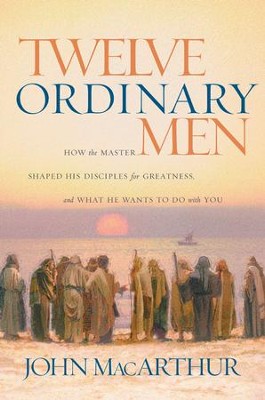
By John MacArthur / Thomas Nelson
Twelve Ordinary Men dives deep into the lives of Jesus’ twelve disciples, revealing how God used ordinary men with flaws and doubts to transform the world. This book highlights their journeys, showing how God equips the unqualified for His work—perfectly complementing the stories you’ve just read.
Buy Now