


Did you know that before he became Israel’s greatest king, David spent years running for his life, hiding in caves? Talk about a career path with twists and turns! In 2024, as we navigate our own complex journeys, David’s story resonates more powerfully than ever. From shepherd boy to giant-slayer, from musician to monarch, David’s life is a wild ride of triumphs, failures, and raw, honest faith that’ll make your head spin. Buckle up, folks – we’re diving into the heart-pounding saga of the man who gave us the Psalms and showed us what it truly means to pursue God’s heart!
From Shepherd to Giant-Slayer: The Unlikely Rise of a Hero
David’s story begins in the most humble of places. As the youngest son of Jesse, he was often overlooked and relegated to tending sheep in the fields. While his older brothers were seen as potential kings, David was the last one anyone would have picked for greatness. But God had other plans. When the prophet Samuel came to anoint Israel’s next king, God reminded him, “The Lord does not look at the things people look at. People look at the outward appearance, but the Lord looks at the heart” (1 Samuel 16:7). It was David’s heart that set him apart.
David’s Humble Beginnings as the Youngest Son of Jesse
Growing up as a shepherd, David learned how to care for his flock, fight off predators, and spend hours in solitude with God. These seemingly insignificant moments prepared him for the greater challenges he would face later. I often think about how God uses our quiet, unnoticed seasons to shape us for the future. David’s time as a shepherd wasn’t wasted—it was foundational for his journey.
The Surprise Anointing by Samuel – God Looks at the Heart!
When Samuel arrived to anoint one of Jesse’s sons as king, David wasn’t even in the lineup. His father didn’t think he was worthy of consideration. But God had chosen David because of his heart, not his outward status. This moment reminds us that God sees beyond our circumstances and capabilities—He looks at our willingness, humility, and faith.
In my own life, there have been times when I felt overlooked or unqualified for what God was calling me to do. But David’s anointing reminds me that it’s not about how others see us—it’s about how God sees us and the heart we bring to His calling.
Facing Goliath – Courage, Faith, and Five Smooth Stones
Perhaps the most iconic moment in David’s early life is his battle with Goliath. Armed with only a sling and five smooth stones, David stepped onto the battlefield with a giant. His courage didn’t come from his own strength, but from his deep trust in God. As he declared to Goliath, “The battle is the Lord’s” (1 Samuel 17:47).
David’s victory wasn’t just about defeating Goliath—it was about showing that faith in God can overcome the most impossible odds. We all face our own “Goliaths” in life, whether it’s fear, doubt, or overwhelming challenges. David’s story teaches us that when we rely on God, we can face even the largest giants with confidence.
Lessons in Using Your Unique Gifts to Face Life’s Giants
David didn’t use Saul’s armor or weapons—he relied on the tools and skills God had given him as a shepherd. This is a powerful reminder that God equips us with exactly what we need to face the challenges in front of us. We don’t need to compare ourselves to others or try to be someone we’re not. Just like David, we can step into battle with confidence, knowing that God has already prepared us for victory.

The Fugitive Years: Forging Faith in the Wilderness
After his victory over Goliath, David’s life took a drastic turn. Instead of rising immediately to the throne, he spent years running for his life from King Saul, who grew jealous of David’s success and popularity. These “fugitive years” were filled with danger, betrayal, and deep loneliness. Yet, it was in these wilderness seasons that David’s faith was forged and strengthened.
David’s Time in Saul’s Court – Favor, Jealousy, and Flying Spears
David’s time in Saul’s court started with favor—he became a trusted warrior and musician, soothing Saul’s troubled spirit with his harp. But as David’s victories grew, so did Saul’s jealousy. Twice, Saul tried to pin David to the wall with his spear (1 Samuel 18:11). David’s time in Saul’s court shows us the tension between being faithful to God’s calling and navigating the hostility that often comes with it.
There have been moments in my life when I’ve faced unexpected opposition, even while doing what I knew God had called me to do. David’s story reminds us that God’s favor doesn’t mean the absence of conflict, but it does mean we can trust Him through it.
On the Run – Navigating Betrayal and Building Unlikely Alliances
David was forced to flee for his life, leaving behind everything he knew. During this time, he navigated betrayal from those he trusted and formed unlikely alliances with people who became his band of misfits. These men, who were discontented and in debt, rallied around David in the wilderness (1 Samuel 22:2). Together, they built a community of faith, despite the odds.
This season of David’s life reminds me that God often brings the right people into our lives during our most difficult seasons. Even when we feel isolated, He provides the support we need through unexpected friendships and alliances.
The Cave of Adullam – Leading a Band of Misfits
One of the most significant moments during David’s fugitive years was his time in the cave of Adullam. It was here that he gathered his group of disheartened men and became their leader. Despite the challenges, David led with integrity and compassion, finding strength in God during the most difficult moments.
Sometimes, we find ourselves in our own “caves”—seasons of hiding, waiting, and wondering what’s next. David’s time in the cave of Adullam teaches us that even in these moments, God is at work, preparing us for the next step in our journey.
Finding Strength in God During Seasons of Hiding and Waiting
David’s wilderness years were marked by uncertainty and fear, but he continually found his strength in God. In Psalm 57, written during this time, David declares, “I will take refuge in the shadow of your wings until the disaster has passed” (Psalm 57:1). His faith didn’t waver in the face of danger—he leaned into God’s protection and promises.
In seasons of waiting and hiding, we can learn from David’s example. When life feels uncertain, and we’re unsure of the next step, God is our refuge. He strengthens us in the wilderness, preparing us for the future He has planned.
The Worshipper King: Bringing the Ark to Jerusalem
One of the defining aspects of David’s legacy is his heart for worship. His passion for God’s presence was unmatched, and nowhere is this more evident than in his determination to bring the Ark of the Covenant to Jerusalem. The Ark represented God’s presence among His people, and David wanted it at the center of Israel’s life.
David’s Passion for God’s Presence – Dancing Before the Lord
David’s exuberance as he danced before the Ark is one of the most famous moments in his kingship. Wearing only a linen ephod, he danced “with all his might” (2 Samuel 6:14), completely unashamed in his worship. This wasn’t about religious ritual—it was about pure, uninhibited joy in the presence of God.
David’s passion challenges us to examine our own worship. Are we willing to worship God with the same abandon, unashamed and fully focused on Him? In a world that values pride and status, David shows us that true worship is about laying down our pride and celebrating God’s presence with everything we have.
The Incident with Uzzah – Balancing Zeal with Reverence
However, David’s journey to bring the Ark to Jerusalem wasn’t without missteps. When Uzzah reached out to steady the Ark and was struck dead, it was a sobering reminder that God’s presence is holy and not to be treated casually (2 Samuel 6:6-7). While David’s zeal for God’s presence was admirable, this moment showed the importance of reverence and obedience in worship.
This story reminds me that while passion for God is essential, it must be accompanied by a deep respect for His holiness. We must balance our zeal with reverence, recognizing that worship is both joyful and sacred.
Michal’s Disdain and David’s Response – Worship Over Pride
Not everyone appreciated David’s display of worship. His wife, Michal, despised him for dancing so freely before the Lord, accusing him of embarrassing himself (2 Samuel 6:20). But David’s response was clear: “I will become even more undignified than this” (2 Samuel 6:22). David wasn’t concerned with how others viewed his worship—he was focused solely on honoring God.
In a world that often pressures us to conform to expectations, David’s response challenges us to prioritize our worship of God over our pride. Worship is about pleasing God, not impressing others. David’s example reminds us to worship freely, without concern for how others might perceive us.
Cultivating a Heart of Authentic, Uninhibited Praise in Our Lives
David’s worship wasn’t just about music or ritual—it was about a heart that longed for God’s presence above all else. His life teaches us the importance of cultivating authentic, uninhibited praise in our own lives. Whether we’re in a corporate worship setting or spending time with God alone, worship should flow from a heart fully devoted to Him.
The Fall and Restoration: Bathsheba, Nathan, and Divine Mercy
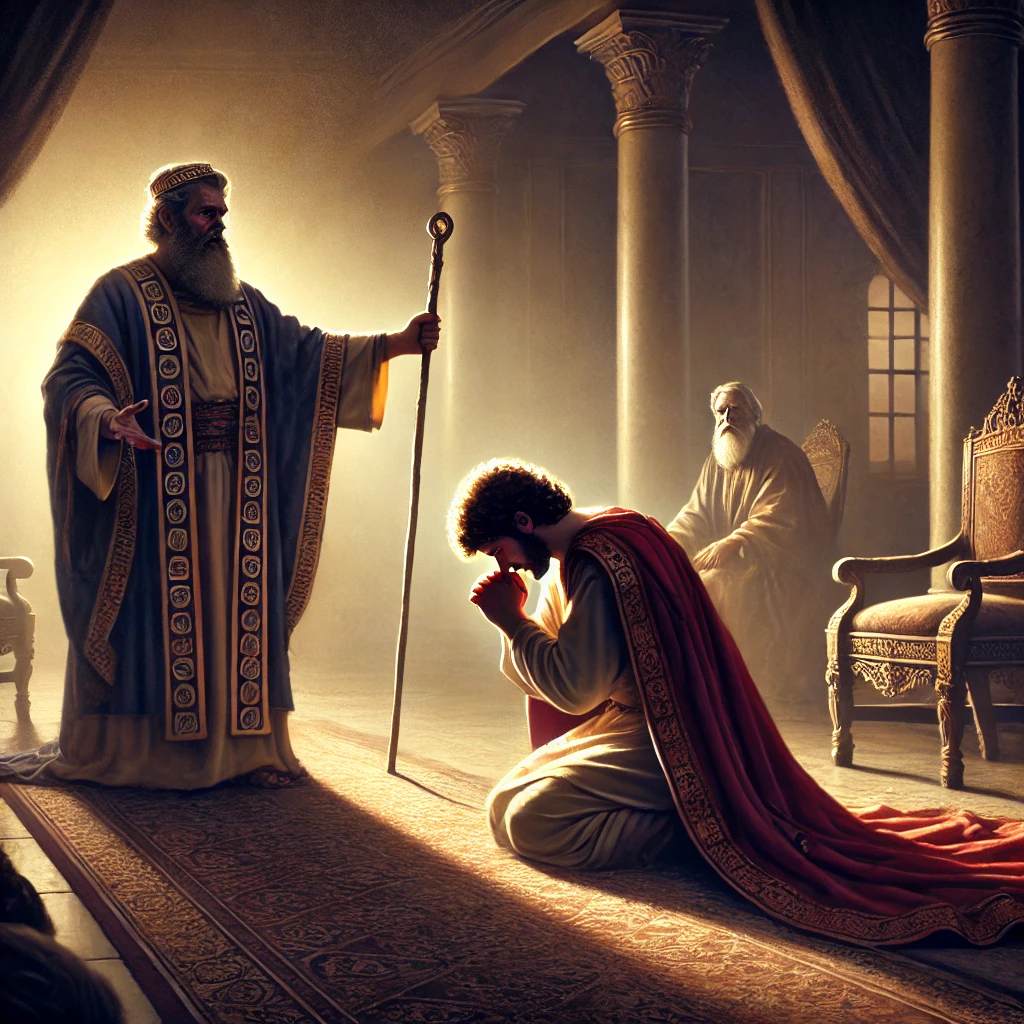
David’s legacy is not only marked by his triumphs and acts of worship but also by his deep failures. The story of David and Bathsheba is one of the most painful chapters in his life—a stark reminder that even a “man after God’s own heart” can fall into sin. Yet, it’s also a story of repentance, divine mercy, and restoration.
The Shocking Sins – Adultery, Deception, and Murder
The affair with Bathsheba started when David saw her bathing and, instead of turning away, pursued her, despite knowing she was the wife of Uriah, one of his loyal soldiers (2 Samuel 11). When Bathsheba became pregnant, David’s attempt to cover up his sin escalated to having Uriah killed in battle. This was a turning point for David, where his choices led him far from the man of integrity he once was.
We’re reminded through this story that no one is immune to sin, and the consequences of unchecked desires can be devastating. Yet, even in his darkest moments, God was not finished with David.
Nathan’s Confrontation – The Power of Speaking Truth to Power
God sent the prophet Nathan to confront David about his sin. Through a parable, Nathan revealed the injustice of David’s actions, leading David to finally confess, “I have sinned against the Lord” (2 Samuel 12:13). Nathan’s boldness in speaking truth to David—despite David’s position of power—shows the importance of accountability and the role of godly voices in our lives.
This story challenges us to examine the ways we respond to correction. Are we willing to listen when God sends people into our lives to call out sin or speak truth to us?
Psalm 51 – A Blueprint for Genuine Repentance
David’s heartfelt repentance is captured in Psalm 51, a beautiful expression of sorrow and a desire for cleansing. David didn’t make excuses for his actions—he laid bare his heart before God, asking for forgiveness and restoration. “Create in me a pure heart, O God, and renew a steadfast spirit within me” (Psalm 51:10).
David’s prayer of repentance offers us a powerful blueprint for how to approach God when we’ve failed. It’s not about minimizing our sins but about coming to God with humility, asking Him to cleanse and renew us. This psalm reminds us that no matter how far we’ve fallen, God’s mercy is always available to those who seek it.
God’s Discipline and Restoration – Learning from Our Failures
Though David was forgiven, his actions had lasting consequences, including turmoil within his family. Yet, even in the midst of discipline, God restored David’s life and legacy. This is a profound reminder that while sin has consequences, God’s grace is greater. He doesn’t abandon us in our failures but uses them to teach us and draw us closer to Him.
David’s story of repentance and restoration shows us that failure doesn’t have to be the end of our story. God’s grace is available to us, offering new beginnings when we turn back to Him in humility.
A Father’s Heartache: Family Turmoil and National Upheaval
David’s later years were marked by deep personal pain and family turmoil. His sins with Bathsheba and his failure to discipline his children had ripple effects that led to tragedy, rebellion, and heartache. Yet, even in the midst of this chaos, David’s love for his children and his reliance on God’s guidance remained.
The Tragedy of Amnon and Tamar – Consequences of Unchecked Sin
One of the most heartbreaking stories in David’s family is the violation of his daughter Tamar by her half-brother Amnon (2 Samuel 13). David’s failure to act decisively in the aftermath of this sin led to even more division within his family. Absalom, Tamar’s brother, sought vengeance by killing Amnon, which further fractured the family.
This story serves as a sobering reminder of the consequences of sin and the importance of addressing injustice swiftly and justly. David’s passivity in this situation had devastating effects, showing us that ignoring difficult issues within our families can lead to greater pain down the line.
Absalom’s Rebellion – Dealing with Family Betrayal
The fallout from Amnon’s death and David’s strained relationship with Absalom eventually led to a full-scale rebellion. Absalom, fueled by anger and resentment, attempted to overthrow his father and take the throne (2 Samuel 15). David was forced to flee Jerusalem, experiencing betrayal from his own son.
The story of Absalom’s rebellion highlights the complexity of family dynamics and the deep pain that can come from betrayal. Yet, it also shows us the importance of remaining steadfast in our trust in God, even when our closest relationships fall apart.
David’s Grief for Absalom – The Complexity of Love and Justice
When Absalom was killed in battle, David’s grief was overwhelming. Despite Absalom’s betrayal, David mourned deeply, crying out, “O my son Absalom! If only I had died instead of you” (2 Samuel 18:33). This moment captures the complexity of love and justice—David’s heart as a father was broken, even though Absalom had rebelled against him.
This story reminds us that love doesn’t always make sense. David’s grief shows us the depth of his heart and the tension between love and justice, something we all experience in our relationships.
Navigating Personal Pain While Leading Others
Despite his personal pain, David continued to lead Israel through a period of national upheaval. His ability to navigate personal and public responsibilities is a testament to his resilience and faith. David’s story teaches us that even when we’re dealing with heartbreak, God can still use us to lead, serve, and make a difference in the lives of others.
The Poet Warrior: David’s Lasting Legacy
David’s legacy as a warrior and poet is unmatched. Not only did he expand Israel’s territory and secure its borders, but he also gave the world the Psalms—a collection of songs and prayers that continue to inspire worship and faith today.
The Psalms – Giving Voice to the Full Spectrum of Human Emotion
David is perhaps best known for his role in writing many of the Psalms. These songs cover the full range of human emotions—joy, sorrow, fear, hope, and everything in between. Through the Psalms, David gave voice to the struggles and triumphs of life, offering believers a way to connect with God in every season.
David’s Psalms have been a source of comfort and strength for generations. They remind us that it’s okay to bring our raw emotions to God, that worship is not about perfection, but about honesty and connection with our Creator.
David’s Military Conquests and Expansion of Israel
In addition to his role as a poet and worshipper, David was a fierce warrior who expanded Israel’s territory and brought peace to the nation. Under his leadership, Israel became a powerful kingdom, and David secured its borders through military conquests and strategic alliances. His legacy as a warrior king laid the foundation for his son Solomon’s reign of peace and prosperity.
David’s life shows us that leadership requires both strength and vulnerability. He wasn’t just a warrior—he was a man who knew how to worship and weep before God. This balance of strength and humility is what made David such an influential leader.
Preparations for the Temple – Vision Beyond One’s Lifetime
Though David wasn’t allowed to build the Temple, he made significant preparations for its construction, gathering materials and organizing resources for his son Solomon to complete the task (1 Chronicles 22:5). David’s vision extended beyond his own lifetime—he understood that God’s plans were bigger than him and that the next generation would carry forward the work he began.
David’s willingness to prepare for a future he wouldn’t see reminds us that true leadership is about investing in the next generation. His legacy challenges us to think beyond our own time and to sow seeds that will bear fruit long after we’re gone.
The Davidic Covenant and Its Messianic Implications
God made a covenant with David, promising that his dynasty would endure forever and that one of his descendants would reign eternally (2 Samuel 7:16). This promise was ultimately fulfilled in Jesus Christ, the Messiah, who came from the line of David.
The Davidic covenant points us to the greater story of redemption, reminding us that God’s plans are always bigger than we can imagine. David’s legacy is not just about his own life—it’s about the promise of a future King who would bring salvation to the world.
Conclusion
Whew! What a rollercoaster, right? David’s life is like a blockbuster movie, packed with action, drama, and plot twists that would make Hollywood jealous. But beyond the epic battles and palace intrigues, it’s David’s heart that truly captivates us. In 2024, as we wrestle with our own giants, hide in our own caves, and face our own failures, David’s story offers us hope and a roadmap. He wasn’t perfect—far from it!—but his relentless pursuit of God, his raw honesty in worship, and his humility in both victory and defeat set him apart.
So, what’s your Goliath? What’s your secret psalm? Where do you need to dance unashamedly or repent deeply? David’s life challenges us to live with passion, to lead with integrity, and to love God with abandon. Remember, it’s not about being flawless; it’s about having a heart that constantly turns back to God. Are you ready to become a person after God’s own heart in your sphere of influence?
The stage is set, the music is playing—it’s time for your David moment!
Facing Your Giants: Lessons from David’s Journey
One of the most memorable moments in David’s life was his incredible victory over Goliath. As a young shepherd, David faced a giant that terrified even the strongest warriors. Armed with nothing but a sling and five smooth stones, David’s courage came not from his own strength but from his unwavering faith in God. His battle with Goliath stands as a timeless reminder that no matter how impossible our challenges seem, with God by our side, we can overcome any giant.
If you want to dive deeper into how David’s faith helped him conquer Goliath, check out this insightful article on David and Goliath: Overcoming Giants. It’s a powerful story that continues to inspire us as we face our own giants today.
Further Exploration: The Legacy of King David
King David’s life offers a wealth of lessons on worship, humility, and faith that continue to inspire believers today. His story demonstrates how a heart aligned with God can overcome great challenges and leave a lasting impact. To delve deeper into the character of this remarkable biblical figure, consider exploring “The Character of David: The Godliness of a Humble Heart” by Natalie Hilton. This insightful article examines David’s humble approach to both victories and failures, highlighting how his unwavering faith shaped his leadership and spiritual journey. By studying David’s example, we can gain valuable insights into cultivating a heart that truly seeks after God’s own heart.