

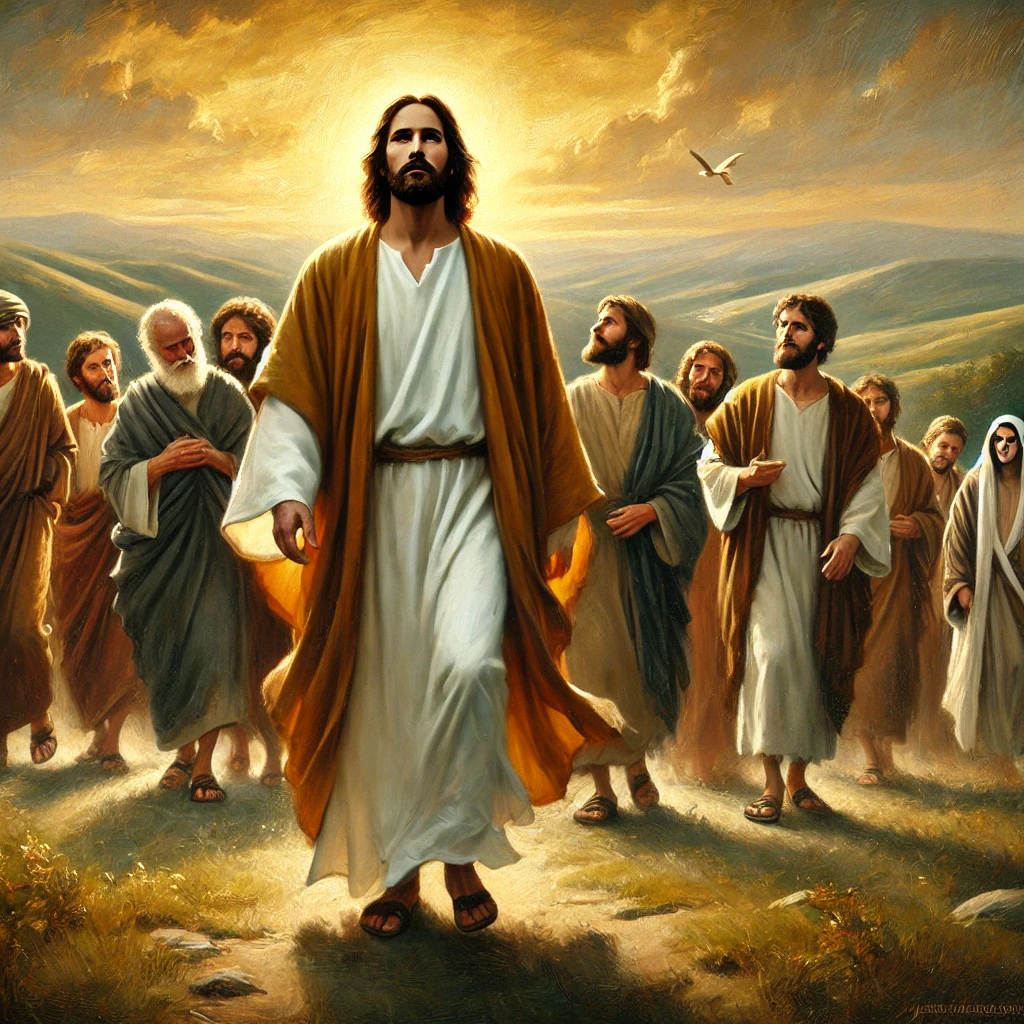
Have you ever wondered what made Jesus’ 12 disciples so unique? These men weren’t spiritual superheroes—they were ordinary people with strengths and weaknesses, just like us.
Some were bold and outspoken, like Peter, while others were quieter, like Andrew. Thomas doubted, James and John argued over who was the greatest, and Judas betrayed. Yet, despite their imperfections, God used each of them to change the world.
In this guide, we’ll explore:
- The strengths that made them effective followers of Jesus
- The weaknesses that revealed their humanity
- The lessons we can apply to our own faith journey
By the end, I hope you’ll see that if Jesus could use these 12 flawed individuals to build His kingdom, He can use you too. 🌱 Looking to explore the complete stories and legacies of the 12 disciples? Check out👉 The Ultimate Guide to the 12 Disciples of Jesus for an in-depth look at their lives, missions, and the impact they had on Christianity.
Why Did Jesus Choose These 12 Disciples?

Jesus didn’t randomly select His disciples. He prayed all night before choosing them (Luke 6:12-16). But why did He pick fishermen, a tax collector, and even a future traitor?
Jesus didn’t call the 12 disciples just to follow Him—He called them to join His ministry.
Through His teaching, healing, and miracles, Jesus trained the disciples for their future mission. To fully understand why Jesus chose these men, it helps to first explore:
👉 What Was Jesus’ Ministry? The Mission That Changed the World
God Uses Ordinary People for Extraordinary Purposes
The disciples weren’t rabbis, scholars, or priests—they were ordinary men with ordinary jobs. But God often chooses the least likely so that His power can be seen through their weaknesses.
Paul later explained this principle when he wrote:
“God chose the foolish things of the world to shame the wise.” (1 Corinthians 1:27)
Jesus Wanted a Diverse Team
The 12 disciples came from different backgrounds:
- Peter, Andrew, James, and John – Fishermen.
- Matthew – A tax collector, hated by his fellow Jews.
- Simon the Zealot – A political activist.
- Judas Iscariot – From Judea, unlike the others from Galilee.
Despite their differences, Jesus united them with a common mission:
“Come, follow me, and I will send you out to fish for people.” (Matthew 4:19)
Their Strengths and Weaknesses Were Part of God’s Plan
Jesus didn’t expect perfection from His disciples. He knew their flaws and still called them. Peter was impulsive, Thomas doubted, and James was hot-tempered, but Jesus saw their potential.
The same is true for us. God can use our strengths and weaknesses for His glory when we follow Him in faith.
The Strengths and Weaknesses of Jesus’ 12 Disciples

When I think about the 12 disciples, I’m reminded that they weren’t perfect, but they were chosen. Jesus didn’t select them because of their abilities—He chose them because of their availability and willingness to follow Him.
Let’s take a closer look at each disciple, their strengths, weaknesses, and the lessons we can learn from their lives.
Peter – The Bold Leader with a Wavering Heart
Peter, also known as Simon Peter, was the most outspoken of the disciples. He was passionate, courageous, and often the first to act or speak. Yet, his impulsiveness and fear sometimes got the better of him.
🛠️ Strengths:
- Bold and willing to step out in faith (Matthew 14:28-29).
- Passionate in his love for Jesus (John 21:15-17).
- Natural leader among the disciples (Acts 2:14).
⚠️ Weaknesses:
- Impulsive and spoke without thinking (Mark 8:32-33).
- Fearful—denied Jesus three times during the crucifixion (Luke 22:54-62).
- Struggled with pride and self-reliance (John 13:6-9).
✨ Lesson: God can use us even when we fail.
Peter’s story reminds me that God’s grace is bigger than our mistakes. Even after denying Jesus, Peter was restored and became a pillar of the early church.
James (Son of Zebedee) – The Zealous, Fiery Disciple
James, the brother of John, was one of the “Sons of Thunder”—a nickname given by Jesus because of his fiery temperament (Mark 3:17). He was part of Jesus’ inner circle and was the first disciple to be martyred (Acts 12:1-2).
🛠️ Strengths:
- Zealous and passionate about his faith.
- Committed and willing to suffer for the Gospel.
- Privileged to witness major events like the Transfiguration (Mark 9:2-3).
⚠️ Weaknesses:
- Quick-tempered—wanted to call down fire on a Samaritan village (Luke 9:54).
- Ambitious—asked to sit at Jesus’ right hand (Mark 10:35-37).
✨ Lesson: Passion needs to be paired with humility.
James’ life teaches us that zeal for God is good, but it must be balanced with grace and patience.
John – The Apostle of Love Who Struggled with Pride
John, James’ brother, is often called the disciple whom Jesus loved. His writings emphasize God’s love, but early on, he struggled with pride and ambition.
🛠️ Strengths:
- Deeply compassionate—his Gospel and letters are filled with love and truth.
- Faithful—he was the only disciple who stayed at the cross (John 19:26-27).
- Spiritual insight—wrote Revelation, detailing God’s eternal plan.
⚠️ Weaknesses:
- Prideful—wanted positions of honor next to Jesus (Mark 10:35-37).
- Intolerant at times—wanted to stop others from casting out demons (Mark 9:38).
✨ Lesson: God can transform pride into love.
John’s journey shows us that spending time with Jesus transforms our hearts. He went from prideful ambition to selfless love.
Andrew – The Quiet Evangelist
Andrew was Peter’s brother and the one who brought Peter to Jesus (John 1:40-42). He was faithful, humble, and often worked behind the scenes.
🛠️ Strengths:
- Evangelistic heart—he consistently brought others to Jesus (John 6:8-9).
- Humble spirit—didn’t seek personal recognition.
- Faithful follower—he remained committed to sharing the Gospel.
⚠️ Weaknesses:
- Stayed in the background, which sometimes limited his leadership impact.
- Possibly hesitant to step out boldly, unlike Peter.
✨ Lesson: Quiet faithfulness matters.
Andrew teaches us that God values quiet, faithful service just as much as visible leadership.
Philip – The Analytical Thinker with a Limited Vision
Philip had a practical, logical mind. When Jesus asked him how to feed the 5,000, Philip immediately calculated the cost (John 6:5-7). While his practical nature was helpful, it sometimes limited his faith.
🛠️ Strengths:
- Logical and methodical—he asked clarifying questions (John 14:8).
- Eager to share Jesus—introduced Nathanael to Jesus (John 1:45).
- Practical and resourceful—aware of logistical challenges.
⚠️ Weaknesses:
- Relied too heavily on logic—struggled to trust in God’s supernatural power.
- Slow to grasp Jesus’ divine identity (John 14:9).
✨ Lesson: Faith often requires us to go beyond what we can calculate or understand.
Philip reminds me that God’s power is limitless, even when our human minds can’t comprehend it.
Bartholomew (Nathanael) – The Honest Skeptic Turned Believer
Bartholomew is also known as Nathanael. When Philip told him about Jesus, he was skeptical (“Can anything good come from Nazareth?”—John 1:46). Yet, his honesty and openness led him to believe.
🛠️ Strengths:
- Honest and sincere—Jesus called him a man without deceit (John 1:47).
- Faithful and loyal—believed when he encountered Jesus.
- Curious and willing to seek the truth.
⚠️ Weaknesses:
- Prejudiced at first—dismissed Jesus based on His hometown.
- Skeptical attitude—needed personal evidence to believe.
✨ Lesson: An honest heart, even when skeptical, can find the truth.
I love Nathanael’s story because it shows that God meets us where we are, even when we have questions and doubts.
Matthew – The Tax Collector Turned Gospel Writer
Matthew, also called Levi, had a lucrative but despised profession as a tax collector. Despite his sinful past, Jesus called him, and Matthew responded immediately (Matthew 9:9). He later wrote the Gospel of Matthew, presenting Jesus as the Messiah.
🛠️ Strengths:
- Detail-oriented—his Gospel is structured, clear, and full of references to Old Testament prophecy.
- Hospitable—he hosted a banquet for Jesus and invited fellow tax collectors (Luke 5:29).
- Obedient—left his career immediately to follow Jesus.
⚠️ Weaknesses:
- Materialistic past—worked as a Roman tax collector, a profession associated with greed and corruption.
- Social isolation—despised by his community due to his profession.
✨ Lesson: No one is beyond God’s grace.
Matthew’s story gives me hope that God can redeem anyone, regardless of their past.
Thomas – The Doubting Disciple with Courageous Faith
Thomas is often remembered as “Doubting Thomas” because he questioned Jesus’ resurrection (John 20:24-29). But Thomas was also brave and loyal—he was willing to die for Jesus (John 11:16).
🛠️ Strengths:
- Courageous loyalty—encouraged the disciples to go with Jesus to Jerusalem, even if it meant death.
- Intellectual curiosity—asked honest questions to understand Jesus’ teachings (John 14:5).
- Strong faith after doubt—when Jesus appeared to him, Thomas made the powerful confession: “My Lord and my God!” (John 20:28).
⚠️ Weaknesses:
- Skepticism and doubt—needed physical proof of the resurrection.
- Fearful when left without clear answers.
✨ Lesson: God meets us in our doubts.
I appreciate Thomas’ honesty—he didn’t pretend to understand. When we seek truth sincerely, Jesus reveals Himself.
James (Son of Alphaeus) – The Quiet but Faithful Disciple
James, also known as James the Less, was one of the more mysterious disciples. Scripture doesn’t record much about his words or actions, but his presence matters—he was faithful to Jesus’ call despite the lack of recognition.
🛠️ Strengths:
- Steady and reliable—he followed Jesus without seeking attention.
- Faithful to the end—remained a disciple despite the dangers.
- Humble and consistent—focused on the mission, not recognition.
⚠️ Weaknesses:
- Low visibility—his role is more obscure than the other disciples.
- No recorded acts of leadership—he was likely a behind-the-scenes contributor.
✨ Lesson: Faithfulness matters more than fame.
James reminds me that not everyone is called to lead from the front. God values obedient hearts just as much as visible leadership.
Thaddaeus (Jude) – The Curious and Compassionate Disciple
Thaddaeus, also called Jude or Lebbaeus, was known for his compassionate heart and curious spirit. In John 14:22, he asked Jesus why He would reveal Himself to the disciples but not to the world—showing both curiosity and concern for others.
🛠️ Strengths:
- Spiritually inquisitive—he wasn’t afraid to ask tough questions.
- Devoted and faithful—he followed Jesus until the end.
- Compassionate—his question in John 14 reflects his care for the world’s salvation.
⚠️ Weaknesses:
- Limited scriptural mentions—not much is known about his personality.
- Possibly hesitant to act without clarity—his question suggests he sought understanding before action.
✨ Lesson: Asking questions is part of growing in faith.
Thaddaeus teaches me that curiosity is not a sign of weak faith—it’s a path to deeper understanding.
Simon the Zealot – The Passionate Revolutionary
Simon was a Zealot, part of a Jewish political movement that opposed Roman rule. His zeal for God’s kingdom was fiery, yet Jesus transformed that passion into spiritual purpose.
🛠️ Strengths:
- Passionate about his beliefs—fully committed to his faith.
- Loyal to Jesus—left his political ambitions to follow Christ.
- Brave and steadfast—willing to risk his life for the Gospel.
⚠️ Weaknesses:
- Radical political views—could have struggled to let go of earthly ambitions.
- Potentially hot-tempered—like James and John, zeal can turn to judgment if unchecked.
✨ Lesson: God can redirect our passions for His glory.
Simon’s story reminds me that our deepest passions are useful—if we surrender them to God.
Judas Iscariot – The Betrayer with Misplaced Priorities

Judas Iscariot is infamous for betraying Jesus for thirty pieces of silver. But before his betrayal, he was trusted enough to be the group’s treasurer. His story is tragic because he witnessed Jesus’ miracles yet allowed greed and disillusionment to harden his heart.
🛠️ Strengths:
- Financially savvy—entrusted with the disciples’ money bag (John 12:6).
- Active participant in Jesus’ ministry—he was present for the miracles, teachings, and private moments.
- Position of trust—the other disciples didn’t suspect his betrayal.
⚠️ Weaknesses:
- Greedy and dishonest—he stole from the group’s funds (John 12:6).
- Selfish ambitions—wanted a political messiah, not a spiritual Savior.
- Unrepentant—regretted his actions but didn’t seek forgiveness.
👉 Discover the shocking reasons why Judas betrayed Jesus.
✨ Lesson: A hardened heart can miss the greatest opportunity of all.
Judas’ story reminds me that spiritual privilege doesn’t guarantee a transformed heart. Faith requires surrender, not just proximity to Jesus.
Frequently Asked Questions about Jesus 12 Disciples
Who Were the 12 Disciples of Jesus?
The 12 disciples were ordinary men chosen by Jesus to spread the Gospel and build His Church. Their names are:
- Peter, James (son of Zebedee), John, Andrew, Philip, Bartholomew (Nathanael), Matthew, Thomas, James (son of Alphaeus), Thaddaeus (Jude), Simon the Zealot, and Judas Iscariot.
What Were the Strengths of the 12 Disciples?
- Peter: Bold leader with strong faith.
- James (Zebedee): Zealous and passionate.
- John: Deeply compassionate and spiritually insightful.
- Andrew: Humble and evangelistic.
- Philip: Analytical and thoughtful.
- Bartholomew: Honest and open-minded.
- Matthew: Detail-oriented and obedient.
- Thomas: Courageous and curious.
- James (Alphaeus): Quiet and consistent.
- Thaddaeus: Compassionate and inquisitive.
- Simon: Passionate about God’s kingdom.
- Judas: Initially trusted but later fell to greed.
What Were the Weaknesses of the 12 Disciples?
- Peter: Impulsive and fearful.
- James (Zebedee): Quick-tempered and proud.
- John: Ambitious and prideful.
- Andrew: Hesitant to step into leadership.
- Philip: Focused on logic over faith.
- Bartholomew: Prejudiced initially.
- Matthew: Materialistic past.
- Thomas: Skeptical and doubtful.
- James (Alphaeus): Low visibility.
- Thaddaeus: Hesitant without clear understanding.
- Simon: Politically driven past.
- Judas: Greedy, deceptive, and disloyal.
Why Did Jesus Choose Such Imperfect People?
Jesus chose ordinary, flawed individuals to show that God’s power works through human weakness. It reminds us that our shortcomings don’t disqualify us—they become opportunities for God’s grace to shine.
How Did the 12 Disciples Die?
Most of the disciples were martyred for their faith, except for John, who died of old age after exile on Patmos.
👉 Discover what happened to the 12 disciples after Jesus’ resurrection.
Why Did Judas Betray Jesus?
Judas betrayed Jesus for 30 pieces of silver (Matthew 26:14-16), driven by greed, disappointment, and Satanic influence. He later regretted his actions but didn’t repent.
👉 Uncover the full story of Judas’ betrayal and what it means for us today.
Want to Dive Deeper into the 12 Disciples?
Learning about the strengths and weaknesses of Jesus’ 12 disciples can help us see how God uses ordinary people to do extraordinary things. If you’re looking to dive deeper into their stories, I highly recommend this book:
Twelve Ordinary Men: How God Shaped the Disciples
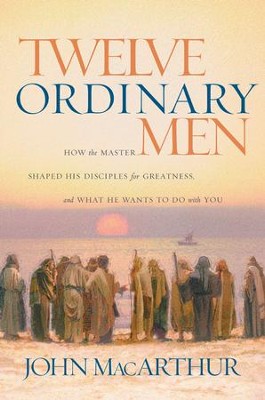
By John MacArthur / Thomas Nelson
In Twelve Ordinary Men, John MacArthur dives into the **personal stories of Jesus’ 12 disciples**, exploring their **strengths, weaknesses, and transformations**. Discover how Jesus chose **ordinary people with struggles just like ours**—and turned them into world-changing leaders.
Buy NowWhether you’re new to Bible study or have been following Jesus for years, this book provides powerful insights into the lives of the men Jesus personally trained.
Conclusion: What the 12 Disciples Teach Us Today
The 12 disciples weren’t perfect, but Jesus chose them anyway. Each one had strengths and weaknesses, yet through faith, perseverance, and the Holy Spirit, they transformed the world.
This reminds me of something powerful: God isn’t looking for perfect people—He’s looking for willing hearts.
Like Peter, we may stumble. Like Thomas, we may doubt. Like James and John, we may struggle with pride. But just as Jesus trained, forgave, and empowered His disciples, He does the same for us today.
If God could take a group of fishermen, tax collectors, and skeptics and turn them into bold preachers of the Gospel, imagine what He can do in your life.
🔹 Do you see yourself in any of the disciples?
🔹 Which of their strengths inspire you?
🔹 What weaknesses do you relate to the most?
I’d love to hear your thoughts—feel free to share in the comments! 💬
👉 Want to learn more about Jesus’ disciples? Discover what happened to them after the resurrection.
Final Encouragement:
No matter where you are in your faith journey, Jesus is still calling people to follow Him today—just as He did 2,000 years ago.
The question is: Will you answer His call?
🙏 Let’s walk this journey together.

