


Hi friend,
Have you ever walked through the deep ache of being betrayed, falsely accused, or mistreated by the very people—family members, close friends, or trusted coworkers—who were supposed to have your back?
When someone else’s jealousy or dishonesty derails your plans and lands you in an unfair, restricted season of life, the natural reaction is to replay the offense over and over in your mind. Without realizing it, our hearts can become more imprisoned by bitterness than by the outward circumstances themselves.
Across thirteen chapters of the Book of Genesis (Genesis 37–50), God gives us the ultimate biblical masterclass on surviving injustice without losing your tenderness of heart: the story of Joseph in Egypt. Sold into slavery at seventeen by his own brothers, framed for a crime he refused to commit in Potiphar’s house, and forgotten in a royal dungeon for two extra years after helping Pharaoh’s cupbearer, Joseph walked through thirteen grueling years of testing before stepping into the palace (read our companion timeline on From Pit to Palace: How Joseph’s Faith Transformed His Life).
📖 Key Biblical Passages on Joseph’s Endurance & Forgiveness
- Genesis 37:18–28: Stripped of his robe and thrown into a dry cistern at Dothan, 17-year-old Joseph is sold by his jealous brothers to merchants bound for Egypt.
- Genesis 39:1–23: Both as a household servant and as a falsely accused prisoner, Joseph honors God in secret, and Scripture repeats the refrain: “The Lord was with Joseph”.
- Genesis 41:14–52: Elevated at age 30 to govern Egypt, Joseph names his sons Manasseh and Ephraim in gratitude for God’s healing.
- Genesis 45:4–8 & 50:19–21: Joseph weeps over his repentant brothers, feeds their families, and declares that what they intended for harm, God intended for good.
4 Transformative Lessons from Joseph on Betrayal & Prison Seasons
1. “The Lord Was With Joseph”: God’s Presence Doesn’t Depend on Your Address
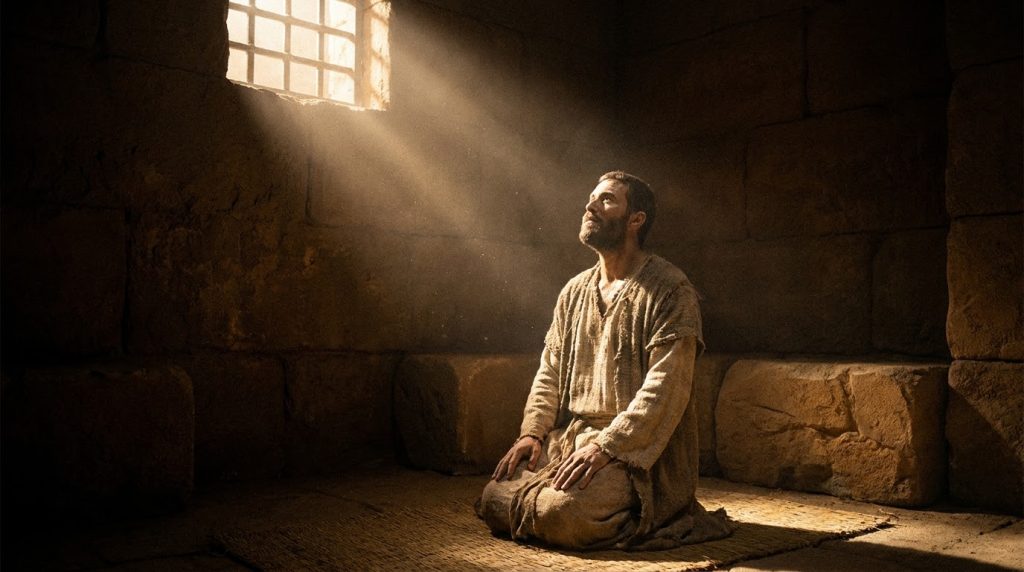
Have you ever noticed when the Bible first explicitly states that the Lord was with Joseph? Not when he was sitting comfortably in Canaan wearing his father Jacob’s ornate coat of favor! Instead, four separate times in Genesis 39:2, 3, 21, and 23—while Joseph is working as a bought servant in Potiphar’s house and while he is locked in chains in the king’s prison—Scripture emphasizes that the Lord was right there with him and showed him steadfast love.
Never measure God’s love for you by the comfort of your immediate surroundings. You can be walking through the hardest, most misunderstood “dungeon season” of your life and still be right in the center of God’s abiding presence.
2. Integrity in the Shadows: Honoring God When No One Else Sees
Far away from his family’s oversight in a foreign land, Joseph could have easily rationalized giving in to bitterness or moral compromise. Yet when Potiphar’s wife pressured him day after day in Genesis 39:7–12, Joseph refused to betray his master’s trust—asking how he could ever do such wickedness and sin against God.
Even more remarkably, when doing the right thing landed him in prison on false charges, Joseph didn’t sulk in the corner. In Genesis 40:6–7, when he noticed two fellow prisoners looking dejected one morning, Joseph paused to ask why their faces were downcast and how he could serve them! Wearing the Armor of God in our daily walk means keeping our hearts tender and faithful in the hidden places before anyone ever applauds in public.
3. Until the Word Came to Pass, the Word of the Lord Tested Him
In Psalm 105:19, the psalmist gives us a behind-the-scenes window into why Joseph’s journey took thirteen years from age seventeen to age thirty (Genesis 41:46): until the time that his word came to pass, the word of the Lord refined and tested him.
In Hebrew, the verb for “tested” (tsaraph) is a goldsmith’s term meaning to smelt precious metal in a furnace until all the dross rises to the surface and is skimmed away. As a teenager, Joseph had genuine God-given dreams, yet he still needed the humility, compassion, and administrative wisdom required to steward an empire without pride. What feels like a painful delay in your calling is often the exact refining fire God is using to prepare your character for what lies ahead.
4. Genesis 50:20: Trading the Heavy Chains of Revenge for Sovereign Grace
The ultimate test of a healed heart isn’t how we act when we are powerless in the pit—it is how we treat the people who hurt us once God puts power back into our hands. After Jacob died in Genesis 50:15–21, Joseph’s brothers trembled in terror, assuming that with their father gone, Egypt’s second-in-command would finally pay them back for selling him twenty years earlier.
Instead, Joseph wept, reassured them, promised to provide for their little ones, and spoke the anchor truth of Genesis 50:20: while they had intended harm against him, God had woven their very actions into a master plan for good to preserve many lives.
As we explore in our guides on harnessing the healing power of forgiveness and why we should forgive according to the teachings of Jesus, biblical forgiveness never pretends that betrayal was harmless. Rather, it releases the offender into God’s hands—trusting that no human scheme can ever overrule God’s redemptive purpose for your life.
🌿 A Quiet-Time Reflection & Breath Prayer for Today
If a past betrayal or an unfair season still stings when it crosses your mind, invite the Lord to bring “Ephraim” fruitfulness out of the land of your suffering today:
- Inhale slowly: “Lord, You are with me in every valley and waiting room…”
- Exhale in freedom: “…I release bitterness and trust You to turn every trial for good.”
Process your prayers and reflections on God’s faithfulness inside our 30-Day Christian Prayer Journals or our Walking in Grace 52-Week Devotional.
Read Next: From Pit to Palace — Joseph’s Complete Timeline →Frequently Asked Questions About Joseph in Egypt
What do the names of Joseph’s two sons—Manasseh and Ephraim—mean?
In Genesis 41:51–52, Joseph named his firstborn Manasseh (saying God had enabled him to let go of the sting of his trouble and his father’s house) and his second son Ephraim (declaring that God had made him fruitful in the very land of his affliction)—showing that healing comes when we release the past and embrace God’s fruitfulness in the present.
How does Joseph’s life foreshadow Jesus Christ?
Although Joseph is never explicitly called a “type” in the New Testament, Christian commentators have long noted dozens of striking parallels: both were beloved sons of their fathers, rejected by their own brothers, sold for pieces of silver, falsely accused, numbered alongside two prisoners (one restored, one condemned), and ultimately exalted to the right hand of the throne to save both their brethren and the Gentile world from death.
How has Genesis 50:20 comforted your heart during an unfair or painful chapter of life? Share your story in the comments below!

