Hi friend,
Have you ever walked through a heartbreaking loss or an unexpected trial that left you wrestling with honest spiritual questions—yet felt afraid to voice those questions out loud lest other believers think your faith was weak?
For nearly two thousand years, the Apostle Thomas (also called Didymus, meaning “the twin”) has been remembered primarily by a single nickname: “Doubting Thomas.” Yet when we examine every scene where Thomas speaks in the Gospel of John, we discover a man who was never a cold-hearted cynic. Instead, Thomas was a deeply loyal, fiercely devoted disciple whose heart was so crushed by watching Jesus die on the cross that he was terrified to let himself hope again unless he knew for certain it was true.
Highlighted in both our pillar guide on the 12 Unqualified People God Used in the Bible and our comprehensive breakdown of the 12 Disciples’ Strengths and Weaknesses, Thomas shows us how gently the risen Jesus meets sincere hearts in the middle of their questions.
📖 Key Biblical Moments in the Life of Thomas
- John 11:16: When returning to Judea meant certain danger of stoning, Thomas rallies his fellow disciples to go with Jesus even if it costs them their lives.
- John 14:5–6: In the Upper Room, Thomas asks the honest question that prompts Jesus to reveal Himself as the Way, the Truth, and the Life.
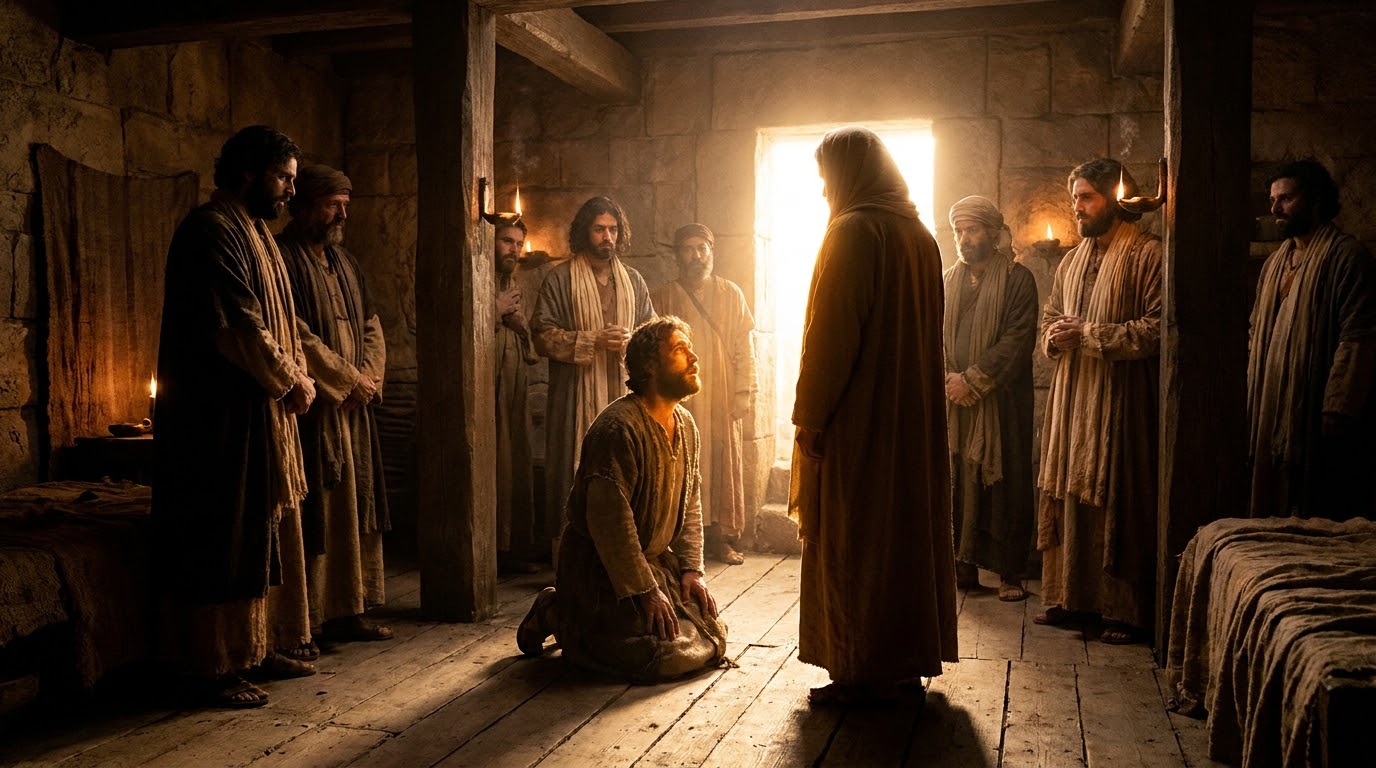
- John 20:24–29: Eight days after the Resurrection, Jesus appears in the locked room, invites Thomas to examine His hands and side, and receives Thomas’s worshipful confession of faith.
The Strengths and Honest Struggles of the Apostle Thomas
To understand why Thomas reacted the way he did after Easter Sunday, we first have to look at the remarkable strengths—and tender vulnerabilities—that shaped his personality:
- Courageous Loyalty Unto Death (John 11:16): When Jesus announced He was heading back toward Bethany near Jerusalem—where hostile authorities had recently tried to stone Him—the other disciples hesitated. It was Thomas who spoke up with raw courage, urging the twelve to walk right into the danger zone so they could stay by their Master’s side even unto death.
- Intellectual Honesty in Prayer (John 14:5): At the Last Supper, when Jesus spoke about going to prepare a place in the Father’s house, the other disciples nodded quietly even though they were confused. Thomas loved Jesus too much to pretend he understood—so he raised his hand and asked plainly how they could know the way.
- Withdrawing in Grief (John 20:24): When Jesus was crucified, Thomas’s realistic, loyal heart shattered. Instead of gathering with the other disciples on that first Sunday evening, Thomas pulled away in solitary grief—and because he isolated himself from fellowship, he missed Jesus’s first appearance!
4 Transformative Faith Lessons from the Story of Thomas
1. Jesus Welcomes Our Honest Questions
Think about what we would be missing in our Bibles today if Thomas had been too embarrassed to ask his question in John 14:5! Because Thomas admitted openly that he didn’t know where Jesus was going or how to find the path, Jesus gave the church one of the most treasured verses in all of Scripture (John 14:6)—explaining that the path to the Father isn’t a map of rules, but a living Person.
Never be afraid to bring your honest confusion or hard questions to God in prayer. Pretending we have everything figured out creates distance, while honest questions invite deeper intimacy with Christ.
2. Isolating Ourselves During Grief Makes Doubt Feel Heavier
Notice the subtle warning tucked inside John 20:19–24. On Easter evening, when the risen Lord stood among the grieving disciples, breathed peace over them, and showed them His hands and side, Thomas wasn’t there. For an entire week afterward, while Peter, John, and Mary Magdalene rejoiced, Thomas remained stuck in Friday’s sorrow because he had separated himself from the room where believers gathered.
When our hearts are hurting, our first instinct is often to pull back from Christian community and suffer alone. Yet staying connected to loving believers is often the exact place where Jesus meets us with fresh peace.
3. The Scars of Jesus Are the Ultimate Proof of His Love
When the other disciples told Thomas they had seen the Lord, Thomas declared that unless he saw the nail prints in His hands and placed his hand into His wounded side, he could not bring himself to believe (John 20:25). Eight days later, when the doors were locked again and Thomas was present, Jesus stood in their midst and turned straight toward him.
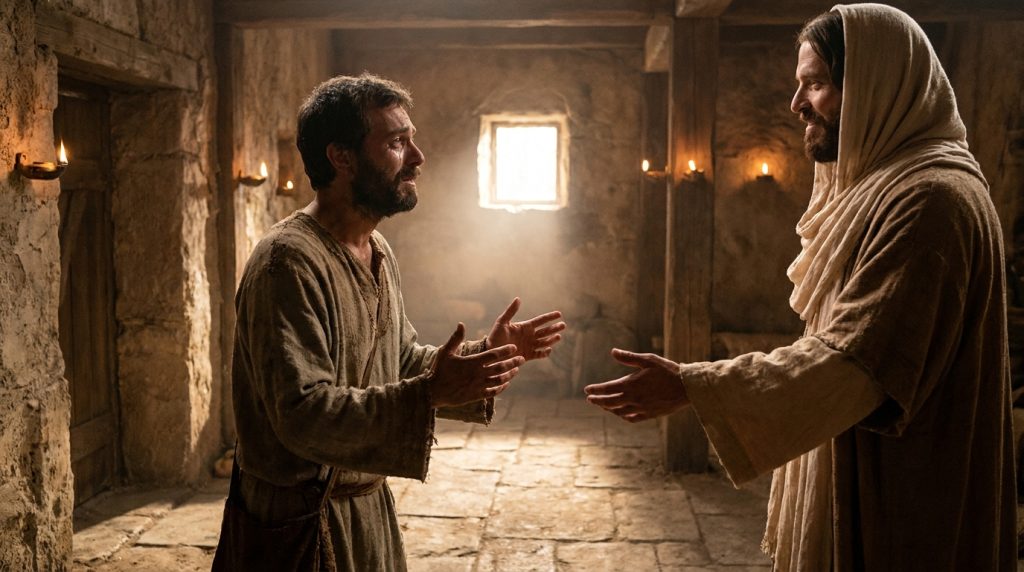
Jesus knew every word Thomas had spoken the week before—yet instead of shaming him, Jesus held out His scarred hands and invited Thomas to come close (John 20:27). Notice how extraordinary it is that Jesus kept His crucifixion scars even in His glorified resurrection body! Those scars are the eternal proof that God knows our pain and paid the ultimate price to redeem us.
4. Wrestle-Through Faith Often Becomes the Strongest Faith of All
The moment Thomas beheld the wounded, risen Savior standing in front of him, he didn’t even need to reach out his finger. Falling in awe, the man who had struggled hardest to believe uttered the highest, clearest declaration of Christ’s deity in the entire four Gospels—proclaiming Jesus directly as both his personal Lord and his Almighty God (John 20:28).
From that day forward, Thomas never looked back. According to ancient Christian historical records, this once-hesitant disciple traveled further east than any of the twelve apostles—carrying the Gospel across Parthia all the way to the Malabar Coast of southern India, where he established vibrant churches that still bear his name today.
🌿 A Quiet-Time Reflection & Breath Prayer for Today
In John 20:29, Jesus spoke a special blessing over every believer down through history—including you and me—who would trust in Him without physically seeing Him with earthly eyes:
- Inhale slowly: “Risen Jesus, You meet me gently in every honest question…”
- Exhale in worship: “…You are my Lord and my God, and I trust in You.”
Pour out your honest prayers and questions before the Lord inside our 30-Day Christian Prayer Journals or grow in your walk week-by-week with our Walking in Grace 52-Week Devotional.
Explore Next: 12 Unqualified People God Used in the Bible →Frequently Asked Questions About the Apostle Thomas
What does “Didymus” mean in the Bible?
In John 11:16, 20:24, and 21:2, John notes that Thomas was called Didymus. Both names mean “the twin”—Thomas comes from the Aramaic word for twin (Te’oma), while Didymus is its Greek equivalent for Greek-speaking readers.
Did Thomas actually touch Jesus’s wounds in John 20?
While Jesus graciously invited Thomas to touch His hands and side in John 20:27, the text suggests that simply seeing the risen Lord and hearing His voice was enough for Thomas to immediately confess his faith, as Jesus replies in verse 29 that Thomas believed because he had seen Him.
Has an honest season of questioning ever led you into a deeper, more personal walk with Jesus? Share your story in the comments below!