Hi friend,
Whenever headlines from the Middle East fill the evening news, many Christian women find themselves asking sincere biblical questions: How do God’s ancient promises to Abraham connect to the New Testament Church today? And what does the Bible actually teach about Israel’s role in God’s redemptive timeline?
Because discussions around Middle Eastern prophecy can sometimes sound either overly political or theologically confusing, the Apostle Paul devoted three entire chapters right in the heart of his greatest letter—Romans chapters 9, 10, and 11—to answering this exact question with humility, clarity, and grace.
As part of our study series on Revelation and End-Times Prophecy, let’s walk through four foundational scriptures that show why God’s unwavering covenant faithfulness is the ultimate anchor for every believer’s peace today.
📖 Quick Biblical Overview: God’s Covenant Plan Across Scripture
- The Abrahamic Covenant (Genesis 12:1–3 & 15:7–18): God establishes an unconditional promise with Abraham → Promising that through his offspring (fulfilled supremely in Jesus the Messiah) all families of the earth will be blessed.
- The Valley of Dry Bones (Ezekiel 37:1–14): Ezekiel’s two-stage vision of restoration → Pictures both physical regathering after centuries of dispersion and the future outpouring of the Spirit of life.
- The One Olive Tree of Grace (Romans 11:17–24): Gentile believers are grafted in as wild olive branches alongside natural Jewish branches → Calls every believer to walk in deep humility and gratitude rather than pride.
- “God’s Gifts and Call Are Irrevocable” (Romans 11:25–29 & Zechariah 12:10): The partial hardening is temporary until the fullness of the Gentiles comes in → Culminating in spiritual awakening and the return of the Prince of Peace.
4 Biblical Truths on Israel, the Church & God’s Faithfulness
1. Why God Walked Through the Covenant Pieces Alone in Genesis 15
Every prophetic promise in the Bible traces back to the covenant God made with Abraham and Sarah in Genesis 12:1–3 and Genesis 15:1–18. In the ancient Near East, when two parties ratified a binding covenant treaty, both individuals walked side by side down an aisle between halved sacrificial animals—symbolically declaring: “If I break my side of this promise, may it be done to me as to these animals.”
Yet look at what happened in Genesis 15:12–17 when the sun went down: God put Abram into a deep sleep, and then the presence of the Lord—appearing as a smoking firepot and a blazing torch—passed between the pieces completely alone!
Why did God walk that covenant aisle by Himself while Abram slept? Because God knew that human beings would stumble and falter—so He anchored the covenant in His own unchanging character rather than human perfection! That is why Paul declares in Romans 11:29 that “God’s gifts and his call are irrevocable.” Think about how deeply that comforts your own walk with Jesus today: if God could break His word to Abraham when Israel stumbled, how could we ever trust Him to keep His promises to us when we stumble? Because God never breaks a covenant, your salvation in Christ is eternally secure.
2. The Parable of the Olive Tree: Gratitude Over Arrogance (Romans 11:17–24)
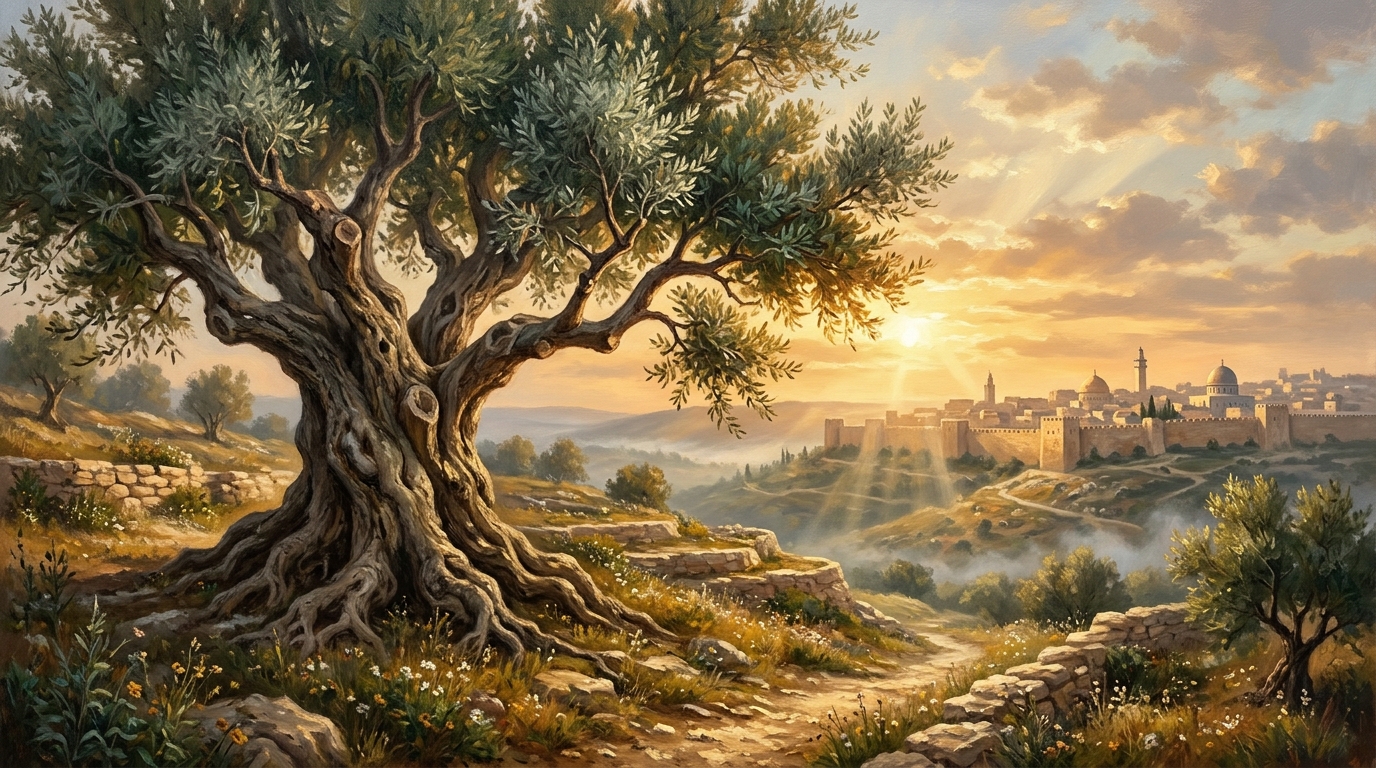
In Romans 11:17–24, Paul uses a rich agricultural picture from the Mediterranean hillsides—the cultivated Olive Tree—to explain how Jewish and Gentile believers fit into God’s family plan.
When many natural branches did not recognize Jesus at His first coming, God used that season to throw open the doors of salvation to the Gentile world—taking us, who were once wild olive shoots, and grafting us right into the rich, nourishing root of Abraham’s covenant tree! And notice Paul’s gentle warning to Gentile Christians in Romans 11:18: never boast over the natural branches, because “you do not support the root, but the root supports you.”
Every time we open our Bibles, we are reading books written by Jewish prophets and apostles (the Twelve Disciples), singing the Psalms of King David, and worshipping our Savior Jesus—who was born of Mary in the line of Judah as the Lion of the Tribe of Judah (Romans 9:4–5).
3. The Mystery of Romans 11:25–26 & Zechariah 12:10
In Romans 11:25–26, Paul unveils a prophetic “mystery” (a sacred truth previously hidden that God now reveals): that Israel has experienced a partial hardening only “until the full number of the Gentiles has come in”—meaning that right now, during this season of grace, God is gathering millions of believers from every nation, tribe, and language into the Bride of Christ.
And what happens when that Gentile harvest reaches its fullness at the end of the age? Just as the prophet Ezekiel saw dry bones first come together physically and then receive the breath of the Spirit of God in a second stage (Ezekiel 37:7–10), the prophet Zechariah foretold the day when the Lord pours out a spirit of grace and supplication upon the house of David and the inhabitants of Jerusalem, and “they will look on me, the one they have pierced” in deep, saving repentance (Zechariah 12:10; echoed in Revelation 1:7)!
4. What It Means to “Pray for the Peace of Jerusalem” (Psalm 122:6)
How should a gentle, Christ-centered woman respond when she sees grief, conflict, and suffering in the land of the Bible today? Not with cold political arguments or sensationalized speculation, but with the compassionate intercession of Psalm 122:6: “Pray for the peace of Jerusalem.”
When we pray for the peace (shalom) of Jerusalem with the heart of Jesus, we are praying in three directions at once:
- Compassion for Every Hurting Soul Today: Praying for protection, comfort, and the gospel of peace to reach every Jewish and Arab family walking through grief and conflict in the region right now.
- Spiritual Awakening: Praying for the veil to be lifted (2 Corinthians 3:16) so that hearts everywhere recognize Jesus as the promised Messiah and Prince of Peace.
- The Return of the King: Because true, lasting peace will ultimately fill Jerusalem when the Prince of Peace Himself returns to Mount Zion, praying for the peace of Jerusalem is another way of praying: “Your kingdom come, Lord Jesus!”
🌿 A Quiet-Time Reflection & Breath Prayer for Today
Rest today in the unshakeable truth of Romans 11:29—that the God who has kept His covenant promises for four thousand years will never let go of your hand:
- Inhale slowly: “Lord, Your gifts and Your covenant call are irrevocable…”
- Exhale in peace: “…thank You for grafting me into Your family by pure grace.”
Lift up your prayers for your family and our world inside our printable 30-Day Christian Prayer Journals or our Walking in Grace 52-Week Devotional.
Read Next: How to Find Hope in Christ Amid Prophecy & Uncertainty →Frequently Asked Questions About Israel in Prophecy
How are people saved in the Old and New Testaments?
Scripture teaches that across every era of history—for both Jew and Gentile alike—salvation has always been by grace alone through faith alone in God’s promised Redeemer! As Paul explains in Romans 4:3 and Galatians 3:6–9, Abraham himself was justified by faith before the law was ever given, looking forward to the Messiah just as we look back to the finished work of Jesus on the cross (Acts 4:12; Romans 1:16).
Where will Jesus physically return at His Second Coming?
According to Zechariah 14:4 and Acts 1:11–12, when Jesus ascended into heaven from the Mount of Olives just east of Jerusalem, two angels promised the disciples that this same Jesus would return in the exact same way—descending directly back onto the Mount of Olives to establish His righteous reign.
How does seeing God’s 4,000-year faithfulness to His covenant promises to Abraham strengthen your trust in His promises for your own life? Share your reflection below!