Hi friend,
Have you ever flipped through the Old Testament book of Leviticus and wondered why God gave Israel such detailed instructions for seven annual festivals—specifying the exact month, day, and hour each celebration was to take place?
When we read Leviticus chapter 23 through the lens of the New Testament—especially the Apostle Paul’s declaration in Colossians 2:16–17 that the sacred festivals are “a shadow of the things that were to come; the reality, however, is found in Christ”—one of the most breathtaking prophetic tapestries in the entire Bible opens before our eyes.
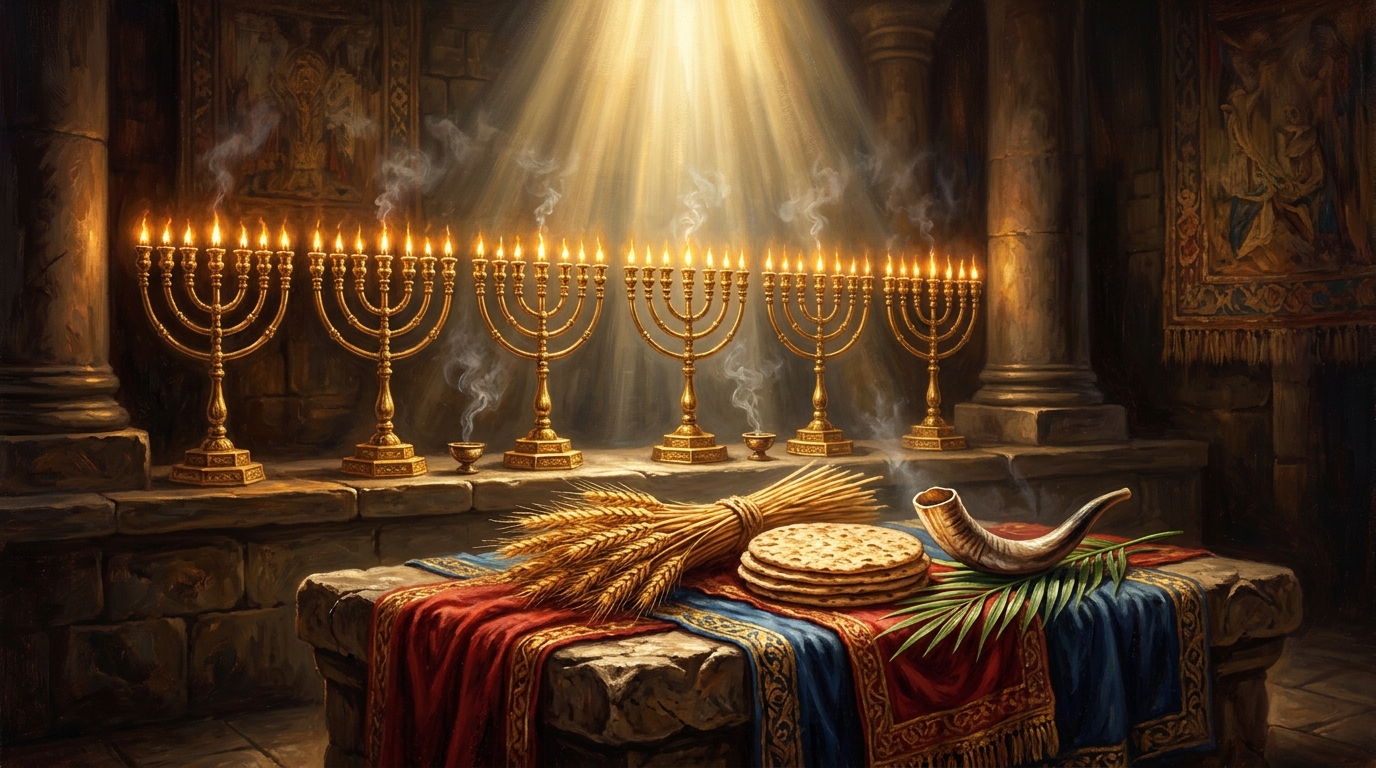
In Hebrew, the word translated “feasts” or “appointed festivals” in Leviticus 23:2 is moedim, which literally means “divine appointments, set times, or dress rehearsals.” Divided into four spring feasts and three autumn feasts, God’s calendar was designed from the beginning to trace the entire redemptive timeline of Jesus—from the cross of Calvary to His glorious Second Coming.
📖 Quick Timeline: All 7 Feasts of the Lord in Leviticus 23
- 1. Passover (Pesach — Spring, Nisan 14): The spotless lamb’s blood on the doorposts → Fulfilled on the exact day Jesus died on the cross as our Passover Lamb (1 Corinthians 5:7).
- 2. Unleavened Bread (Hag HaMatzot — Spring, Nisan 15–21): Removing all leaven (yeast/sin) → Fulfilled as Jesus’s sinless body was placed in the tomb like the seed of the Bread of Life.
- 3. Firstfruits (Bikkurim — Spring, Day after the Sabbath): Waving the first sheaf of the barley harvest → Fulfilled on Easter Sunday morning when Jesus rose from the dead as the “firstfruits” of the resurrection (1 Corinthians 15:20).
- 4. Feast of Weeks / Pentecost (Shavuot — Late Spring, 50 Days Later): Presenting two loaves of leavened bread → Fulfilled on the exact day of Pentecost in Acts 2 when the Holy Spirit descended to birth the Church (Jew and Gentile united in one body).
- 5. Feast of Trumpets (Yom Teruah — Autumn, Tishri 1): Blowing the ram’s horn shofar to awaken and gather the nation → Points prophetically to the trumpet call of God and the gathering of believers to meet the Lord.
- 6. Day of Atonement (Yom Kippur — Autumn, Tishri 10): The holiest day of national repentance and cleansing → Fulfilled at the cross by our Great High Priest (Hebrews 9) and pointing to future national repentance at Christ’s return (Zechariah 12:10).
- 7. Feast of Tabernacles / Booths (Sukkot — Autumn, Tishri 15–21): Rejoicing in temporary shelters after the final harvest → Points to Christ’s Millennial Kingdom and the New Jerusalem where God tabernacles with His people forever (Revelation 21:3).
How the 7 Biblical Feasts Reveal God’s Redemptive Timeline
1. The First Three Spring Feasts: Fulfilled to the Exact Hour at Passion Week
If anyone ever wonders whether the Bible is supernaturally inspired by God, point them to how Jesus fulfilled the first three spring feasts of Leviticus 23:4–14 during the week of His crucifixion and resurrection—not just in general symbolism, but on the exact calendar days God had appointed fourteen centuries earlier through Moses!
- Passover (Nisan 14): At 3:00 PM on the fourteenth of Nisan, at the exact hour the high priest in the Jerusalem Temple was slaughtering the Passover lambs, Jesus cried “It is finished!” on the cross without a single bone of His body broken (fulfilling Exodus 12:46 and John 19:36; read more in our study on understanding the powerful connection between Easter and Passover).
- Unleavened Bread (Nisan 15): In Scripture, leaven (yeast) pictures sin and corruption. Just before sundown ushered in the Feast of Unleavened Bread, the sinless body of Jesus—who had taken our leaven upon Himself—was wrapped in clean linen by Nicodemus and Joseph of Arimathea and laid in the tomb.
- Firstfruits (The Morning After the Sabbath): Under Levitical law (Leviticus 23:10–11), on the morning after the Passover Sabbath, the priest waved the very first bundle of ripened spring barley before the Lord as a guarantee that the rest of the harvest would follow. On that exact Sunday morning at dawn, Jesus walked out of the garden tomb—which is why Paul specifically calls the risen Christ “the firstfruits of those who have fallen asleep” in 1 Corinthians 15:20!
2. The Fourth Feast (Pentecost) & the Long Summer Harvest of the Church
Fifty days after Firstfruits came the fourth feast: Shavuot (the Feast of Weeks, called Pentecost in Greek because pentekoste means “fiftieth day,” Leviticus 23:15–21). Notice a fascinating detail in Leviticus 23:17: whereas leaven was strictly forbidden during Passover and Firstfruits, on the day of Pentecost the high priest was commanded to wave two loaves of bread baked with leaven before the Lord!
Why two loaves baked with leaven? Because on the exact morning of Pentecost in Acts chapter 2, the Holy Spirit descended in wind and fire to birth the New Testament Church—uniting two groups of redeemed yet still-imperfect people (Jewish believers and Gentile believers, still being sanctified from the “leaven” of our human flaws) into one glorious Body of Christ!
And look at what followed Pentecost on Israel’s agricultural calendar: a four-month summer gap between the late-spring wheat harvest and the seventh-month autumn festivals. That long summer harvest season—when Ruth gleaned in the fields of Boaz—is a picture of the exact Church Age we are living in right now, as the Gospel is gathered across every nation on earth.
3. The Feast of Trumpets & Day of Atonement: Awakening and Redemption
If Jesus fulfilled the four spring feasts on the exact days appointed in Leviticus 23 at His First Coming, we can be 100% confident that He will fulfill the dramatic spiritual realities of the three autumn feasts (Leviticus 23:23–44) at the culmination of history:
- The Feast of Trumpets (Yom Teruah): Opening the seventh month with blasts of the ram’s horn shofar, this festival called workers in from the fields, announced the King’s coronation, and awakened hearts—pointing forward to the trumpet of God when Christ gathers His bride (1 Thessalonians 4:16–17; 1 Corinthians 15:52; see our gentle guide on what the Bible teaches about the Rapture) and the 7 Trumpets of Revelation that herald His reign.
- The Day of Atonement (Yom Kippur): Ten days later came the most solemn day of the biblical year, when the high priest entered the Most Holy Place with atoning blood. While Jesus already fulfilled the sacrifice of Yom Kippur once for all on the cross (Hebrews 9:11–12), prophetically it also points to the day at Christ’s return when eyes are opened in deep repentance and cleansing (Zechariah 12:10–13:1).
4. The Feast of Tabernacles (Sukkot): Dwelling With Our King in Unending Joy
Five days after the Day of Atonement came the seventh and final festival of God’s calendar: the Feast of Tabernacles (Sukkot, Leviticus 23:33–43)—called in Scripture “the Season of Our Joy.” With the entire year’s harvest safely gathered into the barns, families dwelt for seven days in leafy booths surrounded by light and celebration, remembering how God sheltered them in the wilderness.
When the Apostle John wanted to describe the incarnation of Jesus in John 1:14, he wrote that the Word became flesh and literally “tabernacled” (pitched His tent) among us. And when John beheld the grand finale of all human history in the New Jerusalem of Revelation 21:3, he heard a loud voice from the throne proclaim the ultimate fulfillment of the Feast of Tabernacles: “Look! God’s dwelling place (tabernacle) is now among the people, and he will dwell with them.”
🌿 A Quiet-Time Reflection & Breath Prayer for Today
Because God kept every single one of His spring appointments at Calvary and the empty tomb down to the exact hour, you can trust Him completely with the future autumn harvest:
- Inhale slowly: “Lord Jesus, You are my Passover Lamb and my risen Firstfruits…”
- Exhale in hope: “…I trust Your perfect timing as I await the joy of dwelling with You forever.”
Trace God’s faithfulness across the Scriptures in your morning quiet time using our printable 30-Day Christian Prayer Journals or our Walking in Grace 52-Week Devotional.
Read Next: Easter and Passover — Understanding the Powerful Connection →Frequently Asked Questions About the 7 Biblical Feasts
Why are they called “the feasts of the Lord” in Leviticus 23:2 instead of “Jewish feasts”?
In Leviticus 23:2, God specifically tells Moses: “The LORD’s appointed festivals, which you are to proclaim as sacred assemblies, are my appointed festivals.” Because they belong to the Lord Himself and paint a portrait of Jesus the Messiah, studying their meaning enriches every Christian’s appreciation of both the Old and New Testaments.
How did Jesus use the Feast of Tabernacles in John chapters 7 and 8?
Two of Jesus’s most famous declarations took place right during the Feast of Tabernacles in Jerusalem! On the final day of the feast, as priests poured out golden pitchers of water from the Pool of Siloam at the altar, Jesus stood and cried out, “Let anyone who is thirsty come to me and drink” (John 7:37–38). The next morning, standing beside the giant festival lamps lit for Tabernacles, He proclaimed in His second “I AM” statement: “I am the light of the world” (John 8:12)!
Which of the 7 Feasts in Leviticus 23 amazes you most when you see how it points to Jesus? Share your thoughts in the comments below!