Hi friend,
When an unexpected hardship, chronic illness, or family struggle enters your life, how quickly does the enemy whisper the accusation: “Whose fault is this? What did you do wrong to deserve this?”
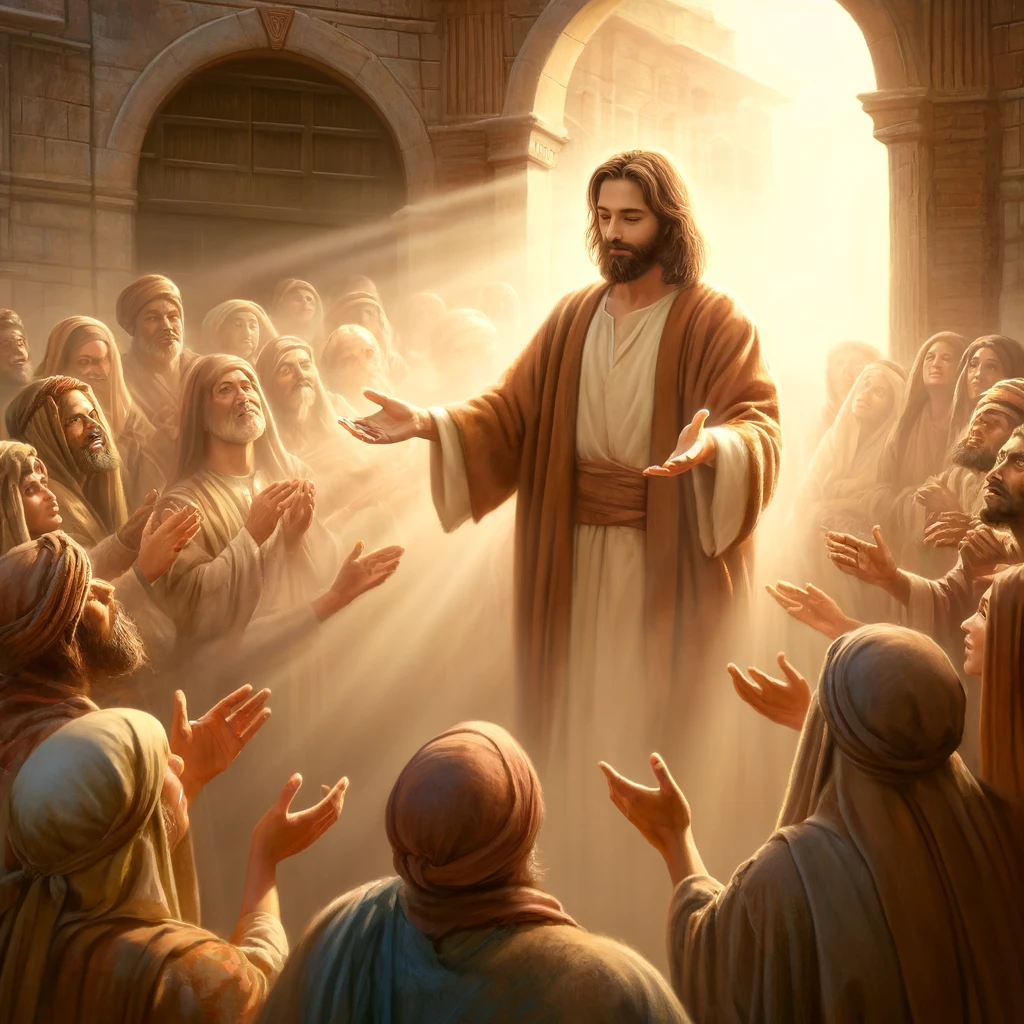
Even Jesus’s own disciples fell into that exact theological trap! Walking through Jerusalem in John chapter 9, they passed a beggar who had been blind from birth. Instead of viewing him with compassion, the disciples treated him like a debate topic—asking Jesus whether the man or his parents had sinned to cause his blindness (John 9:2).
What Jesus spoke next in John 9:3–5—and how He gently led that healed beggar from physical sight at the Pool of Siloam to full spiritual worship by the end of the chapter—provides one of the most liberating teachings on suffering, grace, and personal testimony in the entire Bible.
📖 Key Biblical Passage: John 9:1–41
- John 9:1–5: Rejecting the disciples’ blame game, Jesus declares that neither the man nor his parents sinned, but that the works of God might be displayed in him as the Light of the World.
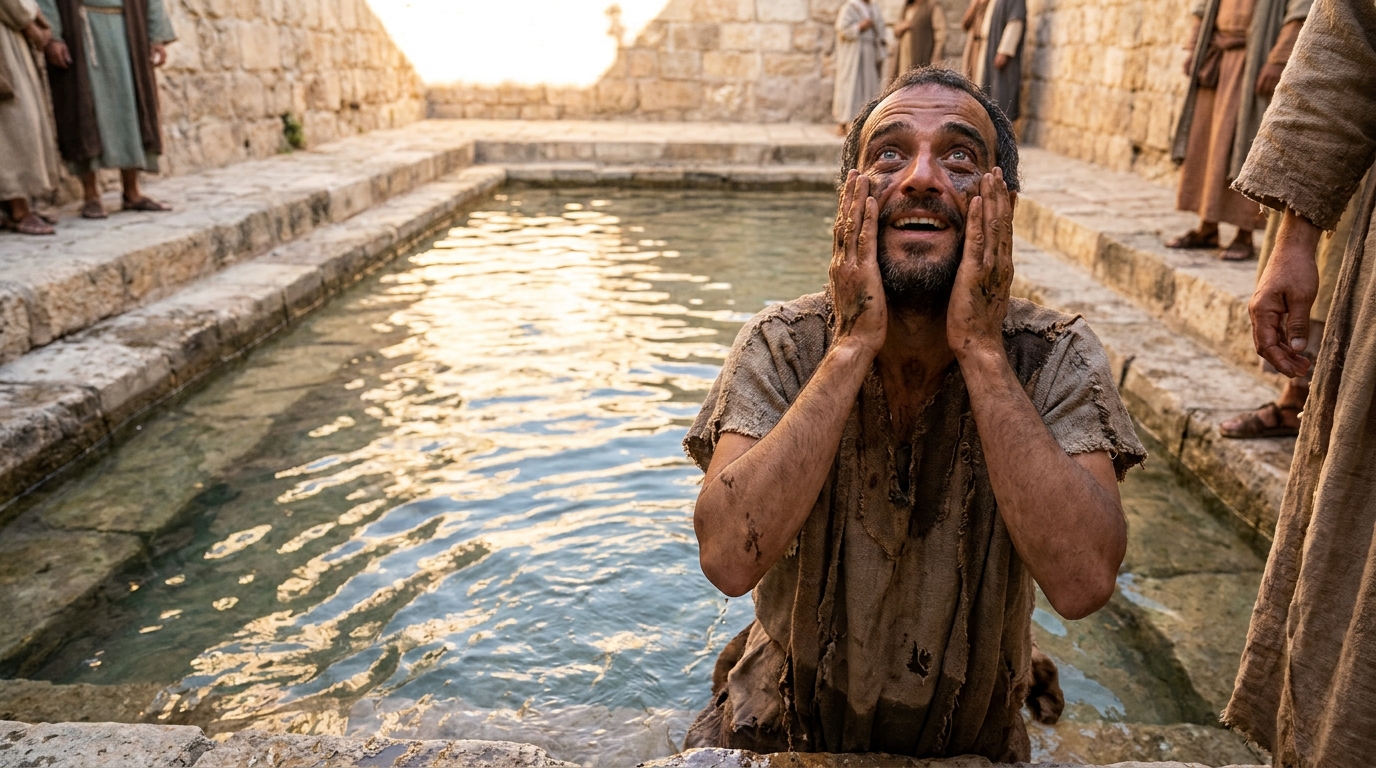
- John 9:6–7: Anointing the man’s eyes with clay made from dust and saliva, Jesus sends him to wash in the Pool of Siloam (which means “Sent”)—and he comes home seeing for the first time in his life.
- John 9:8–34: Interrogated repeatedly by hostile Pharisees offended that the healing occurred on the Sabbath, the man stands firm on his simple testimony: “One thing I do know. I was blind but now I see!”
- John 9:35–41: Cast out of the synagogue by religious leaders, the man is sought out personally by Jesus, confesses faith in the Son of Man, and worships Him.
4 Transformative Lessons from the Healing at the Pool of Siloam
1. Trading “Who Sinned?” for “So the Works of God Might Be Displayed” (John 9:2–3)
Look at how the disciples framed their question in John 9:2: just like Job’s three friends, they assumed only two possibilities existed—either the man had sinned, or his parents had sinned! They were looking backward for someone to blame.
Jesus immediately broke their false dichotomy in John 9:3: “Neither this man nor his parents sinned, but this happened so that the works of God might be displayed in him.” Instead of looking backward in guilt, Jesus looked forward in redemptive purpose! While we live in a fallen world where sickness exists (see our guide on understanding why there is suffering from God’s perspective), individual afflictions are not petty cosmic punishments—in Christ’s hands, they become the very canvas on which God paints His grace.
2. Clay on His Eyes and Washing at “Siloam”: Why Jesus Used Dust and Water (John 9:6–7)
Why did Jesus spit on the ground, knead a little clay from the dust, place it over the blind man’s eyes, and send him walking down through the city to wash in the Pool of Siloam?
Early church teachers noticed a breathtaking Genesis connection in John 9:6: remember that this man wasn’t someone whose eyes had grown dim with age—he was born without working sight from the womb. How did the Creator originally form the human body in Genesis 2:7? Out of the dust of the ground! By taking dust from the ground and fashioning new sight over the man’s eyes, Jesus revealed that He was the very Creator who formed humanity in the beginning. Then He sent him to wash in Siloam—which John 9:7 translates for us as “Sent”—pointing directly to Jesus as the One sent by the Father to be the Light of the World.
3. The Unshakeable Power of a Simple Testimony: “I Was Blind, But Now I See!” (John 9:25)
Notice how this formerly blind beggar’s understanding of Jesus grew deeper every time the Pharisees pressured him across the chapter:
- In verse 11, he simply calls Him “the man they call Jesus.”
- In verse 17, under questioning by the council, he confesses: “He is a prophet.”
- In verse 25, when the religious scholars try to tie him in theological knots, he delivers the most famous one-sentence testimony in history (immortalized in John Newton’s hymn Amazing Grace): “One thing I do know. I was blind but now I see!”
- And in verse 38, when he finally sees Jesus face-to-face for the very first time, he declares: “Lord, I believe,” and worships Him!
Just like the Samaritan woman telling her village what Jesus did for her, you never need a seminary degree to share your faith—no skeptic on earth can argue with the lived reality of how Jesus opened your eyes and changed your heart.
4. When Religious Pride Casts You Out, Jesus Comes Looking for You (John 9:34–38)
One of the most tender verses in the entire Gospel of John is John 9:35. Furious that an uneducated beggar had exposed their spiritual blindness, the Pharisees hurled insults at him and threw him out of the synagogue (verse 34)—a devastating social and religious excommunication.
Look at the very next sentence in verse 35: “Jesus heard that they had thrown him out, and when he found him, he said, ‘Do you believe in the Son of Man?'”
Notice that! When the man was healed at the pool in verse 7, he still hadn’t seen what Jesus’s face looked like, because Jesus had sent him to Siloam while his eyes were still covered in mud. Only after harsh religious legalism rejected him did Jesus personally go searching through the streets of Jerusalem to find him, introduce Himself face-to-face, and welcome him into eternal fellowship.
🌿 A Quiet-Time Reflection & Breath Prayer for Today
Release every whisper of false guilt over the trials you have walked through—and trust that the Light of the World is using your story to display His grace:
- Inhale slowly: “Jesus, You are the Light of the World who opened my eyes…”
- Exhale in worship: “…display Your works of grace through every chapter of my story.”
Record the ways God has opened your eyes and answered your prayers inside our printable 30-Day Christian Prayer Journals or our Walking in Grace 52-Week Devotional.
Explore Next: The Miracles of Jesus — Powerful Acts of Faith and Healing →Frequently Asked Questions About the Man Born Blind in John 9
Why did the Pharisees claim Jesus broke the Sabbath in John 9:14–16?
While the Old Testament law of Moses commanded rest on the Sabbath, later rabbinic oral traditions added thirty-nine strict categories of prohibited activities—one of which explicitly forbade “kneading” on the Sabbath, and another forbade applying medicine to an eye unless life was in immediate danger! By kneading a tiny bit of clay on the Sabbath to give a blind man sight, Jesus exposed how their man-made rules had blinded them to the heart of God.
Where was the Pool of Siloam located in Jerusalem?
Located at the southern tip of the City of David in Jerusalem, the Pool of Siloam was fed by the waters of the Gihon Spring flowing through Hezekiah’s Tunnel. In 2004, archaeologists excavating a drainage line uncovered the monumental stone steps of the exact first-century Pool of Siloam where Jesus sent the blind man in John 9:7!
How has your own “I was blind, but now I see” testimony of God’s grace grown over the years? Share your reflection in the comments below!