Hi friend,
Have you ever held back from using a gift, starting a ministry, or sharing encouragement because a quiet voice of perfectionism whispered: “What if I try and fail? What if what I have isn’t nearly as impressive as hers?”
Fear of failure and comparison are two of the enemy’s favorite shovels for convincing Christian women to bury their God-given callings in the dirt. We tell ourselves we are just being “cautious” or “humble,” when in reality, fear has talked us into playing it safe.
In Matthew 25:14–30, sitting on the Mount of Olives just days before the cross, Jesus told The Parable of the Talents to show His followers how to live while awaiting His Second Coming. In fact, our modern English word “talent” (meaning a natural skill or ability) comes directly from this very parable of Jesus!
📖 Key Biblical Overview: Matthew 25:14–30
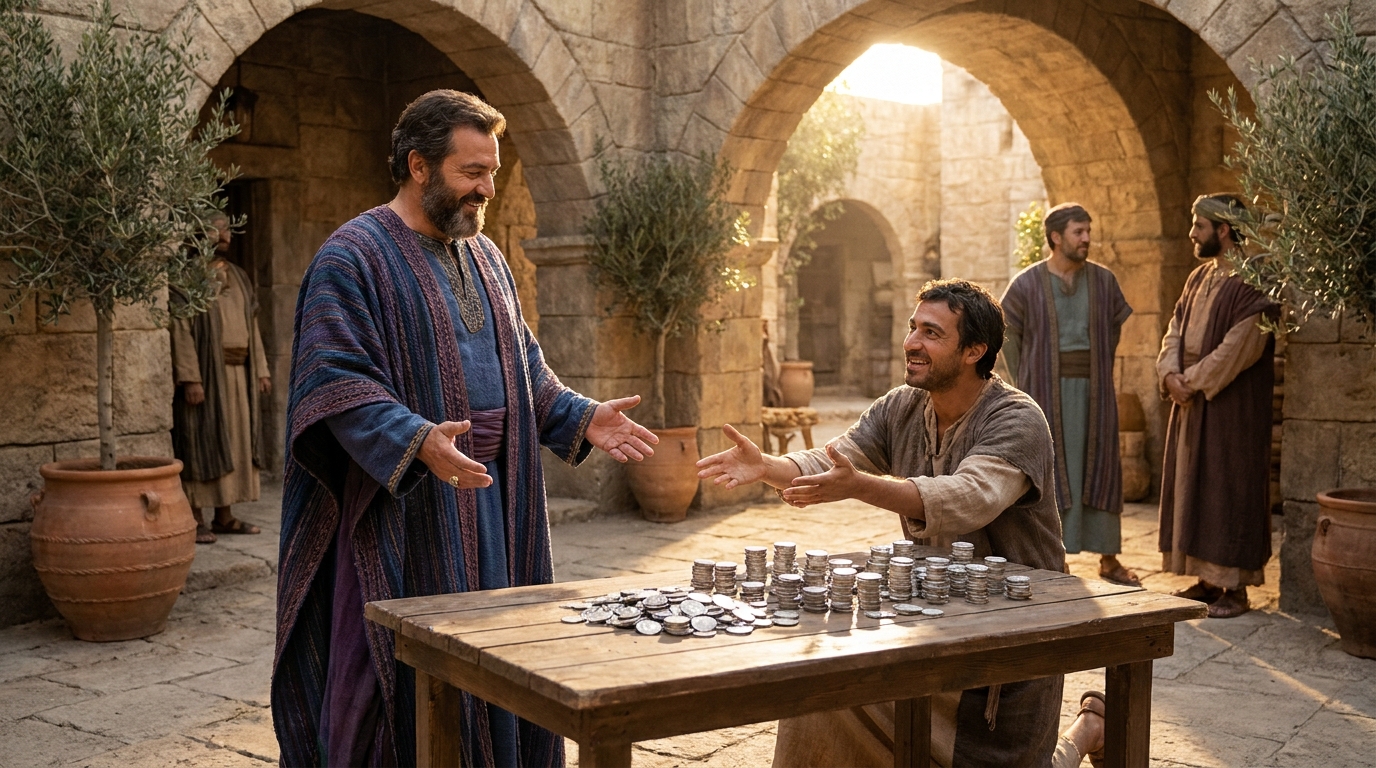
- The Entrustment (Verses 14–15): Before departing on a long journey, a wealthy master entrusts his property to three servants according to their individual capacities—giving five talents (approx. 170 kilograms of precious metal) to the first, two talents (68 kilograms) to the second, and one talent (34 kilograms) to the third.
- The Faithful Investment (Verses 16–18): The first two servants go to work at once and double their master’s estate, while the third servant digs a hole in the ground and hides his master’s silver.
- The Identical Reward (Verses 19–23): Upon his return, the master gives the exact same joyful commendation to both the five-talent and two-talent servants, inviting both to enter into the joy of their lord.
- The Root of the Buried Talent (Verses 24–30): The third servant confesses that a harsh, distorted view of the master’s character made him afraid, leading him to bury his trust rather than invest it.
4 Transformative Faith Lessons from the Parable of the Talents
1. Even “One Talent” Is a Royal Fortune in God’s Eyes (Matthew 25:15)
Because we use the word “talent” today to mean a hobby like playing the piano or baking bread, it is easy to feel sorry for the third servant who received “only one talent.” Yet in the first-century Greco-Roman world, a talent (Greek: talanton) was not a small coin—it was the largest unit of weight and currency in the empire, weighing approximately 34 kilograms (75 pounds) of silver or gold!
To put that in perspective: a single silver talent was worth 6,000 denarii—which equaled twenty full years of wages for a working-class laborer! Even the servant who received “just one talent” was handed a 34-kilogram chest of treasure worth two decades of income. Never look at your life and say God gave you nothing significant; every single believer has been entrusted with a priceless measure of time, spiritual gifts, gospel truth, and relational influence.
2. Notice the Identical Commendation: God Rewards Faithfulness, Not Volume (Matthew 25:20–23)
Compare the master’s words to the five-talent servant in Matthew 25:21 with his words to the two-talent servant in Matthew 25:23. Look closely at the text: every single word is 100% identical!
The master did not give a bigger smile or a warmer welcome to the five-talent servant than he gave to the two-talent servant. Both heard the exact same words: “Well done, good and faithful servant! You have been faithful over a little; I will set you over much. Enter into the joy of your master.”
Why? Because in Matthew 25:15, the master distributed the bags according to each servant’s unique capacity and season, and he never compared the two-talent servant against the five-talent servant’s quota! Just as quiet Andrew was just as treasured as bold Peter, God will never judge you by someone else’s gifts—He simply looks for loving faithfulness with the portion He placed in your hands.
3. Why Did the Third Servant Bury His Gift? A Distorted View of the Father (Matthew 25:24–25)
Look at how the third servant explained his inaction in Matthew 25:24–25: he did not say, “Master, I was lazy,” or “I forgot where I put the silver.” Instead, he pointed his finger straight at the master’s character—claiming he knew the master was a harsh, unforgiving man, and declaring: “So I was afraid, and I went and hid your talent in the ground.”
Wait—was this master truly a stingy, cruel tyrant? Look at the story! A stingy tyrant doesn’t hand out hundreds of kilograms of silver to his household servants and then invite them to share his personal feast and joy upon his return! The third servant’s fear was born entirely out of a warped, legalistic view of his master. Whenever we view God as an angry perfectionist waiting for us to mess up rather than the running Father of the Parable of the Prodigal Son, fear will paralyze our obedience every time.
4. Unearthing Your Buried Gift to Enter the Master’s Joy
Notice what the two faithful servants did the moment they received their trust in verses 16–17: they went to work “at once”. They didn’t wait for flawless conditions or zero risk; because they trusted their master’s generous heart, they gladly stepped out in faith (see our guide on how to conquer fear through faith).
And what is the ultimate reward of faithful stewardship in verses 21 and 23? It isn’t merely a heavier workload—it is sharing directly in the Master’s own joy! Every time you dig up a gift you once hid out of insecurity and use it to bless God’s people, you step into the very joy of Jesus Himself.
🌿 A Quiet-Time Reflection & Breath Prayer for Today
Is there a creative gift, a ministry nudging, or an act of encouragement you have kept “buried in the ground” out of fear of not being good enough? Hand it back to your loving Master today:
- Inhale slowly: “Lord, You are a generous Father, not a harsh taskmaster…”
- Exhale in courage: “…I unearth the gifts You gave me and invest them for Your joy.”
Plan your week around what matters eternally with our Christian Planners & Prayer Organizers or our 30-Day Christian Prayer Journals.
Read Next: Why Did Jesus Speak in Parables? →Frequently Asked Questions About the Parable of the Talents
How does the Parable of the Talents in Matthew 25 differ from the Parable of the Minas in Luke 19?
While the two parables share similar themes of stewardship before Christ’s return, Jesus taught them on two separate occasions to illustrate two complementary truths: in the Parable of the Minas (Luke 19:11–27, spoken near Jericho), ten servants each receive the exact same small sum (one mina, equal to about three months’ wages) and produce different results (tenfold vs. fivefold); in the Parable of the Talents (Matthew 25:14–30, spoken on the Mount of Olives), three servants receive different initial amounts (five vs. two talents) and produce the exact same 100% faithful return!
Why did the master suggest putting the money “with the bankers” in Matthew 25:27?
In the ancient world, burying coins in a hole in the ground was considered the absolute minimum way to guard against theft, requiring zero effort or faith. By pointing out that the servant could have at least placed the silver with moneychangers to earn simple interest, the master exposed that the servant hadn’t even cared enough to take the smallest low-risk step on his master’s behalf.
What “one talent” or quiet everyday gift is God inviting you to unearth and use with joy this season? Share your thoughts in the comments below!