Hi friend,
Have you ever walked into a room, a church lobby, or a family gathering carrying a quiet weight of heartbreak or past regret—hoping no one would ask too many questions or look too closely at the bruised corners of your story?
When we have walked through relational disappointment, divorce, rejection, or choices that left us feeling empty, isolation often feels safer than community. We build polite walls around our hearts, assuming that if people—or God—really knew everything we had been through, they would keep their distance.
That is why the longest recorded one-on-one conversation Jesus ever had in the Gospels wasn’t with a temple scholar, a synagogue ruler, or a wealthy dignitary. In John chapter 4, Jesus went out of His way to sit down beside Jacob’s well in the scorching midday sun to meet a lonely, nameless Samaritan woman whom everyone else in town avoided.
As one of the most moving portraits among the 12 Unqualified People God Used in the Bible, her story proves that Jesus never exposes our wounds to embarrass us—He meets us at the well of our deepest thirst so He can fill us with Living Water and turn our testimony into a beacon of hope.
📖 Key Biblical Passage to Read Along: John 4:1–42
The Historical Setting: Travelling north from Judea to Galilee, observant first-century Jews typically crossed the Jordan River to bypass Samaria completely due to centuries of bitter ethnic and religious hostility. Instead, John 4:4 notes that Jesus intentionally traveled straight through Samaria, stopping at Sychar at the sixth hour (high noon)—the exact moment an outcast woman walked out alone to draw water.
5 Transformative Lessons from the Woman at the Well
1. Jesus Crosses Every Barrier to Meet You in Your “Noon Hour”
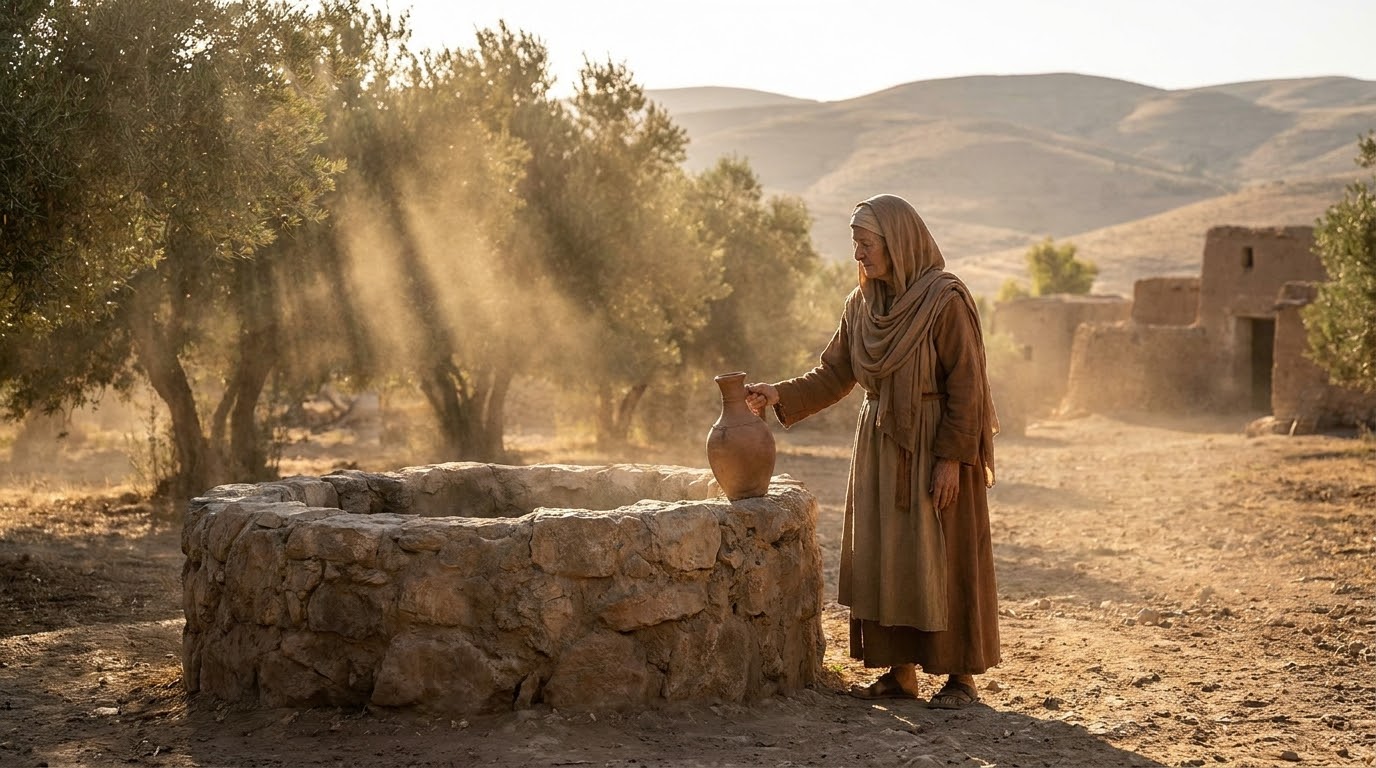
In the ancient Near East, village women always gathered at the well in the cool breeze of early morning or late evening to draw water and visit together. Walking out to a deep stone well carrying a heavy clay jar at twelve o’clock noon under the blazing Middle Eastern sun meant only one thing: this woman chose physical exhaustion over the painful whispers and cold stares of her neighbors.
Yet when she arrived at the well expecting to be completely alone, Jesus was already waiting for her. By asking her for a drink of water (John 4:7–9), Jesus stepped across three rigid cultural walls at once—ethnicity, gender, and moral reputation—showing that no social barrier or past history can ever keep the Savior from pursuing a hurting daughter (just as He redeemed the past of Rahab and the scarlet cord in the Old Testament).
2. Earthly Wells Always Leave Us Thirsty Again—Only Christ Satisfies
When the woman expressed surprise that a Jewish rabbi would speak kindly to her, Jesus gently shifted the conversation from physical water in a bucket to the deep spiritual thirst of the human soul (John 4:10–14). Everyone who drinks from earthly wells—whether we are chasing validation through relationships, achievements, possessions, or approval—soon finds themselves thirsty all over again.
In contrast, Jesus promised that the gift He gives becomes an internal, overflowing spring of Living Water welling up to eternal life. You don’t have to keep striving to fill an empty cup when the Source of living water dwells right inside your heart.
3. To Be Fully Known by Jesus—and Fully Loved—Heals Our Deepest Shame
When the woman asked for this Living Water so she wouldn’t have to keep making the lonely trek to the well, Jesus gently invited her to call her husband (John 4:16). When she replied quietly that she had no husband, Jesus spoke the truth of her life with piercing accuracy yet zero condemnation—acknowledging that she had been through five marriages and that the man she currently lived with was not her husband (John 4:17–18).
Notice what didn’t happen next: Jesus did not lecture her, recoil from her, or walk away. For the very first time in her life, she stood before a Man who knew every single chapter of her broken relational history and still looked at her with pure compassion and dignity. If you have ever struggled with letting go of guilt and finding freedom in Christ—or wondered if any past mistake is too big for God’s forgiveness—let John 4 remind you that Jesus knows your whole story and loves you completely.
4. True Worship Is About an Honest Heart, Not a Perfect Location
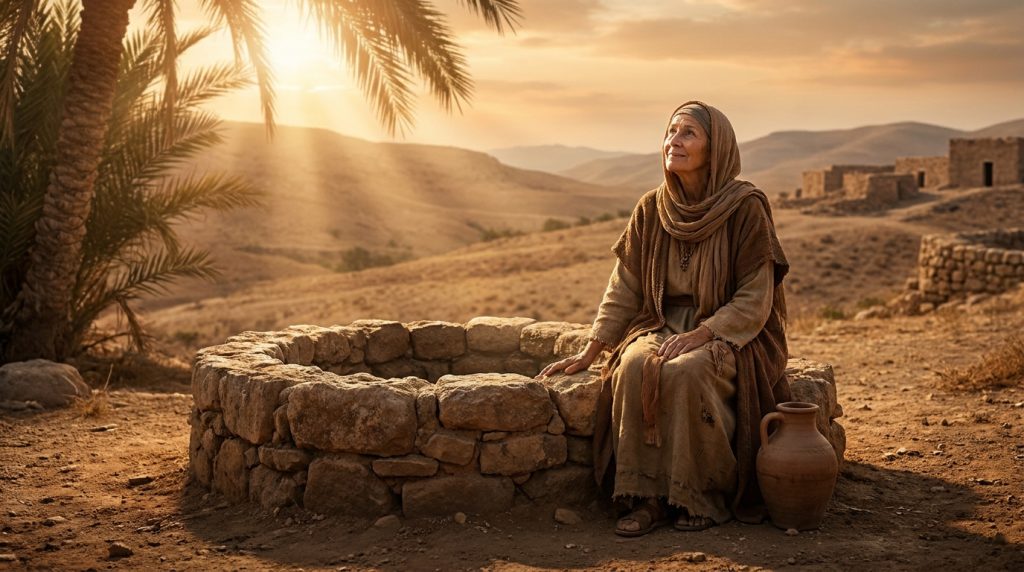
Sensing that Jesus was a prophet, the woman brought up the centuries-old theological debate over whether God should be worshipped on Mount Gerizim in Samaria or at the temple in Jerusalem (John 4:20). In response, Jesus shared one of the most liberating truths in all of Scripture (John 4:23–24): the Father is actively seeking worshippers who come to Him in spirit and in truth.
Then, in John 4:25–26, when she mentioned her hope for the coming Messiah, Jesus revealed His identity openly to her—the very first clear declaration of His Messianic identity in the Gospel of John! As we explore in our reflection on the transformative power of worship in your faith journey, coming to God “in truth” simply means dropping our masks and bringing our real, unvarnished hearts into His presence.
5. When You Taste Living Water, You Leave Your Heavy Jar Behind
Look at the small, unforgettable detail John records in John 4:28–29: the woman left her water jar behind at the well and ran straight back into the town of Sychar! The very neighbors she had spent years hiding from at noon were now the first people she sought out.
Even more remarkably, her testimony to the townspeople wasn’t a polished theological sermon. She simply invited them to come and see a Man who knew everything she had ever done and loved her anyway. What used to be her deepest source of hiding became the exact bridge God used to bring an entire village to saving faith in Jesus (John 4:39–42).
🌿 A Quiet-Time Reflection & Breath Prayer for Today
Take a quiet moment right now to set down any heavy “water jar” of striving, regret, or loneliness at the feet of Jesus:
- Inhale slowly: “Jesus, You know every detail of my story and love me completely…”
- Exhale in peace: “…fill my thirsty soul with Your Living Water today.”
Looking for a quiet place to pour out your heart to the Lord each morning? Explore our 30-Day Christian Prayer Journals or walk through a year of grace with our Walking in Grace 52-Week Devotional.
Explore Next: 12 Unqualified People God Used in the Bible →Frequently Asked Questions About the Woman at the Well
What was the name of the Samaritan woman at the well?
The Gospel of John leaves her unnamed, allowing every reader who has ever felt lonely or unworthy to step into her shoes at the well. In later Eastern Christian tradition, she was affectionately given the name Photini, which means “the enlightened or radiant one.”
Why did the Samaritan woman leave her water jar behind in John 4:28?
Leaving her heavy clay water pot at the well showed both her joyful urgency to share the good news with her village and her intention to return quickly with others—while also serving as a beautiful symbol that she had found the true Living Water that satisfied her soul.
What part of Jesus’s conversation at Jacob’s well speaks most tenderly to your heart today? Share your reflection in the comments below!