Hi friend,
Have you ever walked through a devastating loss or health crisis where the hardest part wasn’t just the pain itself—it was the stinging, oversimplified advice from well-meaning people who implied that if you just had more faith, you wouldn’t be hurting?
Or on the flip side, have you ever wanted to comfort a grieving friend, yet felt afraid of saying the wrong thing?
While chapters 1 and 2 of the Book of Job recount the sudden storms that struck a blameless man (explored in our overview of 7 Amazing Lessons on Faith from Job’s Trials), more than thirty-five chapters of the book focus on the conversation between Job and his three friends—Eliphaz, Bildad, and Zophar—culminating in Job’s soaring declaration in Job 19:25 and God’s surprising verdict in Job 42:7–10.
📖 Key Biblical Passages on Job’s Friends, Lament & Restoration
- Job 2:11–13: Hearing of Job’s tragedy, Eliphaz, Bildad, and Zophar travel to sit with him on the ground for seven days and seven nights without speaking a word because they see how deep his suffering is.
- Job 4–27 & 16:2: Once the three friends start lecturing—insisting that suffering is always punishment for hidden sin—Job calls them “miserable comforters.”
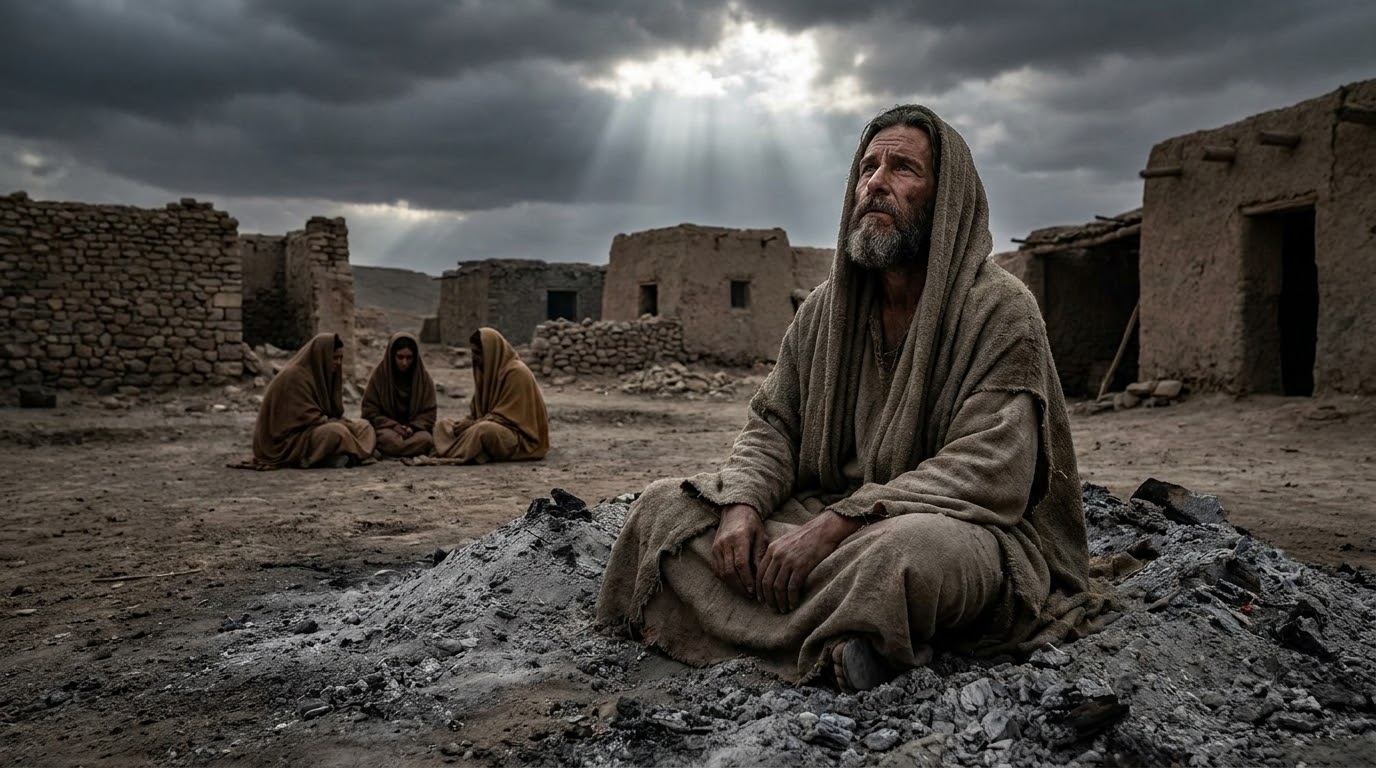
- Job 19:25–27: From the ash heap, Job proclaims by faith: “I know that my redeemer lives, and that in the end he will stand on the earth.”
- Job 42:7–10: After speaking from the whirlwind, God rebukes the three friends for not speaking rightly of Him as Job did—and restores Job’s fortunes when Job prays for his friends.
4 Transformative Lessons from Job, His Friends & Job 19:25
1. The Best Thing Job’s Friends Did Was Their First Seven Days of Silence (Job 2:11–13)
We often remember Eliphaz, Bildad, and Zophar only for their harsh speeches, yet look at how beautifully they started in Job 2:11–13. They left their homes, traveled long distances to meet together, wept aloud when they saw their unrecognizable friend from afar, and sat on the ground beside him for seven days and seven nights without saying a word, because they saw how great his grief was.
When someone you love is walking through fresh, acute heartbreak, they do not need a thirty-minute theological explanation of why bad things happen (see our gentle study on understanding God’s perspective on why there is suffering). They need the ministry of presence—someone who will simply sit in the ashes beside them, hold their hand, and weep with those who weep (Romans 12:15).
2. Why God Rebuked the Friends While Welcoming Job’s Raw Lament (Job 42:7)
Everything went wrong in chapter 4 when Eliphaz, Bildad, and Zophar opened their mouths. Operating on a rigid, transactional “karma” theology, the three men insisted that since God is just, righteous people always prosper and only secret sinners suffer—meaning Job must have done something terrible to deserve the loss of his children and health!
Now look at the shock awaiting readers at the very end of the book in Job 42:7: God tells Eliphaz that He is displeased with him and his two friends because “you have not spoken the truth about me, as my servant Job has.”
Wait—how did Job speak more rightly than his friends when Job poured out chapters of raw grief, confusion, and tearful questions? Because while the three friends talked about God in cold, pious clichés, Job brought his broken heart directly to God in honest prayer! God always prefers your real, tear-stained lament over stiff religious platitudes.
3. “I Know That My Redeemer Lives”: Anchoring in Christ From the Ash Heap (Job 19:25)
Right in the middle of the book, when his earthly friends had turned into accusers and his body was wracked with pain, Job lifted his eyes past the ash heap and uttered one of the greatest Messianic prophecies in the Old Testament in Job 19:25: “I know that my redeemer lives, and that in the end he will stand on the earth.”
The Hebrew word Job used for “Redeemer” is Go’el—the exact legal term for a Kinsman-Redeemer (like Boaz in our study of Ruth and Boaz), a blood relative who steps into court to vindicate a wronged family member, buy back what was lost, and stand up for the helpless. Centuries before Bethlehem or Easter morning, Job knew by faith that he had a living Kinsman-Redeemer in heaven who would one day stand upon the earth and make all things right.
4. Healing Comes When We Pray for the Friends Who Misunderstood Us (Job 42:10)
Look closely at the exact moment God turned Job’s captivity around in Job 42:10: “After Job had prayed for his friends, the Lord restored his fortunes and gave him twice as much as he had before.”
Notice that! After thirty-five chapters of listening to Eliphaz, Bildad, and Zophar falsely accuse his character while he was at his lowest point, God asked Job to act as an intercessor and pray for their forgiveness (Job 42:8). Like Joseph forgiving his brothers in Egypt, when Job released resentment and prayed for the very friends who had let him down, the floodgates of double restoration opened over his life.
🌿 A Quiet-Time Reflection & Breath Prayer for Today
Even when earthly comforters misunderstand your season or when the “why” questions remain unanswered, rest in the certainty of Job 19:25:
- Inhale slowly: “Lord, even when I cannot trace Your hand, I know my Redeemer lives…”
- Exhale in peace: “…I release every hurt from others and trust Your sovereign heart.”
Pour out your honest laments and prayers inside our 30-Day Christian Prayer Journals or walk through Scripture with our Walking in Grace 52-Week Devotional.
Read Next: 7 Amazing Lessons on Faith From Job’s Trials →Frequently Asked Questions About Job and His Friends
Why did God give Job double his livestock in Job 42, but ten children instead of twenty?
In Job 42:12–13, God doubled Job’s sheep, camels, oxen, and donkeys to the exact number—yet gave him seven sons and three daughters (ten children, the same number he lost in chapter 1). Why wasn’t ten children doubled to twenty? Because in God’s eternal kingdom, Job’s first ten children were not ceased to exist like lost livestock—they were safely waiting for him in heaven, meaning that with ten children in glory and ten on earth, Job’s family was indeed doubled!
Who was the fourth speaker, Elihu, in Job chapters 32–37?
Elihu was a younger observer who waited respectfully in silence while the older men debated, before speaking in chapters 32–37 to remind Job that God is greater than human understanding and uses suffering not merely to punish, but to humble, teach, and draw our ears closer to Him—which is why Elihu is not rebuked alongside the three friends in chapter 42.
How has the truth of “I know that my Redeemer lives” anchored your heart during a season when life didn’t make sense? Share your story in the comments below!