Hi friend,
Have you ever listened to a deeply moving Sunday message or read a comforting promise in your morning Bible reading—only to find that by Tuesday afternoon, grocery lists, work pressures, and phone notifications had completely crowded out the peace you felt?
When our spiritual growth feels slow or fragile, it is easy to get discouraged and wonder why God’s Word seems to take root so effortlessly in some seasons while feeling choked out in others.
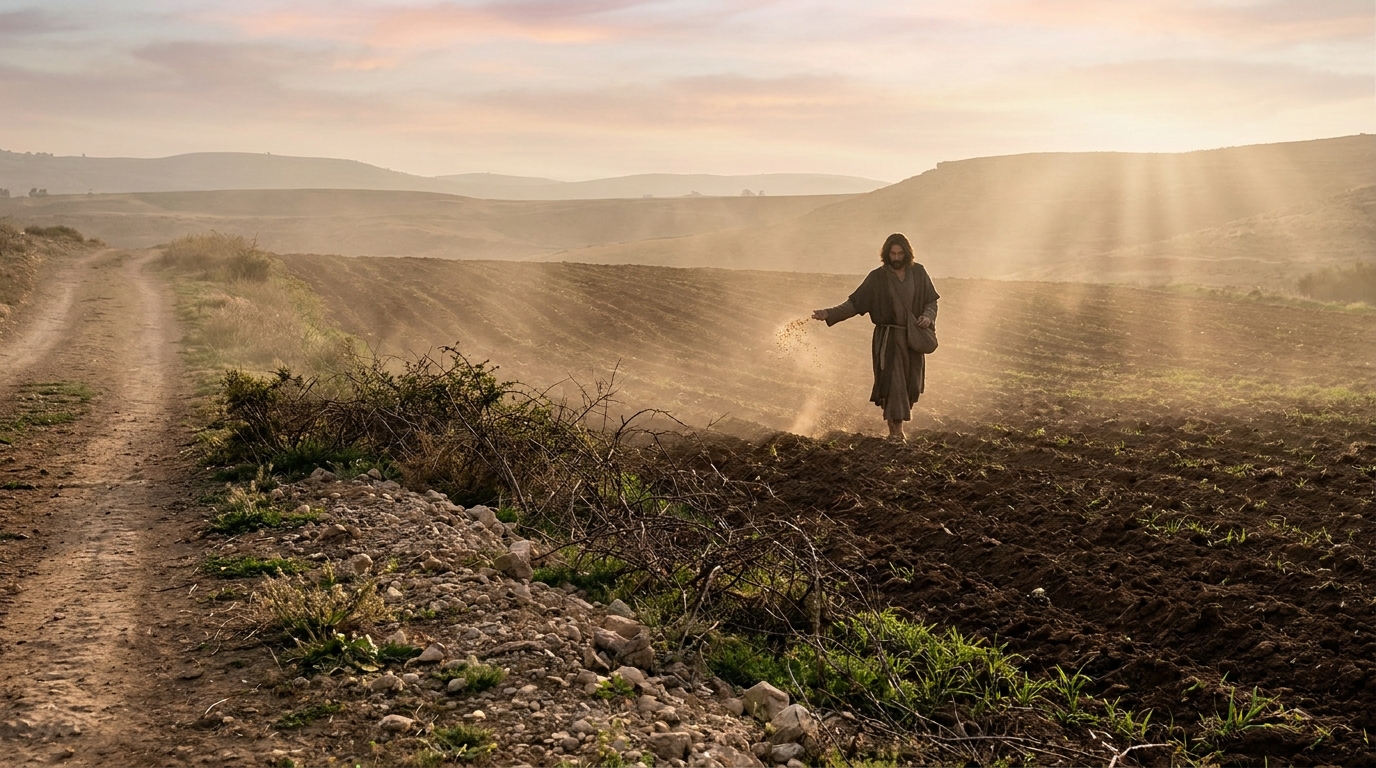
Sitting in a wooden fishing boat just offshore on the Sea of Galilee while crowds lined the beach, Jesus shared His foundational teaching on spiritual receptivity in Matthew 13:1–23 (also recorded in Mark 4:1–20 and Luke 8:4–15): The Parable of the Sower. Notice that in this story, the Farmer is generous and there is nothing wrong with the seed—the seed is the living, unchanging Word of God (Luke 8:11). The entire difference in the harvest comes down to the condition of the four soils of the human heart.
📖 Quick Diagnostic: The 4 Soils in Matthew 13:3–23
- 1. The Hardened Path (Verses 4, 19): Trampled ground where the seed sits on the surface and is quickly snatched away before it can sink in.
- 2. The Shallow Rocky Places (Verses 5–6, 20–21): Thin soil over limestone bedrock that sprouts fast with emotion, but withers under the heat of trials for lack of deep roots.
- 3. The Thorny Ground (Verses 7, 22): Fertile soil that is overcrowded by thorns—where the worries of this life and the deceitfulness of wealth choke the plant’s fruitfulness.
- 4. The Good Soil (Verses 8, 23): A soft, receptive, unhurried heart that hears the Word, understands it, and bears a 30-, 60-, or 100-fold harvest in patience.
Examining the 4 Soil Conditions of the Heart Today
1. The Hardened Footpath: Softening a Calloused or Hurried Heart
In ancient Galilean fields, unfenced footpaths crisscrossed right through the farmland, packed as hard as concrete by thousands of passing footsteps. When seed landed on that beaten path, it couldn’t penetrate the surface by a single millimetre, leaving it exposed for birds to snatch away (Matthew 13:4, 19).
How does a believer’s heart become packed down like a footpath? Rarely overnight! It happens gradually when we let unhealed hurts, cynicism, or hurried religious routine make us numb to God’s voice. The good news of Hosea 10:12 is that no soil has to stay hard: when we bring our honest pain to the Lord in prayer and practice the healing power of forgiveness, the Holy Spirit gently rains on our hearts and breaks up the fallow ground.
2. The Rocky Soil: Growing Deep Roots Beneath the Surface
Much of the hillside terrain around Galilee consists of a thin, 5-centimetre layer of warm topsoil resting directly on top of a solid shelf of limestone rock. Because that shallow dirt warms up quickly in the spring sun, seeds planted there actually sprout faster than anywhere else in the field (Matthew 13:5)—yet the moment the scorching summer sun arrives, the shoots wither because their roots hit rock and have no deep moisture.
Jesus explained in Matthew 13:20–21 that this pictures a faith built solely on emotional highs. Feelings are a wonderful gift from God, but emotional excitement alone cannot carry you when a storm hits. Deep spiritual roots are grown in the quiet, unseen places—through a simple, consistent daily Bible study plan and daily prayer even on ordinary Tuesdays when you don’t feel goosebumps.
3. The Thorny Ground: Why Worry and Busyness Are the Biggest Threats to Modern Women
Look closely at the third soil in Matthew 13:7 and 13:22, because it is the #1 struggle for devoted Christian women today. Unlike the hard path or the rocky ledge, the thorny ground is actually rich, deep soil! The seed takes root and grows into a real stalk—yet notice what happens: the thorns grow up alongside it and choke it, making it unfruitful.
Jesus names the exact thorns that crowd out our spiritual vitality across the three Gospels: “the worries of this life, the deceitfulness of wealth, and the desires for other things” (Matthew 13:22; Mark 4:19; Luke 8:14). Notice that the plant doesn’t die—it just becomes too exhausted and crowded to bear joyful fruit! Just as Martha’s anxious striving in Luke 10 pulled her away from Jesus’s feet, allowing our minds to stay overcrowded with anxiety and overthinking steals the nutrients meant for our spiritual peace.
4. The Good Soil: Bearing Fruit With Patience, Not Pressure (Luke 8:15)
What turns a heart into “good soil”? In Luke’s parallel account (Luke 8:15), Jesus explains that the good soil represents those who hear the Word, hold it fast in an honest and good heart, and “bear fruit with patience” (perseverance).
Notice how comforting that is: not every plant in the good soil produces the exact same volume—some yield thirtyfold, some sixtyfold, and some a hundredfold (Matthew 13:23)—and no seed turns into a harvest in twenty-four hours! God is not asking you to manufacture fruit overnight through stress; He simply invites you to clear away the weeds of hurry, hold fast to His promises, and let His Word do its quiet, living work inside you.
🌿 A Quiet-Time Reflection & Breath Prayer for Today
Which of the four soils most closely mirrors how your heart feels this week? Invite the Master Gardener to tend the soil of your soul right now:
- Inhale slowly: “Lord, soften my heart to receive the seed of Your Word…”
- Exhale in stillness: “…and clear away every thorn of worry that crowds out my peace.”
Give God’s Word unhurried space to take root each morning inside our 30-Day Christian Prayer Journals or our Walking in Grace 52-Week Devotional.
Explore Next: Why Did Jesus Speak in Parables? →Frequently Asked Questions About the Parable of the Sower
Why did the farmer scatter seed on paths, rocks, and thorns in the first place?
In first-century Galilee, farmers often practiced “broadcast sowing” before plowing—scattering seed generously by hand across the entire field and then plowing the soil afterward to turn the seeds under. More importantly, spiritually it reflects the extravagant generosity of God, who scatters the good news of His kingdom to every human heart without prejudice.
Can the soil of my heart change from season to season?
Yes! Even mature believers can notice “thorns” of worry and distraction creeping into the edges of their lives during busy seasons. That is why daily prayer, Sabbath rest, and staying in Scripture act like gentle spiritual gardening—weeding out anxiety and keeping our hearts soft and receptive.
What is one practical way you like to clear out the “thorns” of distraction before spending time in God’s Word? Share your favourite quiet-time habit in the comments below!