

Hi friend,
Have you ever been placed in a position of responsibility—in your family, workplace, ministry, or community—where the challenges felt overwhelmingly complex and you wondered how to lead effectively without losing your gentleness or peace?
Modern culture often insists that to be heard or respected, a leader must be loud, forceful, or controlling. Yet trying to carry authority in our own human intensity only leaves our spirits drained and anxious. When we open the pages of Scripture, God shows us a completely different model of influence: spiritual authority rooted in quiet confidence, prayerful discernment, and unshakeable trust in the Lord.
In Judges chapters 4 and 5, during one of the most lawless and discouraged eras of Israel’s history, God raised up Deborah—the only female judge recorded in the Old Testament to serve simultaneously as a prophetess, a national counselor, and a spiritual “mother in Israel” (Judges 5:7).
📖 Key Biblical Passages on Deborah’s Life (Judges 4–5)
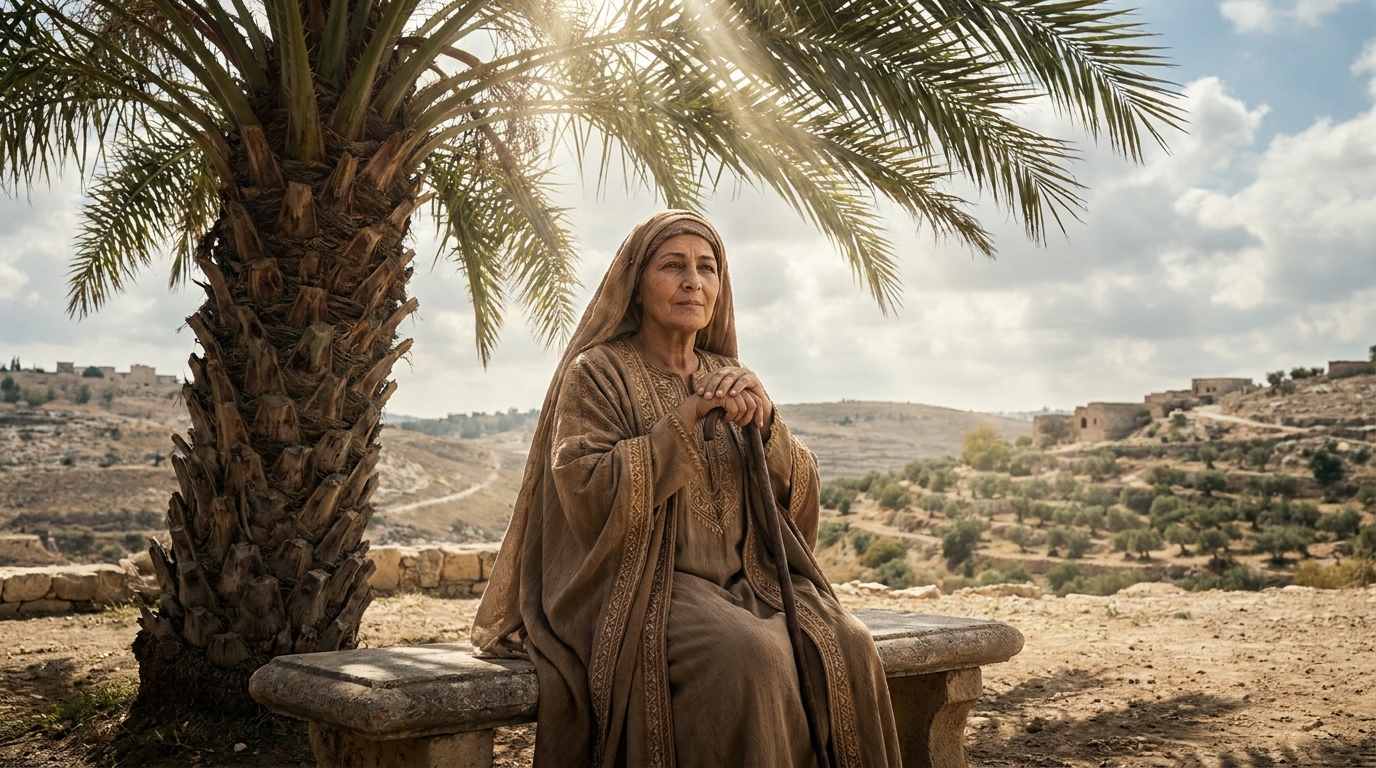
- Judges 4:1–5: While Jabin king of Canaan and his commander Sisera oppress Israel for 20 years with 900 iron chariots, Deborah holds court beneath the Palm of Deborah in the hill country of Ephraim.
- Judges 4:6–10: Deborah delivers God’s strategic word to Barak and agrees to ride alongside him to Mount Tabor to strengthen his courage.
- Judges 4:14–24: The Lord routs Sisera’s chariots at the Kishon River, and Deborah’s prophetic word is fulfilled through Jael.
- Judges 5:1–31: Deborah and Barak sing a magnificent hymn of praise, and the land enjoys 40 years of peace.
The Core Strengths of Deborah’s Leadership
Before diving into the spiritual lessons of Judges 4 and 5, notice the three distinct qualities that set Deborah apart among the leaders of Israel:
- Attentive Ear to God’s Voice (Judges 4:4–6): Before Deborah ever issued a public ruling or military summons, she listened closely to the Lord as a prophetess. Her wisdom wasn’t based on human guesswork; it flowed out of intimacy with God.
- Accessible, Humble Presence (Judges 4:5): Rather than locking herself behind palace walls, Deborah sat outdoors under a palm tree between Ramah and Bethel so ordinary families could bring their disputes and burdens directly to her.
- Courage in the Face of Intimidating Odds (Judges 4:3, 14): Sisera’s 900 iron chariots were the ancient equivalent of an invincible armored division. While Israel’s villages hid in fear for two decades, Deborah fixed her eyes on the sovereignty of God.
4 Transformative Faith Lessons from Deborah in the Bible
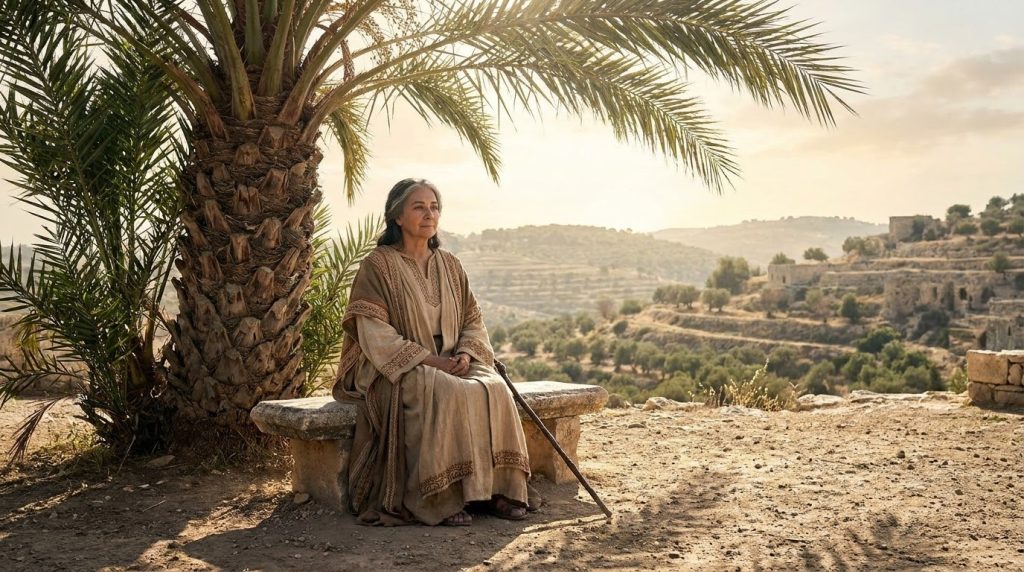
1. True Authority Flows From Secret Communion Under the “Palm Tree”
Why did the people of Israel travel up into the hill country of Ephraim to seek Deborah’s counsel? Because in a chaotic season when everyone else was panicking, Deborah remained anchored in the presence of God.
Public wisdom is always born in private stillness. When you prioritize unhurried daily time in God’s Word and unlock the spiritual strength found in the power of prayer, you don’t have to scramble or react out of fear when a crisis hits your home or workplace.
2. Godly Leaders Empower Others Rather Than Competing With Them
Look at the remarkable exchange between Deborah and the military commander Barak in Judges 4:6–9. When Deborah passed along the Lord’s command to gather ten thousand men at Mount Tabor, Barak hesitated—insisting that he would only march into battle if Deborah went with him.
Notice how Deborah responded: she didn’t mock Barak’s fear, nor did she push him aside to take over his military post. Instead, she immediately agreed to walk into the danger zone beside him to lend him her spiritual confidence—while honestly reminding him that the ultimate honor of defeating Sisera would go to another woman, Jael. Just as we see in our study of the 12 Unqualified People God Used in the Bible and in the supportive partnership of Moses and Aaron, godly leadership calls forth courage in the people standing beside you.
3. Arising as a “Mother in Israel”: Leading With Nurturing Strength
In Judges 5:7, when Deborah looked back over what prompted her to step forward during a time of national paralysis, she didn’t call herself a queen, a general, or a celebrity. She described herself simply as “a mother in Israel”.
Biblical womanhood and strong leadership are never at odds. Like Queen Esther stepping forward in faith for her people, Deborah led with fierce maternal care—protecting the vulnerable, restoring order where families were hurting, and nurturing the spiritual courage of an entire generation.
4. Turn Every Breakthrough Directly Into a Song of Praise
How did God defeat Sisera’s 900 iron chariots? As Deborah and Barak’s song in Judges 5:4, 20–21 reveals, when Barak charged down Mount Tabor in obedience to Deborah’s command, the Lord sent a torrential downpour that caused the Kishon River to overflow—turning the valley floor into deep mud that bogged down every single enemy chariot!
The moment the battle ended, Deborah didn’t boast in her own counsel. All of Judges chapter 5 is a soaring hymn of thanksgiving giving every ounce of credit to the Lord—demonstrating the transformative power of worship to guard our hearts in humility and usher in forty years of rest (Judges 5:31).
🌿 A Quiet-Time Reflection & Breath Prayer for Today
Where is God asking you to arise as a voice of calm wisdom, encouragement, and spiritual strength in your family or community this week?
- Inhale slowly: “Lord, You are my wisdom and my unshakeable strength…”
- Exhale in confidence: “…March on, my soul; be strong in the grace of God!” (Judges 5:21)
Anchor your daily leadership in quiet communion with Jesus using our 30-Day Christian Prayer Journals or our Walking in Grace 52-Week Devotional.
Explore Next: 12 Unqualified People God Used in the Bible →Frequently Asked Questions About Deborah in the Bible
What does the name Deborah mean in Hebrew?
In Hebrew, the name Deborah (Devorah) means “bee”—a fitting symbol in the ancient world for industry, order, sweetness of wisdom to one’s family, and fierce protection against enemies.
How did Deborah’s prophecy in Judges 4:9 come true?
Because Barak hesitated to go without her, Deborah prophesied that the Lord would deliver Sisera into the hand of a woman. When Sisera fled on foot from the muddy battlefield at the Kishon River, he sought refuge in the tent of Jael, the wife of Heber the Kenite, who defeated him and ended the twenty-year oppression of Israel (Judges 4:17–22).
Which quality of Deborah’s leadership—her quiet discernment under the palm tree, her encouragement of Barak, or her song of praise—inspires you most today? Share your thoughts in the comments below!

