Hi friend,
Have you ever felt like an outsider looking in—wondering if your past choices, spiritual distance, or everyday compromises have placed a crowd of obstacles between you and the nearness of God?
Many of us first heard the story of Zacchaeus in Luke 19:1–10 as a simple children’s Sunday school song about a short man climbing a sycamore tree. Yet when we read Luke’s account with adult eyes, we discover one of the most profound stories of radical grace, spiritual hunger, and life-changing repentance in the entire New Testament.
As the chief tax collector in the wealthy trade hub of Jericho, Zacchaeus had everything money could buy—and yet he was bankrupt where it mattered most. Despised by his own neighbors as a corrupt collaborator with Rome, he stood on the outside of religious community until the afternoon Jesus walked beneath his tree, looked up through the leaves, and invited Himself to dinner.
📖 Key Biblical Passage to Read Along: Luke 19:1–10
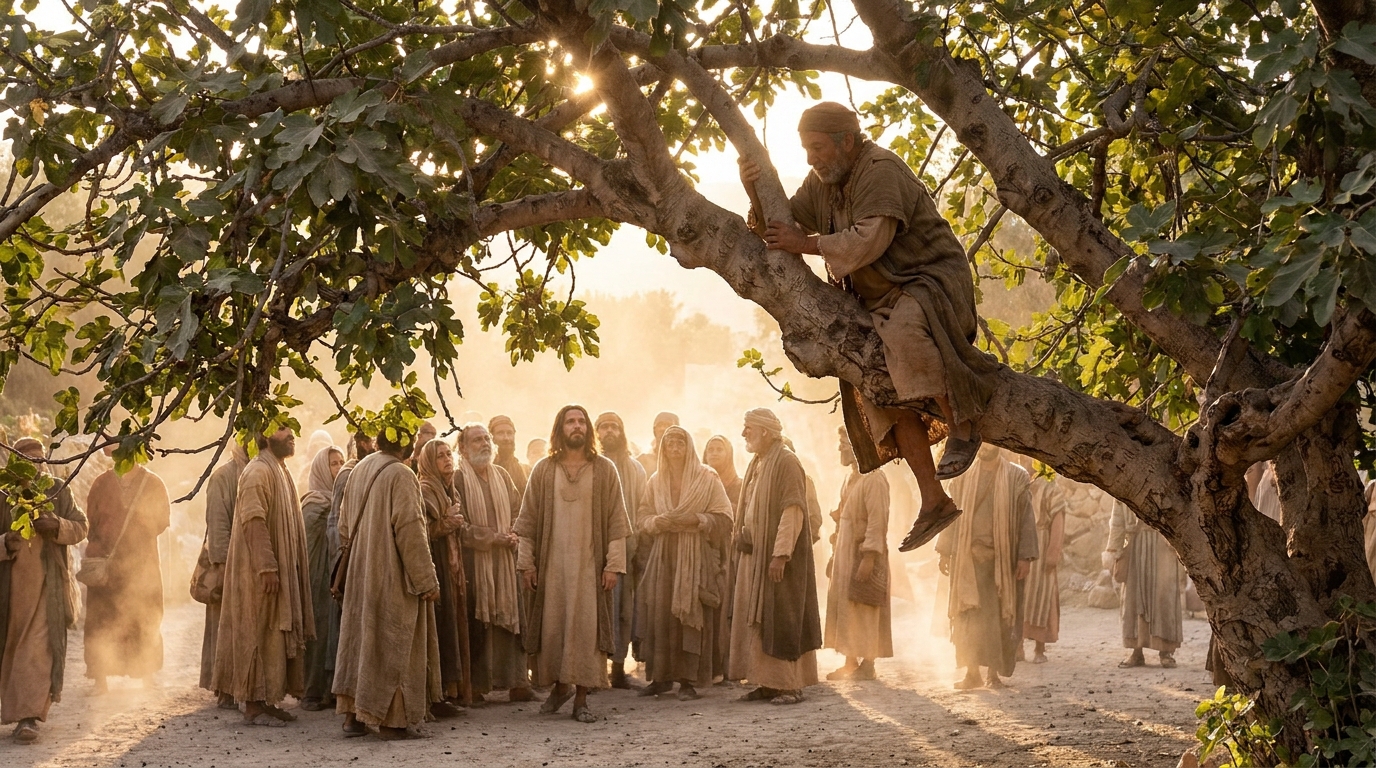
The Historical Setting: On His final journey toward Jerusalem before Passover, Jesus passes through Jericho—a prosperous palm city and customs crossroads near the Jordan River. While crowds line the road to cheer the famous Teacher, Jericho’s wealthiest and most resented tax official scrambles up a roadside sycamore-fig tree just to catch a glimpse of Him.
4 Transformative Lessons from Zacchaeus and the Sycamore Tree
1. True Spiritual Hunger Is Willing to Set Aside Pride
In first-century culture, dignified wealthy men never sprinted down a public street, and they certainly never hiked up their costly robes to climb a roadside tree like a young boy! Yet when Zacchaeus realized that his short stature—and the cold shoulders of a hostile crowd refusing to let him through—blocked his view of Jesus (Luke 19:3–4), he cared more about seeing Christ than preserving his public image.
As we see across all 12 Unqualified People God Used in the Bible, pride keeps us standing at the back of the crowd, while humility is willing to look foolish if it brings us closer to Jesus.
2. Jesus Stops at Your Tree and Calls You by Your True Name
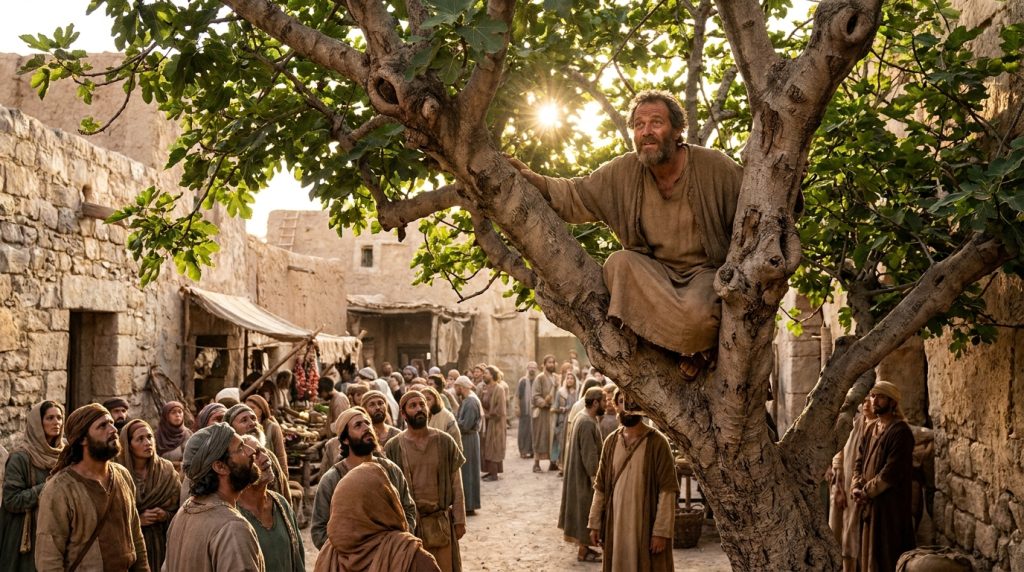
Zacchaeus climbed into those broad, leafy sycamore branches hoping to see Jesus without being noticed himself. Instead, the moment Jesus reached that exact spot on the road, He stopped the entire procession, looked straight up into the branches, and addressed him personally by name: “Zacchaeus” (Luke 19:5).
Here is a remarkable Hebrew detail: the name Zacchaeus comes from the Hebrew root Zakkai, which means “pure, innocent, or righteous.” For years, whenever people in Jericho spat out his name, it must have sounded like bitter irony against a man known for greed. Yet when Jesus looked up and spoke his name with warmth, He was calling Zacchaeus out of his old life and into the righteous man grace was about to make him!
3. Unconditional Hospitality Melts a Hardened Heart Faster Than Scorn
Notice the order of events in Luke 19:5–7. Jesus did not stand at the bottom of the tree and demand that Zacchaeus clean up his financial ledgers before He would associate with him. Instead, Jesus offered fellowship first—telling Zacchaeus to hurry down because He intended to be a guest in his home that very day.
Years of religious scowls and neighborhood gossip had never convinced Zacchaeus to part with a single coin. Yet one afternoon sitting across the table from the kindness and forgiving mercy of Jesus broke the grip of greed over his soul forever. Just as Romans 2:4 reminds us, it is the kindness of God that leads our hearts to genuine repentance.
4. When Grace Enters Your Home, It Transforms How You Live and Give
While the crowd outside grumbled that Jesus had gone to be the guest of a notorious sinner (Luke 19:7), a quiet miracle was taking place inside the dining room. Standing up before the Lord in Luke 19:8, Zacchaeus joyful pledged two extraordinary commitments on the spot:
- He gave half of all his possessions directly to the poor.
- He promised to pay back anyone he had defrauded four times the amount—voluntarily applying the strictest Old Testament restitution standard (Exodus 22:1).
Why did a man who spent his career hoarding wealth suddenly give away a fortune with a smile? Because when you discover the treasure of being loved by Jesus, earthly idols lose their hold on your hands. In response, Jesus spoke the crowning promise of Luke 19:9–10—declaring that salvation had come to that house, because the Son of Man came specifically to seek and to save the lost (read more on understanding the true purpose of Jesus’s ministry).
🌿 A Quiet-Time Reflection & Breath Prayer for Today
No matter where you feel hidden in the branches today, Jesus stops beneath your tree and invites Himself into the center of your home and heart:
- Inhale slowly: “Jesus, thank You for seeking me and calling me by name…”
- Exhale in joy: “…I gladly welcome Your presence into every room of my heart.”
Want a daily place to meet with Jesus in prayer and reflection? Explore our 30-Day Christian Prayer Journals or our guided Walking in Grace 52-Week Devotional.
Read Next: 12 Unqualified People God Used in the Bible →Frequently Asked Questions About Zacchaeus
Why were tax collectors like Zacchaeus so disliked in the New Testament?
Under the Roman tax-farming system, local collectors bid for contracts to collect tolls and customs for the occupying Roman Empire, earning their personal profit by overcharging their own countrymen. As a “chief tax collector” (Luke 19:2), Zacchaeus oversaw other collectors in prosperous Jericho, making him a symbol of betrayal and extortion until he met Christ.
What kind of tree did Zacchaeus climb in Jericho?
Luke 19:4 identifies it as a sycamore-fig tree (Ficus sycomorus), an evergreen Middle Eastern tree prized for its wide, low-hanging horizontal branches and dense foliage—making it easy for a short man to climb quickly and peer out over a crowded roadway.
What part of Zacchaeus’s encounter with Jesus—his eagerness to climb the tree, Jesus calling his name, or his joyful generosity—encourages you most today? Leave a comment below!