Hi friend,
If you were planning the grand public debut of the Son of God on earth, where would you stage His very first miracle? Human instinct would pick the marble courts of the Jerusalem Temple or the steps of a royal palace in Rome.
Instead, in John 2:1–11, Jesus unveiled His glory for the first time in the quiet hills of Lower Galilee—at an ordinary village wedding reception in Cana (the hometown of Nathanael, located roughly 14.5 kilometres north of Nazareth). And what was the emergency that prompted heaven’s first sign under the New Covenant? A young couple’s family ran out of wine in the middle of their wedding feast!
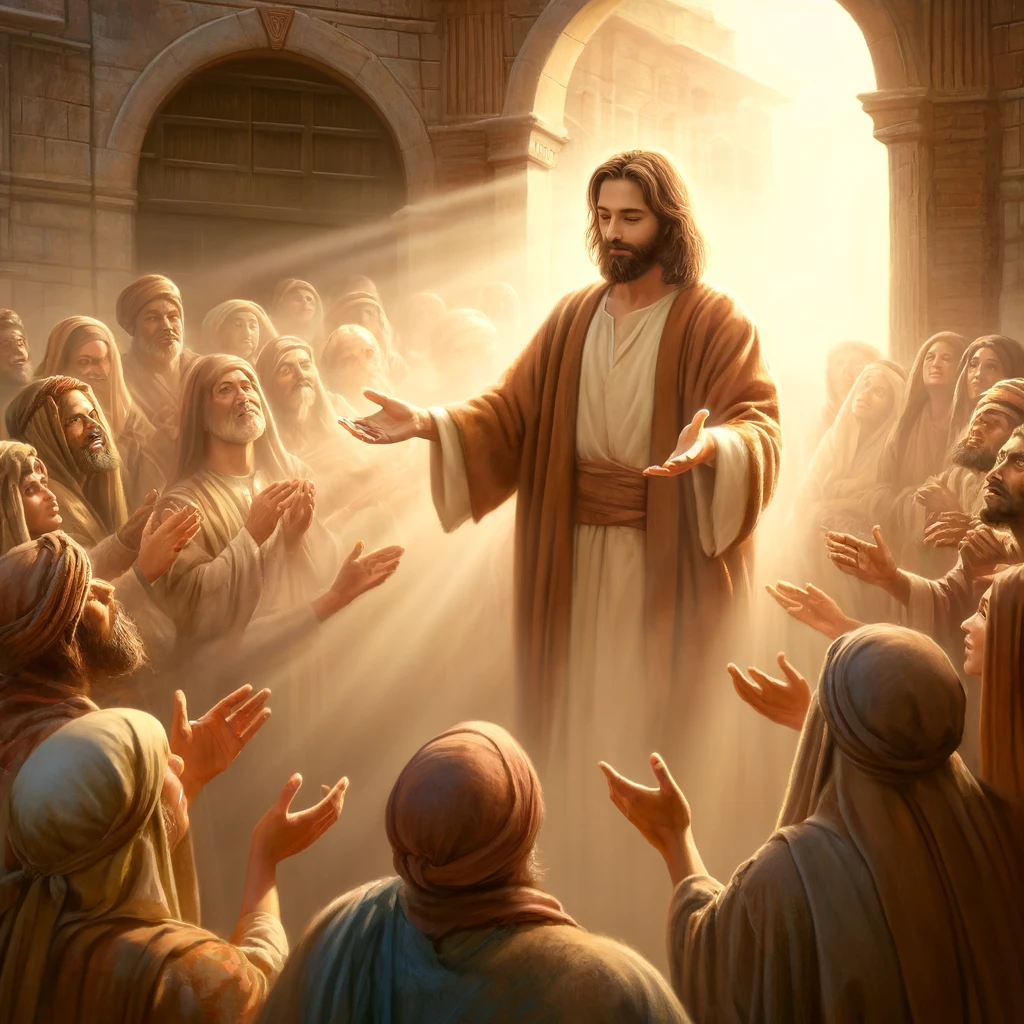
As the opening account in our series on the Miracles of Jesus, the Wedding at Cana shows us that nothing in your home or family life is too small for Jesus to care about—and that when you invite Him to the table, He replaces dry religious striving with overflowing joy.
📖 Key Biblical Passage: John 2:1–11
- John 2:1–3: Attending a wedding in Cana alongside His mother Mary and His newly called disciples, Jesus is informed by Mary that the hosts have run out of wine.
- John 2:4–5: After Jesus reminds her that His hour has not yet come, Mary turns to the household servants and gives them her famous instruction: “Do whatever he tells you.”
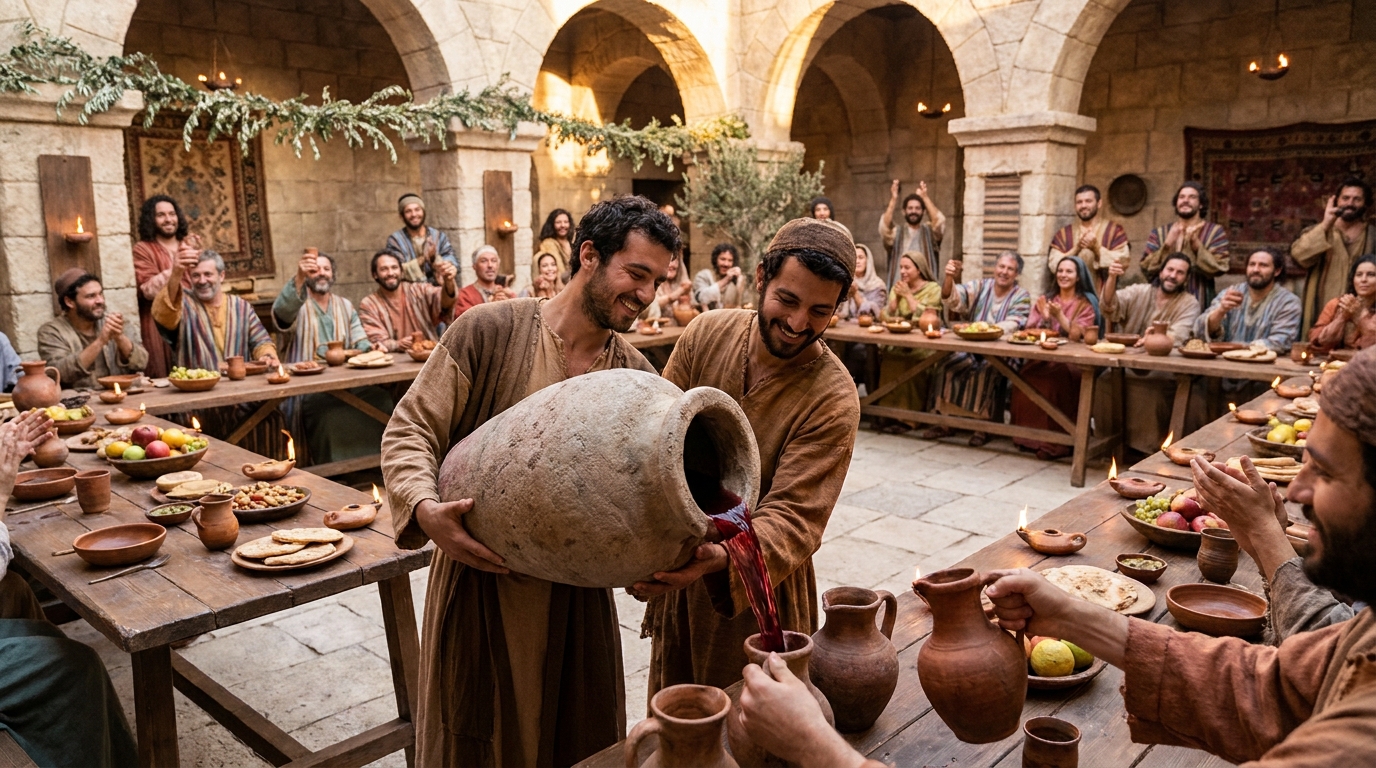
- John 2:6–8: Standing nearby are six large stone water jars used for Jewish ceremonial washing, each holding 76 to 114 litres. At Jesus’s word, the servants fill them to the brim with water and draw some out for the master of the banquet.
- John 2:9–11: The water has become the finest vintage wine—revealing Jesus’s glory and anchoring His disciples’ faith.
4 Transformative Faith Lessons from the Wedding at Cana
1. Jesus Cares About the Ordinary Embarrassments of Your Home (John 2:1–3)
In first-century Jewish village life, a wedding celebration lasted an entire week, and hospitality was a sacred family duty. Running out of wine mid-celebration wasn’t just a minor catering hiccup—it meant public shame that a bride and groom would carry in their community for years, and in some cases even opened the groom’s family to legal financial claims from the bride’s relatives.
Notice what Mary did the moment she spotted the empty wine skins in John 2:3: she didn’t gossip to the other guests or panic; she simply brought the need straight to Jesus in a four-word sentence: “They have no wine.” You never have to dress up your practical worries to bring them to God in prayer. When your patience, your energy, or your household budget runs dry, bring the empty jar directly to Jesus.
2. Mary’s Timeless Advice: “Do Whatever He Tells You” (John 2:5)
Have you ever noticed that the very last recorded words spoken by Mary the mother of Jesus in all four Gospels are the five words she spoke to the catering servants in John 2:5? Turning to the waiters, she pointed them straight to her Son and said: “Do whatever he tells you.”
Think about how much trust it took for those exhausted servants to obey what Jesus asked next in verses 7–8. Instead of sending them to the market to buy wine, Jesus told them to haul bucket after bucket of heavy well water to fill six massive stone jars—totalling between 456 and 684 litres of water!—and then dip a cup into that water and hand it straight to the headwaiter without tasting it first.Notice the detail John records in verse 7: the servants didn’t fill the jars halfway; “they filled them to the brim.” Wholehearted obedience in the small, hidden tasks is often the exact vessel God uses for a miracle.
3. Why Six Stone Purification Jars? From External Ritual to Inward Grace (John 2:6)
John never wastes a detail in his Gospel. He calls His miracles “signs” (John 2:11) because every physical miracle points to a deeper spiritual reality. Look at the containers Jesus chose in John 2:6: six stone water jars used by the Jews for ceremonial hand-washing and ritual purification.
In biblical symbolism, the number six (one short of seven, the number of divine completeness) represents human incompleteness and striving under the law. Those cold stone jars could wash the outside of a person’s hands, but they could never cleanse a guilty conscience or put joy inside a weary heart—just as Jesus explained in the very next chapter to Nicodemus in John 3! By turning the water of ceremonial washing into the rich wine of a wedding feast, Jesus signaled that the old era of external religious striving was giving way to the overflowing grace of the New Covenant.
4. With Jesus, the Best Is Always Saved for Last (John 2:9–10)
When the master of the banquet tasted the cup drawn from the stone jars—not knowing where it had come from, though the servants who had drawn the water knew!—he called the bridegroom aside in amazement (John 2:9–10). In the world’s economy, hosts always set out their finest wine first while palates are sharp, and bring out the cheaper vintage later. Yet with Jesus, “you have saved the best till now!”
The world always gives its brightest promises up front and leaves us emptier as time goes on. Walking with Jesus works in the exact opposite direction: through every season of sanctification and all the way to the Marriage Supper of the Lamb (Revelation 19:9), He always saves His best for last.
🌿 A Quiet-Time Reflection & Breath Prayer for Today
Where do you feel like you have “run out of wine” in your own strength this week? Invite Jesus into the center of your home and fill your jars of obedience to the brim:
- Inhale slowly: “Jesus, I bring my empty jars and ordinary worries to You…”
- Exhale in joy: “…help me do whatever You tell me and trust Your overflowing grace.”
Anchor your home in daily prayer and gratitude with our printable 30-Day Christian Prayer Journals or our Walking in Grace 52-Week Devotional.
Explore Next: The Miracles of Jesus — Powerful Acts of Faith and Healing →Frequently Asked Questions About the Wedding at Cana
Why did Jesus address Mary as “Woman” in John 2:4?
While “Woman” can sound abrupt to modern English ears, in first-century Greek and Aramaic (Gynai) it was a title of deep respect and affection, roughly equivalent to “Dear lady” or “Madam.” In fact, it is the exact same tender title Jesus used when speaking to Mary from the cross in John 19:26 as He entrusted her to the care of the Apostle John.
Why were the water jars at Cana carved out of stone instead of clay pottery?
Under Levitical purity laws (Leviticus 11:33), porous earthenware clay pots became ceremonially unclean if touched by impurity and had to be smashed, whereas solid carved limestone vessels did not absorb ritual uncleanness—which is why first-century Jewish homes and wedding halls prized heavy stone jars for purification water.
Which part of the miracle at Cana—Mary bringing the quiet problem to Jesus, the servants filling the jars to the brim, or Jesus saving the best for last—encourages your heart most today? Share below!