

Hi friend,
Have you ever served faithfully alongside family members or ministry friends for years, only to feel a sudden, uncomfortable sting of comparison or resentment when someone else received greater recognition?
One of the reasons we can trust the Bible completely is that it never hides the human flaws of its greatest heroes. Across the books of Exodus and Numbers, Miriam—the older sister of Aaron and Moses—stands as the very first woman in Scripture explicitly given the title of prophetess (Exodus 15:20), and one of three national leaders God credits in Micah 6:4 with guiding Israel out of bondage.
From a brave young girl standing watch beside a papyrus basket in the Nile reeds to an eighty-plus-year-old worship leader lifting her tambourine on the shores of the Red Sea—and even through her humbling battle with jealousy in Numbers 12—Miriam’s life teaches us how to lead with courage while guarding our hearts against comparison.
📖 Key Biblical Passages on the Life of Miriam
- Exodus 2:1–10: As a young girl, Miriam watches over baby Moses in the Nile reeds and boldly proposes to Pharaoh’s daughter that Moses’s own Hebrew mother nurse him.
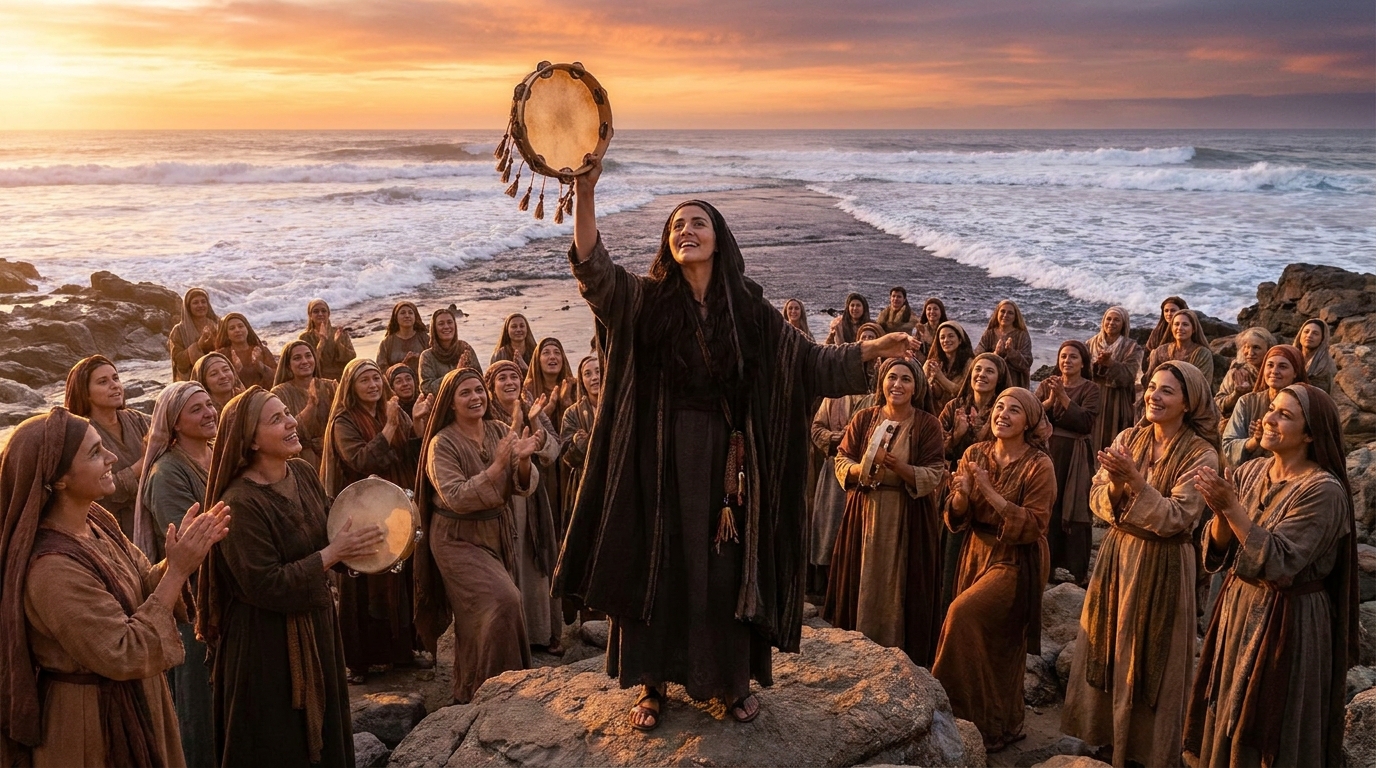
- Exodus 15:20–21: After the parting of the Red Sea, Miriam the prophetess takes a timbrel in her hand and leads all the women of Israel in a triumphant song of praise.
- Numbers 12:1–16: When Miriam and Aaron speak against Moses out of spiritual rivalry, Miriam is struck with leprosy—and then healed and restored after Moses’s immediate intercessory prayer.
- Micah 6:4: Centuries later, God honors her lifelong service alongside her brothers: “I brought you up out of Egypt and redeemed you from the land of slavery; I sent Moses to lead you, also Aaron and Miriam.”
The Strengths and Honest Struggles of Miriam
When we look at the three major scenes of Miriam’s life in the Torah, we see a woman of extraordinary initiative who also faced a very real temptation in her later years:
- Strength — Quick-Thinking Courage Under Pressure (Exodus 2:4–8): Imagine a young Hebrew enslaved girl stepping out of the tall marsh grass to address an Egyptian royal princess surrounded by palace attendants! Miriam’s calm poise reunited baby Moses with their mother Jochebed during his foundational childhood years.
- Strength — Prepared Expectancy for Worship (Exodus 15:20): Why did Miriam have a hand-drum (timbrel) in her travel bag when Israel fled Egypt in haste? Because she packed her instrument in faith, fully expecting God to give His people a song of deliverance on the other side!
- Struggle — Allowing Sibling Rivalry to Cloud Her Spirit (Numbers 12:1–2): After years of sharing leadership in the wilderness, Miriam allowed criticism over Moses’s Cushite wife to mask a deeper root of spiritual envy—asking whether the Lord spoke only through Moses and not through her and Aaron as well.
4 Transformative Faith Lessons from Miriam in the Bible
1. Station Yourself by the Reeds: Faith Watches to See What God Will Do
When Jochebed could no longer hide three-month-old Moses from Pharaoh’s soldiers and placed his waterproofed papyrus basket among the reeds of the Nile, look at what young Miriam did in Exodus 2:4: “His sister stood at a distance to see what would happen to him.”
Miriam didn’t walk away in despair assuming all was lost; she stationed herself in watchful expectation—and when God opened a narrow window of opportunity with Pharaoh’s daughter, she was right there ready to speak up! Whenever you entrust a loved one or an uncertain situation into God’s hands in prayer, keep standing watch in faith to see how God moves.
2. Pack Your Tambourine Before the Red Sea Parts (Exodus 15:20–21)
Notice a tiny detail tucked inside Exodus 15:20 that is easy to miss: as soon as Israel walked up onto the dry eastern shore of the Red Sea and saw Pharaoh’s chariots swept away (see our full guide to the Exodus story of faith and deliverance), Miriam pulled out a timbrel—and all the women followed her with timbrels and dancing!
When you are packing up everything you can carry on your shoulders in the middle of the night during the Passover exodus, you only pack what you consider essential. Under Miriam’s influence, the women of Israel packed musical instruments while they were still enslaved in bricks and mortar—because they trusted God would give them a reason to dance! Practicing the transformative power of worship means preparing your heart to praise God even before you cross the sea.
3. Guarding Your Heart When Comparison Whispers “What About Me?” (Numbers 12)
Why is Numbers chapter 12 included in the Bible? Because even seasoned believers who have served God for eighty years are not immune to the trap of comparison. In Numbers 12:1–2 (shortly after God appointed seventy elders to assist Moses in Numbers 11), Miriam and Aaron began murmuring against their younger brother—using his Cushite wife as a pretext while revealing their real grievance in verse 2: “Has the Lord indeed spoken only through Moses? Has He not spoken through us also?”
Notice that what they said was factually true—Miriam was a prophetess and Aaron was the high priest! Yet God assigns distinct roles inside His family, and whenever we let discontentment over someone else’s calling turn into criticism, our spiritual joy dries up immediately.
4. The Beauty of Intercession, Waiting Communities, and Full Restoration
When God’s discipline fell on Miriam in Numbers 12:10–15 and her skin turned white with leprosy, look at two breathtaking pictures of grace that followed:
- Moses Prayed Immediately for the Sister Who Hurt Him: Instead of saying, “She got what she deserved,” Moses cried out a five-word prayer from a broken heart in Numbers 12:13: “Please, God, heal her now!” (Read more in our study on the bond between Moses and Aaron.)
- An Entire Nation Waited for Her Restoration: During the seven days Miriam spent quarantined outside the camp while being restored, Numbers 12:15 records that “the people did not move on until Miriam was brought back.” Two million Israelites refused to take a single step forward without the woman who had watched over their deliverer and led them in song!
🌿 A Quiet-Time Reflection & Breath Prayer for Today
Pack your spiritual “tambourine” of expectancy this morning, and ask the Lord to keep your heart free from every whisper of comparison:
- Inhale slowly: “Lord, I rejoice in the unique calling You have placed in my hands…”
- Exhale in praise: “…I lift my voice in thanksgiving before the Red Sea even parts.”
Cultivate a heart of daily gratitude and prayer inside our 30-Day Christian Prayer Journals or our Walking in Grace 52-Week Devotional.
Read Next: The Amazing Story of Moses — From Prince to Prophet →Frequently Asked Questions About Miriam in the Bible
How is the name “Mary” in the New Testament connected to Miriam?
They are the exact same name! In Hebrew and Aramaic, the name of Jesus’s mother—as well as Mary Magdalene and Mary of Bethany—was Miriam (Maryam), which was transliterated into Greek as Maria and into English as Mary.
Why does Exodus 15:20 call Miriam “Aaron’s sister”?
Because Aaron was the eldest brother in the household (born three years before Moses, while Miriam was the oldest of all three siblings) and had grown up alongside Miriam in Egypt during the forty years Moses spent away in Midian, associating her with Aaron honored their lifelong shared ministry among the people.
Which scene from Miriam’s life—standing watch by the Nile reeds, dancing at the Red Sea, or being restored by grace in Numbers 12—speaks most to you today? Share in the comments below!

