Hi friend,
Have you ever felt a flash of hot indignation when someone mistreated you or someone you loved—or caught yourself wrestling with a quiet desire for your hard work to be noticed, praised, and given a seat of honor?
Because the Apostle John is famous for writing the tender words of 1 John—reminding believers over and over to love one another—many Christians picture young John and his older brother James as soft-spoken, mild-mannered mystics.
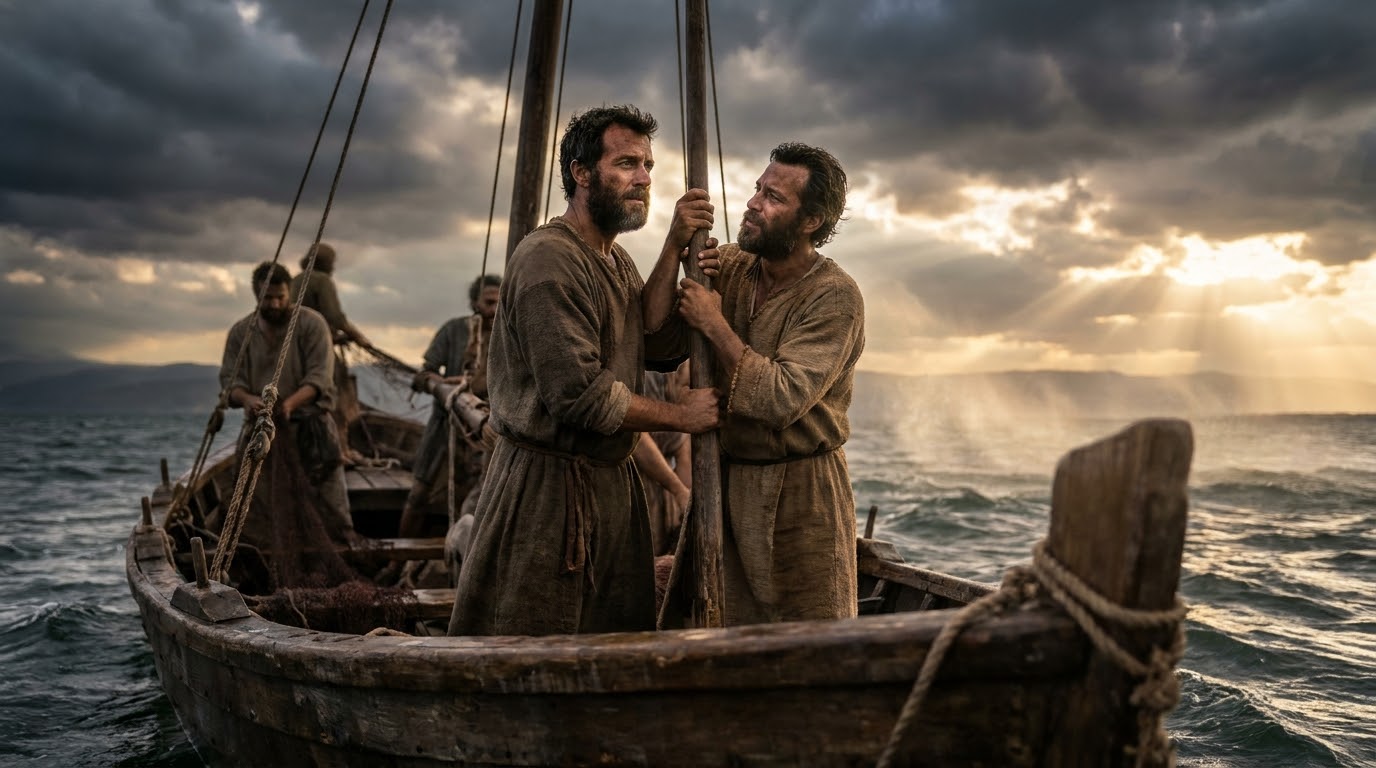
Yet when Jesus first called the two fishermen out of their father Zebedee’s boat on the Sea of Galilee, He gave them an unforgettable Aramaic nickname in Mark 3:17: Boanerges, which means “Sons of Thunder.” Fiery, fiercely protective, ambitious, and quick to want judgment called down on their rivals, James and John show us that Jesus doesn’t crush a passionate temperament—He refines our thunder into holy, sacrificial love.
📖 Key Biblical Passages on James and John (The Sons of Thunder)
- Matthew 4:21–22 & Mark 3:17: Leaving their father Zebedee and their hired servants in the fishing boat, James and John follow Jesus immediately and receive the nickname “Sons of Thunder.”
- Luke 9:49–56: In two back-to-back scenes, John tries to stop an outsider from ministering in Jesus’s name, and both brothers ask permission to call down fire from heaven on an unwelcoming Samaritan village.
- Mark 10:35–45: Alongside their mother Salome (Matthew 20:20), James and John ask for the two highest thrones at Jesus’s right and left hand, prompting Jesus’s teaching on servant greatness.
- John 19:26–27, Acts 12:2 & 1 John 4:7–8: Transformed by the cross, John cares for Jesus’s mother Mary, James becomes the first apostle martyred for Christ, and John pens the epistles of love.
The Strengths and Weaknesses of James and John
In our pillar guide to the 12 Disciples’ Strengths and Weaknesses, the sons of Zebedee illustrate how raw zeal looks both before and after the cross refines it:
- Strength — Wholehearted Commitment (Matthew 4:21–22): Zebedee’s fishing business was prosperous enough to employ hired workers (Mark 1:20), yet when Jesus called them, James and John walked away from family comfort immediately without looking back.
- Strength — Closest Inner-Circle Devotion: Alongside Simon Peter, James and John were invited into Jesus’s most intimate moments—witnessing the raising of Jairus’s daughter (Mark 5:37), the glory of the Mount of Transfiguration, and Jesus’s agonizing prayers in Gethsemane (Matthew 26:37).
- Weakness — Sectarian Pride and Short Tempers (Luke 9:49–55): Early on, their fierce loyalty to Jesus often came out as harsh intolerance toward anyone outside their group—wanting to silence a man casting out demons because he wasn’t in their circle, and wanting to incinerate a Samaritan town that refused them lodging!
- Weakness — Jockeying for Status (Mark 10:35–41): Even while Jesus was walking toward Jerusalem explaining that He was about to be crucified (Mark 10:32–34), the brothers were busy lobbying for the top two seats of honor in His kingdom, stirring up indignation among the other ten disciples.
4 Transformative Faith Lessons from the Sons of Thunder
1. Zeal Without Mercy Always Wants to Call Down Fire (Luke 9:51–56)
Look at what happened in Luke 9:51–55 as Jesus traveled south toward Jerusalem and sent messengers ahead into a Samaritan village. When the villagers refused to welcome Jesus because His face was set toward Jerusalem, James and John’s protective temper flared immediately. Remembering how the prophet Elijah had called down fire on soldiers in 2 Kings 1 near that very region, the brothers asked if Jesus wanted them to command fire to come down from heaven and consume the town!
Jesus turned and rebuked them on the spot, reminding them that the Son of Man did not come to destroy human lives, but to save them. Notice what happens just a few years later in Acts 8:14–17: after the Resurrection, who traveled right back down to Samaria to lay hands on new Samaritan believers and pray for them to receive the Holy Spirit? Peter and John! The very village region John once wanted to burn with judgment became the place he blessed with the fire of the Holy Spirit.
2. True Greatness Wears a Towel, Not a Crown (Mark 10:35–45)
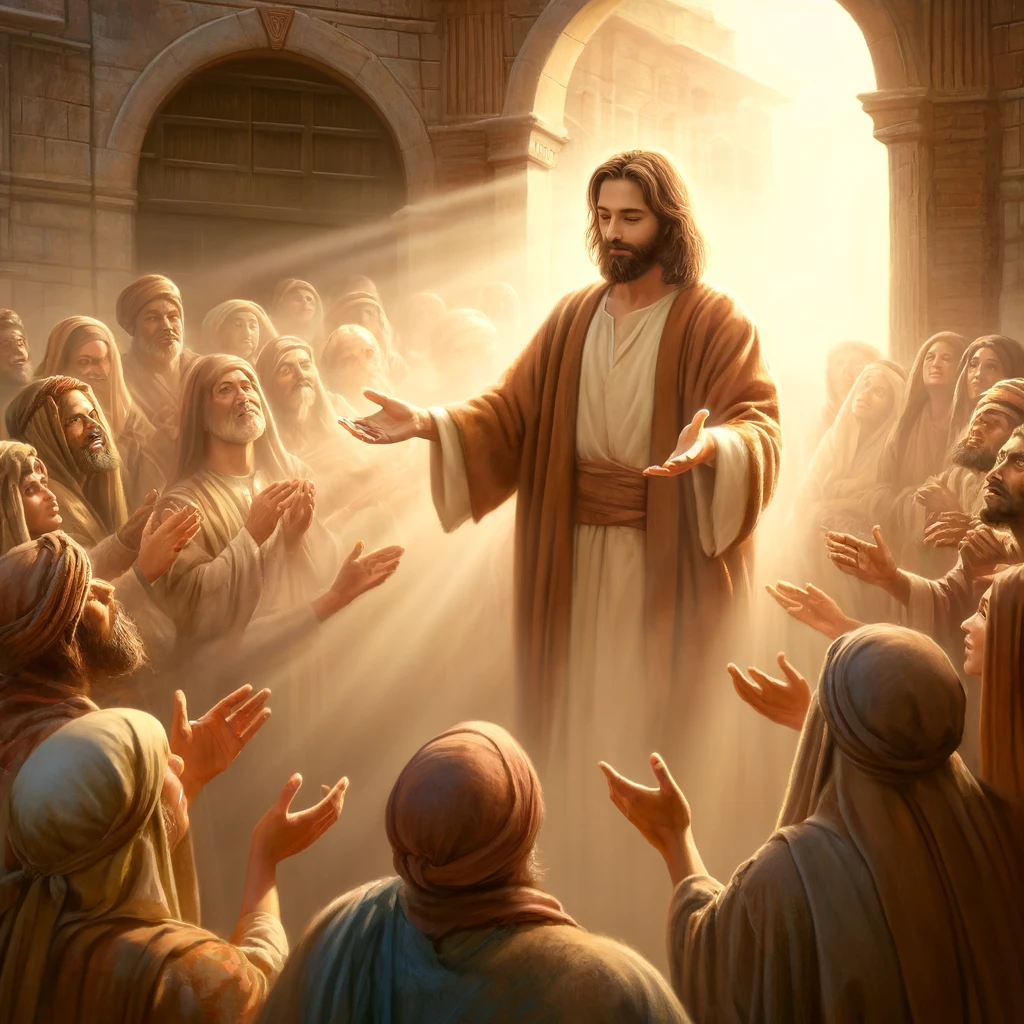
When James and John asked to sit at Jesus’s right and left hand in glory (Mark 10:37), Jesus didn’t scold them for wanting to be close to Him—instead, He gently asked if they understood the cost of that closeness: could they drink the cup of suffering He was about to drink? When they confidently replied that they could, Jesus called all twelve disciples together and redefined leadership forever (Mark 10:42–45).
In earthly kingdoms, rulers lord their position over others; in God’s kingdom, whoever wants to be great must become a servant—just as Jesus demonstrated when washing the disciples’ feet in the Upper Room and giving His life as a ransom for many.
3. Drinking the Cup in Two Very Different Ways (Acts 12:2 & Revelation 1:9)
In Mark 10:39, Jesus prophesied that both James and John would indeed drink His cup of suffering—yet look at the two completely different timelines God ordained for the two brothers:
- James drank the cup of sudden martyrdom: In Acts 12:1–2 (around 44 AD), King Herod Agrippa had James executed by the sword in Jerusalem—making James the first of the twelve apostles to lay down his life for Jesus.
- John drank the cup of long perseverance: John outlived every other apostle, caring for Jesus’s mother Mary for decades, pastoring the churches of Asia Minor, enduring lonely exile on the rocky island of Patmos in his nineties, and becoming the last of the Twelve to pass into glory.
Never compare your road of obedience to someone else’s timeline—both James’s short, blazing race and John’s ninety-year marathon brought equal glory to the Lord.
4. From “Son of Thunder” to “The Apostle of Love”
How did a hot-tempered fisherman who once argued over thrones transform into the gentle elder who wrote “God is love” (1 John 4:8) and referred to himself five times in the fourth Gospel simply as “the disciple whom Jesus loved” (John 13:23; 19:26; 20:2; 21:7, 20)?
He didn’t transform by trying harder to manage his anger in his own willpower. He transformed by resting his head near Jesus’s heart at the Last Supper, standing at the foot of the cross when all the other male disciples fled (John 19:26), and soaking in how deeply Jesus loved him! As we explore in embracing God’s grace and the power of His love, the more secure you become in the truth that you are the disciple Jesus loves, the softer and more patient your heart becomes toward everyone else.
🌿 A Quiet-Time Reflection & Breath Prayer for Today
Invite the Holy Spirit to take every ounce of your natural passion, protective drive, and energy today and channel it into Christ-like love:
- Inhale slowly: “Jesus, I rest in knowing that I am a disciple whom You love…”
- Exhale in humility: “…soften my spirit to serve others with Your patience and grace.”
Soak in the love of Christ each morning with our printable 30-Day Christian Prayer Journals or our Walking in Grace 52-Week Devotional.
Explore Next: All 12 Disciples’ Strengths and Weaknesses →Frequently Asked Questions About James and John
Were James and John related to Jesus?
By comparing the women standing at the cross in Matthew 27:56 (which names “the mother of Zebedee’s sons”), Mark 15:40 (which names “Salome”), and John 19:25 (which mentions “His mother’s sister”), many biblical scholars conclude that Salome—the mother of James and John—was the sister of Mary the mother of Jesus, making James and John first cousins of Jesus according to the flesh!
Which books of the New Testament did the Apostle John write?
While James the son of Zebedee was martyred early in Acts 12 (the Epistle of James was written by James the brother of Jesus), the Apostle John authored five books of the New Testament: the Gospel of John, 1 John, 2 John, 3 John, and the Book of Revelation.
What encourages you most about seeing the fiery “Sons of Thunder” transformed into servants of love? Share your reflection in the comments below!