

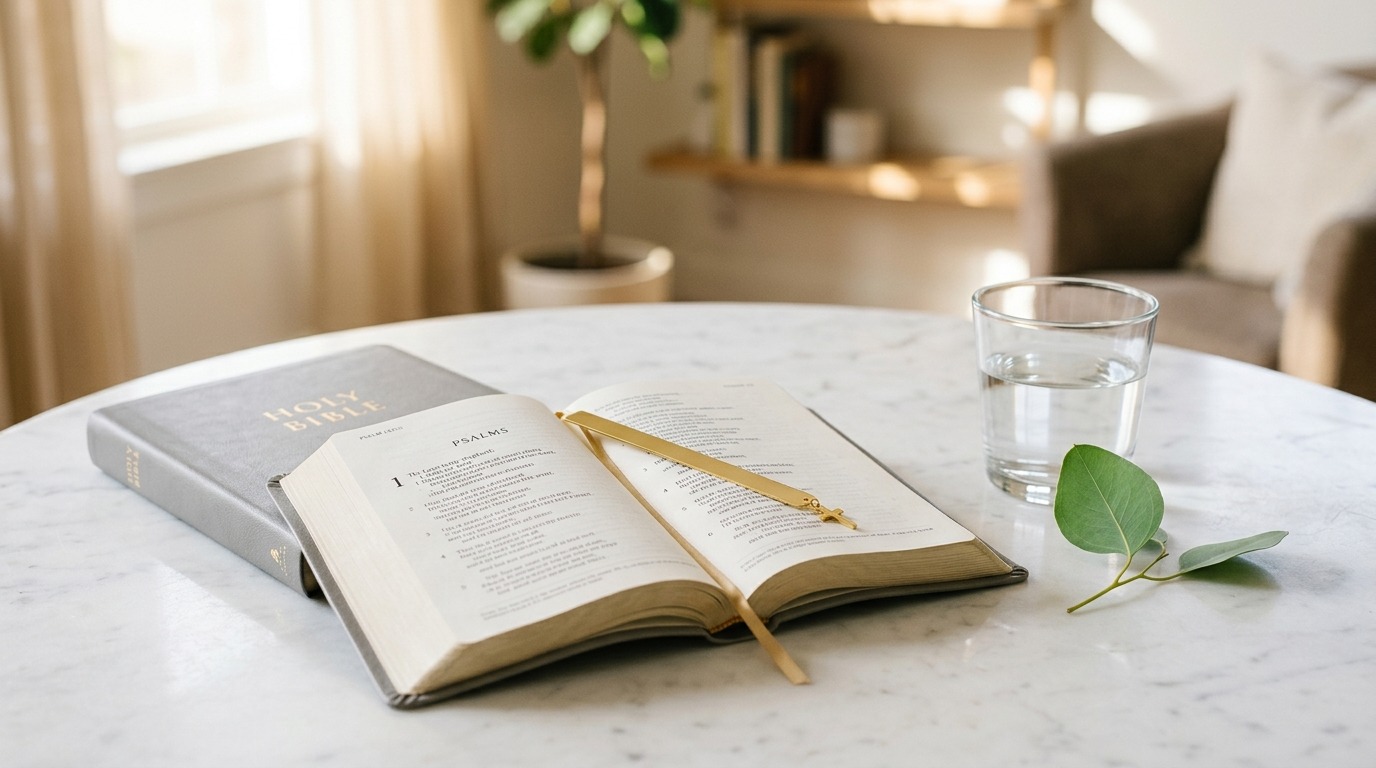
If you have ever opened the Bible to page one, determined to read it all the way through, you are not alone. Millions of people start in Genesis with the best intentions, only to hit a wall of confusing laws and genealogies a few weeks later.
The reason this happens is simple: the Bible is not a single book. It is a library of 66 different books, written across thousands of years, containing history, poetry, prophecy, and letters. Because it is a collection, reading it chronologically from cover to cover is actually one of the hardest ways to understand it.
If you want to build a sustainable, daily habit in the Word, you need a roadmap. Here is exactly how to read the Bible order for beginners so you can focus on Jesus, understand the overarching story, and actually enjoy your daily reading.
Why You Shouldn’t Read the Bible Front to Back
When you pick up a normal book, starting at chapter one is the only logical choice. But because the Bible is a library, its books are grouped by genre, not strictly by timeline. All the historical books are grouped together, the poetry and wisdom books are clustered in the middle, and the prophetic books are placed at the end of the Old Testament.
If you try to read it front to back, you will eventually land in Leviticus or Numbers—books filled with ancient civil laws, sacrifices, and census records. Without understanding the bigger picture of Jesus first, these books can feel incredibly dry and discouraging. Skipping around is not only acceptable; it is the most highly recommended way for beginners to grasp the overarching story of God’s grace.
The Best “How to Read the Bible” Order for Beginners
Step 1: Start with Jesus (The Book of John)
The entire Bible points to one person: Jesus Christ. Before you try to understand the history of the Israelites or the prophecies of the Old Testament, you need to know who Jesus is and why He came. The Gospel of John is beautifully written and focuses heavily on the love, identity, and divinity of Jesus. It is the perfect starting line for your faith journey.
Step 2: Action and History (Mark and Acts)
Once you finish John, turn back a few pages to the Gospel of Mark. Mark is the shortest and most action-packed account of Jesus’ life. It moves quickly and shows His incredible miracles, compassion, and servanthood.
After Mark, skip forward to the book of Acts. Acts reads like a fast-paced history book. It picks up the exact moment Jesus leaves earth and tells the thrilling story of how the Holy Spirit arrived and the early church exploded across the world.
Step 3: Practical Christian Living (Ephesians, Philippians, James)
Now that you know the history, it is time to learn how to live it out. These three short books are letters written to the early churches, and they are packed with practical advice you can apply today.
- Ephesians: Teaches you about your true identity in Christ and how to put on the “armor of God.”
- Philippians: An incredibly uplifting letter all about finding joy even in difficult circumstances.
- James: The most practical book in the New Testament. It covers how to control your words, handle your finances, and live out your faith through real action.
Step 4: Wisdom and Emotion (Psalms and Proverbs)
You don’t have to wait until Step 4 to read these; in fact, they are best read alongside the other books! The book of Psalms is a collection of prayers, songs, and deep emotions. Whenever you feel anxious, joyful, or heartbroken, there is a Psalm that speaks exactly to how you feel. Proverbs is the book of wisdom. Try reading one Proverb a day to gain practical insight into making wise, daily decisions.
Step 5: The Old Testament Foundation (Genesis & Exodus)
Now that you have a firm grasp of Jesus, His church, and Christian living, it is time to go back to the beginning. Genesis and Exodus will show you how the world was created, how humanity fell, and how God miraculously rescued the Israelites from slavery in Egypt. Because you already know how the story ends (with Jesus), reading these Old Testament books will finally make complete sense.
The Best Study Bibles for Beginners
Having a Bible that explains historical context, defines big words, and provides character maps changes everything. A good study Bible is like having a pastor sitting in your living room answering your questions as you read. Here are the two I highly recommend:
Affiliate Disclosure: As an Amazon Associate, Grace Filled Pathways earns from qualifying purchases. When you purchase through links on our site, we may earn an affiliate commission at no extra cost to you.

NIV Life Application Study Bible
Best for Practical Daily Living
This is arguably the best Bible for beginners. The bottom half of every page is filled with notes explaining exactly what the verses mean and how to apply them to your daily life, relationships, and struggles.
View on Amazon
The ESV Study Bible
Best for Deep Historical Context
If you love history and want to understand the deep theological context of what you are reading, this is the gold standard. It features incredible full-color maps, character profiles, and extensive book introductions.
View on Amazon3 Quick Tips for Sticking to Your Daily Reading
- Pray before you read: You don’t need a theology degree to understand the Bible, but you do need the Holy Spirit. Simply pray, “Lord, open my eyes and teach me one specific truth today.”
- Focus on quality, not quantity: Reading three verses and actually letting them change your heart is infinitely better than speed-reading three chapters just to check a box.
- Use a structured plan: Decision fatigue is the enemy of consistency. If you haven’t already, make sure you download our free 52-Week Bible Reading Plan above so you always know exactly which chapter to read each morning.

