Hi friend,
Have you ever walked through a season where a prayer you trusted God for turned out completely different from what you expected—leaving you whispering those three heavy words: “We had hoped…”?
Disappointment with how a story unfolded can make even a devoted believer’s footsteps feel heavy. When our expectations shatter, our vision gets so clouded by sorrow that we can miss God standing right beside us on the path.
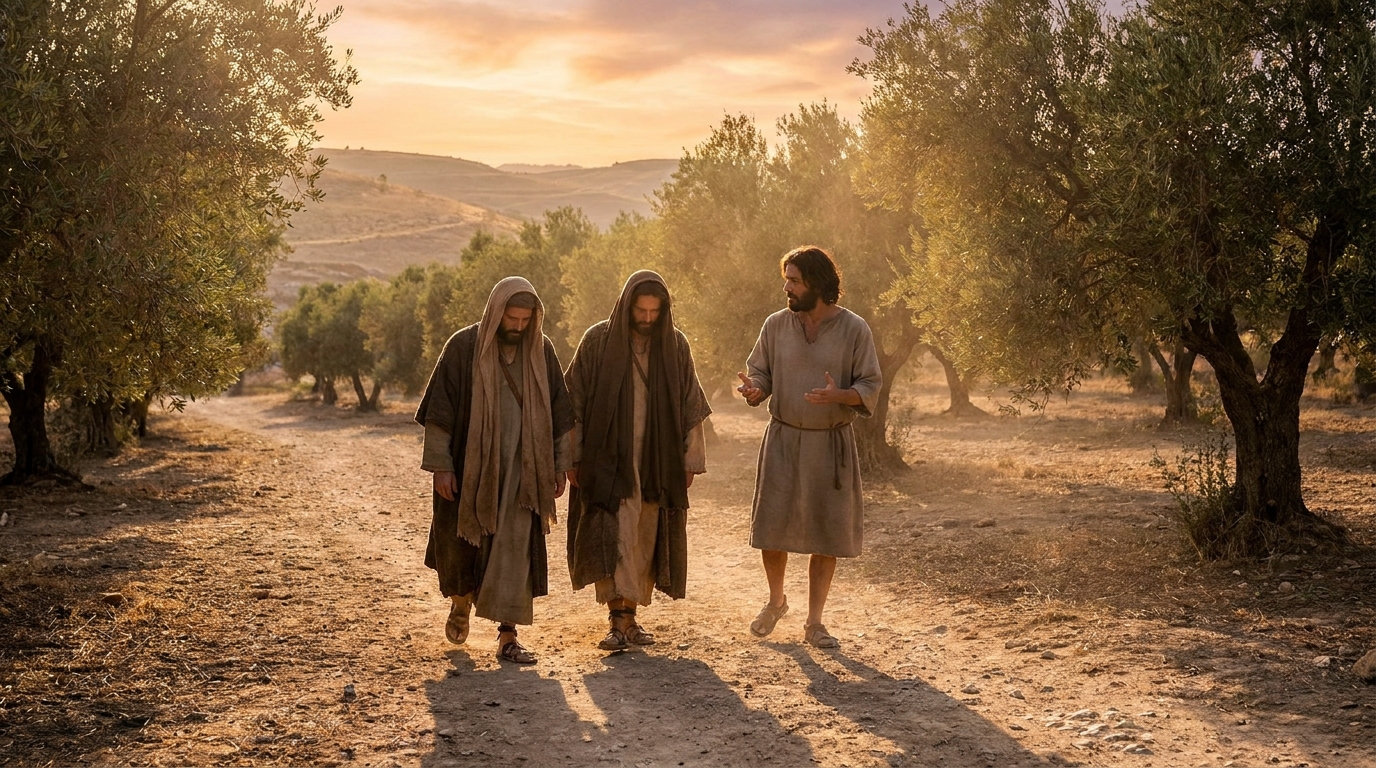
In Luke 24:13–35, on the very afternoon of Resurrection Sunday, two brokenhearted followers of Jesus—one named Cleopas and an unnamed companion—were walking roughly 11 kilometres (sixty Greek stadia) away from Jerusalem toward a village called Emmaus. As they trudged down the dusty road with downcast faces, the risen Jesus Himself drew near, fell into step beside them, and turned their heartbroken retreat into burning hearts of joy.
📖 Key Biblical Passage: Luke 24:13–35
- Luke 24:13–17: Walking the 11-kilometre road from Jerusalem to Emmaus on Easter afternoon, two grieving disciples are joined by the risen Jesus, though their eyes are kept from recognizing Him.
- Luke 24:18–24: Invited by Jesus’s gentle question to pour out their grief, Cleopas confesses their crushed expectations: “But we had hoped that he was the one who was going to redeem Israel.”
- Luke 24:25–27: Beginning with Moses and all the Prophets, Jesus walks them through the Old Testament Scriptures to show how the Messiah had to suffer before entering His glory.
- Luke 24:28–35: Welcomed into their home for supper, Jesus takes bread, gives thanks, breaks it, and hands it to them—opening their eyes and sending them running all 11 kilometres back to Jerusalem that very night!
4 Comforting Lessons from the Road to Emmaus
1. Jesus Walks Beside You Even When Sorrow Blurs Your Vision (Luke 24:15–16)
Look at the direction Cleopas and his friend were walking in Luke 24:13: they were walking away from Jerusalem, away from the other disciples, and away from the place where they thought their dreams had died. Yet Jesus didn’t wait in Jerusalem with His arms crossed until they got their theology straightened out—He walked right out onto the road of their disappointment and matched His pace to theirs (verse 15).
Just as Mary Magdalene initially mistook the risen Jesus for the gardener through her tears that morning, these two travelers didn’t recognize Jesus at first. Never judge whether Jesus is near you by what your emotions feel in a dark week; the risen Shepherd is walking right beside you on your Emmaus road even before your eyes recognize His hand.
2. Healing “We Had Hoped”: When God’s Plan Is Bigger Than Our Expectations (Luke 24:17–21)
Before Jesus taught them a single verse of Scripture, notice what He did first in Luke 24:17: He asked them a gentle question—“What are you discussing together as you walk along?”—and listened patiently as they stood still, faces downcast, and poured out all their confusion.
Look at the root of their heartbreak in verse 21: “But we had hoped that he was the one who was going to redeem Israel.” Why were they devastated on the exact day salvation was won? Because they had been hoping for a small, temporary political redemption from Roman taxes—while Jesus had just accomplished an eternal redemption from sin and death on the cross! Whenever you find yourself sighing “I had hoped…” over an unanswered prayer, remember that God only says no to our smaller expectations when He is working out a far deeper redemption (see our reflection on 7 Bible Verses on Trusting God’s Plans for Us).
3. Why Jesus Opened the Scriptures Before He Opened Their Eyes (Luke 24:25–27, 32)
Have you ever wondered why Luke 24:16 says their eyes were kept from recognizing Jesus during the two-hour walk? Why didn’t Jesus simply show them His nail-scarred hands in the first five minutes?
Because in just forty days, Jesus was going to ascend to heaven—and every believer down through history would need to learn how to find and experience the risen Christ not through physical sight, but through the pages of the written Word of God! Walking along that 11-kilometre trail, Jesus led the greatest Bible study in history—starting with Moses in Genesis and Exodus (the Passover lamb, the bronze serpent) and walking through all the Prophets (Isaiah 53, Psalm 22) to show how every page of the Bible whispers His name. As they later marvelled to each other in verse 32, their hearts were burning within them as He opened the Scriptures!
4. Recognizing Jesus in the Ordinary Breaking of Bread (Luke 24:28–35)
When they reached the village of Emmaus as evening shadows lengthened, Luke 24:28–29 records a crucial detail: Jesus acted as if He were going to keep walking further, waiting to see if they would invite Him in. Jesus never forces His way into our evenings; He waits to be welcomed. The moment they urged Him, “Stay with us,” He stepped under their roof.
And when did their eyes finally open? Not in a palace or a temple, but at an ordinary supper table when the Guest became the Host—taking the loaf of bread, giving thanks, breaking it, and handing it to them (verses 30–31), perhaps revealing the nail prints on His wrists as He held out the bread! Instantly, their exhaustion vanished: even though night had fallen, the two travelers practically flew all 11 kilometres uphill back to Jerusalem to tell the others that the Lord had truly risen.
🌿 A Quiet-Time Reflection & Breath Prayer for Today
If your heart has felt heavy with a “we had hoped” disappointment recently, invite the risen Jesus to walk beside you and open His Word to your soul today:
- Inhale slowly: “Risen Jesus, thank You for walking beside me even when my eyes are tearful…”
- Exhale in hope: “…stay with me today and kindle a burning hope inside my heart through Your Word.”
Invite Jesus into your morning and evening quiet time with our printable 30-Day Christian Prayer Journals or our Walking in Grace 52-Week Devotional.
Read Next: Doubting Thomas — How Honest Questions Turn to Faith →Frequently Asked Questions About the Road to Emmaus
Who was the second unnamed disciple walking with Cleopas to Emmaus?
While Luke 24:18 names one traveler as Cleopas (whom early church historian Hegesippus identified as Clopas, the brother of Joseph and husband of Mary of Clopas who stood at the cross in John 19:25), many scholars suggest the second traveler returning to the same house in Emmaus was Cleopas’s wife, Mary—making them a married couple walking home in grief! Leaving the second name blank also invites every reader to step right into those sandals beside Jesus.
How far was Emmaus from Jerusalem in kilometres?
Luke 24:13 states that Emmaus was sixty Greek stadia from Jerusalem, which equals approximately 11 kilometres—about a two-to-three-hour walk on foot through the Judean hills.
Have you ever experienced a moment where a verse of Scripture suddenly made your heart “burn within you” during a discouraging season? Share your story in the comments below!