Hi friend,
Have you ever felt overlooked because you have a quieter personality—preferring one-on-one conversations, practical helping, and behind-the-scenes faithfulness over standing at a microphone or leading a crowd?
Even inside church culture, we sometimes mistakenly assume that the loudest voices do the most important kingdom work. Yet if you are naturally gentle, observant, or introverted, God placed an extraordinary encourager right at the front of the New Testament for you: Andrew the Apostle.
Born in Bethsaida along the northern shore of the Sea of Galilee, Andrew was the brother of Simon Peter. While Peter almost always stood in the spotlight, Andrew carried a quiet superpower that runs through every single scene where he appears in the Gospel of John: whenever we see Andrew, he is introducing one individual person to Jesus.
📖 Key Biblical Moments in the Life of Andrew
- John 1:35–42: Originally a disciple of John the Baptist, Andrew becomes the very first disciple to follow Jesus—and immediately goes to find his brother Simon Peter to bring him to the Messiah.
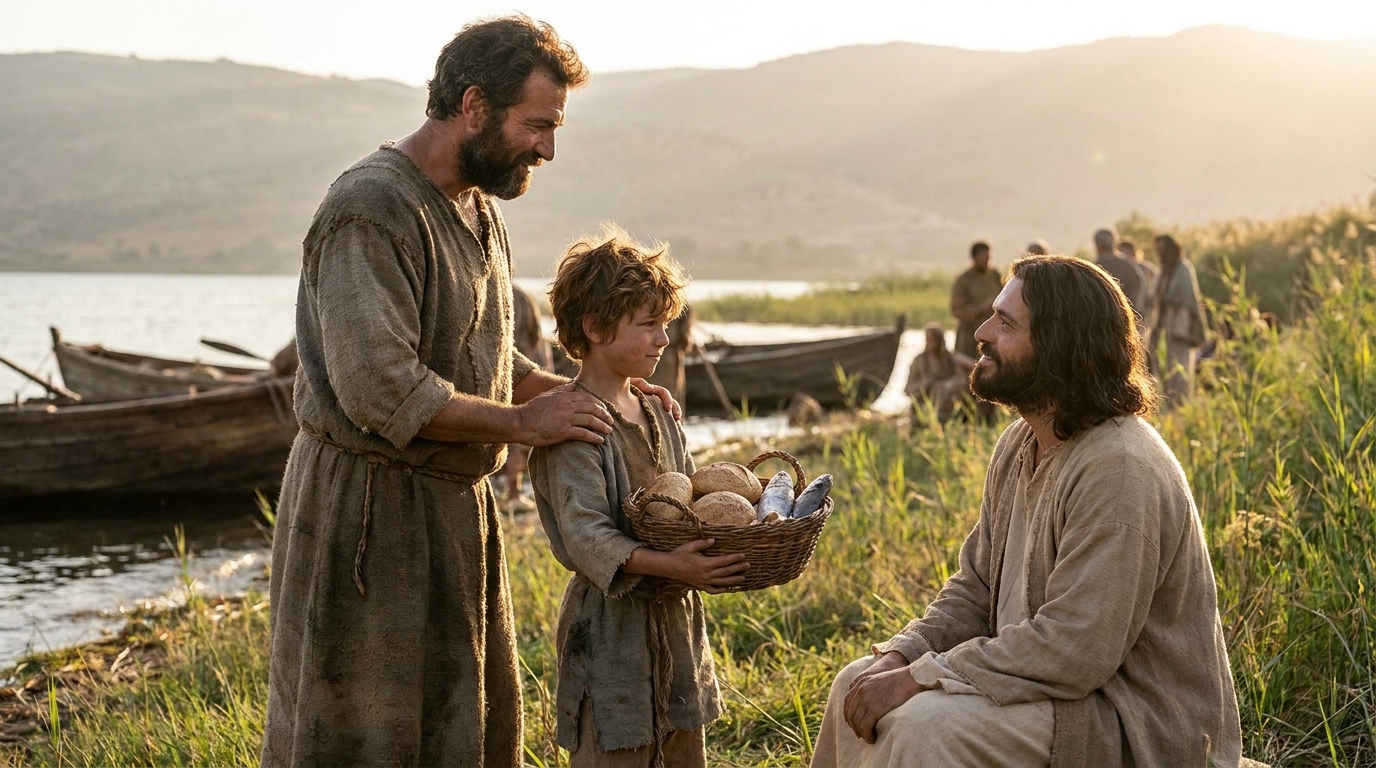
- John 6:8–9: When five thousand men and their families are hungry on the hillside, Andrew is the only disciple who notices a young boy carrying five small barley loaves and two fish and brings him to Jesus.
- John 12:20–22: During Passover week, when Greek seekers ask Philip to help them meet Jesus, Philip consults Andrew, and together they lead the seekers to the Lord.
The Strengths and Weaknesses of Andrew
As part of our comprehensive series on the 12 Disciples’ Strengths and Weaknesses, Andrew’s portrait highlights the beauty—and occasional hesitations—of a quiet servant’s heart:
- Strength — Deep Spiritual Hunger (John 1:35–39): Before he ever met Jesus, Andrew left his fishing nets in Galilee and traveled south to the Jordan River wilderness to learn from John the Baptist, eagerly watching for the coming Lamb of God.
- Strength — Freedom From Sibling Envy: Even though Andrew met Jesus first and personally introduced Peter to the Lord, he spent the rest of his life being referred to as “Simon Peter’s brother” (John 1:40; 6:8)—and was left outside the inner three (Peter, James, and John) at the Transfiguration. Yet we never once read a word of jealousy or resentment from Andrew’s lips!
- Strength — Approachable Warmth With Outsiders: Whether speaking to a young child with a lunch basket (John 6:8) or foreign Greek travelers (John 12:22), people naturally felt safe approaching Andrew when the other disciples seemed intimidating.
- Weakness — Underestimating How Far Small Offerings Can Go (John 6:9): Even as Andrew brought the boy’s five barley loaves and two fish to Jesus, he added a hesitant sigh—wondering aloud how far such a tiny meal could possibly stretch among so many thousands.
4 Transformative Faith Lessons from Andrew the Apostle
1. One Quiet Invitation Can Echo Across Eternity (John 1:41–42)
In Eastern Orthodox tradition, Andrew is honored by the title Protokletos—meaning “the First-Called.” After spending a single afternoon talking with Jesus in John 1:39–41, the very first thing Andrew did was go find his brother Simon, tell him they had found the Messiah, and lead him straight to Jesus.
Andrew never preached the sermon at Pentecost in Acts 2 where three thousand souls were saved—Simon Peter did. Yet there would have been no Apostle Peter standing at Pentecost without a faithful brother named Andrew who cared enough to walk across town and invite him to meet Jesus! Never underestimate what God can do when you gently invite one family member, child, or friend into His presence.
2. Never Despise Small Loaves When You Place Them in Jesus’s Hands
While the other disciples wanted to send the hungry crowd of five thousand away, and Philip was busy calculating the massive financial cost of feeding them, Andrew was walking among the people paying attention to individuals. That is how he spotted a small boy carrying five coarse barley cakes (the humble bread of poor families) and two pickled fish (John 6:8–9).
Even though Andrew wasn’t sure how five little loaves could make a dent in a crowd that size, he still brought the boy to Jesus! When your faith or your resources feel too small, you don’t have to figure out the multiplication math—your only job is to place what you have into the Savior’s hands.
3. Joyfully Playing “Second Violin” Without Comparison
A famous preacher once asked a concert conductor which instrument in the orchestra was the hardest to fill, expecting him to say the first chair violin. Instead, the conductor replied: “Second violin—I can find plenty of musicians who want to play first violin with the spotlight on them, but to find someone who plays second violin with equal enthusiasm and joy is rare.”
Andrew played “second violin” to his bolder brother Peter with pure grace. Whenever you choose to serve your family, church, or neighbor for an Audience of One rather than chasing human applause, comparison loses its grip on your heart completely.
4. Being a Bridge-Builder for People Who Feel Unsure
In John 12:20–22, when several God-fearing Greeks arrived in Jerusalem for Passover and wanted to meet Jesus, Philip wasn’t sure what to do—because earlier in Jesus’s ministry, the Twelve had been instructed to focus primarily on the lost sheep of Israel (Matthew 10:5–6). So who did Philip immediately go talk to? Andrew!
Andrew knew the heart of Jesus well enough to know that the Savior never turns away a sincere seeker. Without hesitation, Andrew walked right beside Philip to bring those Greek visitors to Jesus—showing us how to keep our hearts open and welcoming to everyone seeking hope.
🌿 A Quiet-Time Reflection & Breath Prayer for Today
If your service in your home, workplace, or church often feels quiet and unseen by the crowd, rest in knowing that heaven treasures every faithful introduction you make:
- Inhale slowly: “Jesus, I place my small loaves and quiet gifts into Your hands…”
- Exhale in peace: “…use my life to gently point the people around me to You.”
Nurture your daily walk with Jesus inside our 30-Day Christian Prayer Journals or our Walking in Grace 52-Week Devotional.
Explore Next: All 12 Disciples’ Strengths and Weaknesses →Frequently Asked Questions About Andrew the Apostle
Why is St. Andrew’s cross shaped like an “X”?
According to early Christian history (explored further in our guide to what happened to Jesus’s 12 disciples after the Resurrection), Andrew preached the Gospel across Scythia and Greece before being sentenced to crucifixion in the Greek city of Patras. Feeling unworthy to be crucified on the same style of vertical cross as his Lord, he requested to be bound to an X-shaped cross (a crux decussata), where he continued preaching the love of Christ to onlookers for two days until he entered glory.
What does the name Andrew mean in Greek?
Unlike the Hebrew namesSimon and Levi, Andrew (Andreas) is a Greek name meaning “manly, courageous, or valorous”—reflecting both the bilingual fishing culture of Bethsaida and the quiet spiritual courage that marked his entire life.
Who was the “Andrew” in your life who first introduced you to Jesus? Take a moment to thank God for them and share their story in the comments below!