Hi friend,
Have you ever looked at the size of the needs standing in front of you—caring for your family, showing up for hurting friends, managing your work, and keeping up with household bills—and then looked down at the tiny amount of energy or resources left in your hands, whispering, “Lord, this is nowhere near enough”?
Apart from the Resurrection itself, only one miracle in the entire earthly ministry of Jesus is recorded by all four Gospel writers (Matthew 14:13–21; Mark 6:30–44; Luke 9:10–17; and John 6:1–15): The Feeding of the 5,000.
Why did the Holy Spirit make sure every single Gospel included this hillside meal near Bethsaida? Because every generation of believers needs the visual reminder that human insufficiency is the exact starting line for God’s overflowing provision.
📖 Key Biblical Passages: All Four Gospels on the Feeding of the 5,000
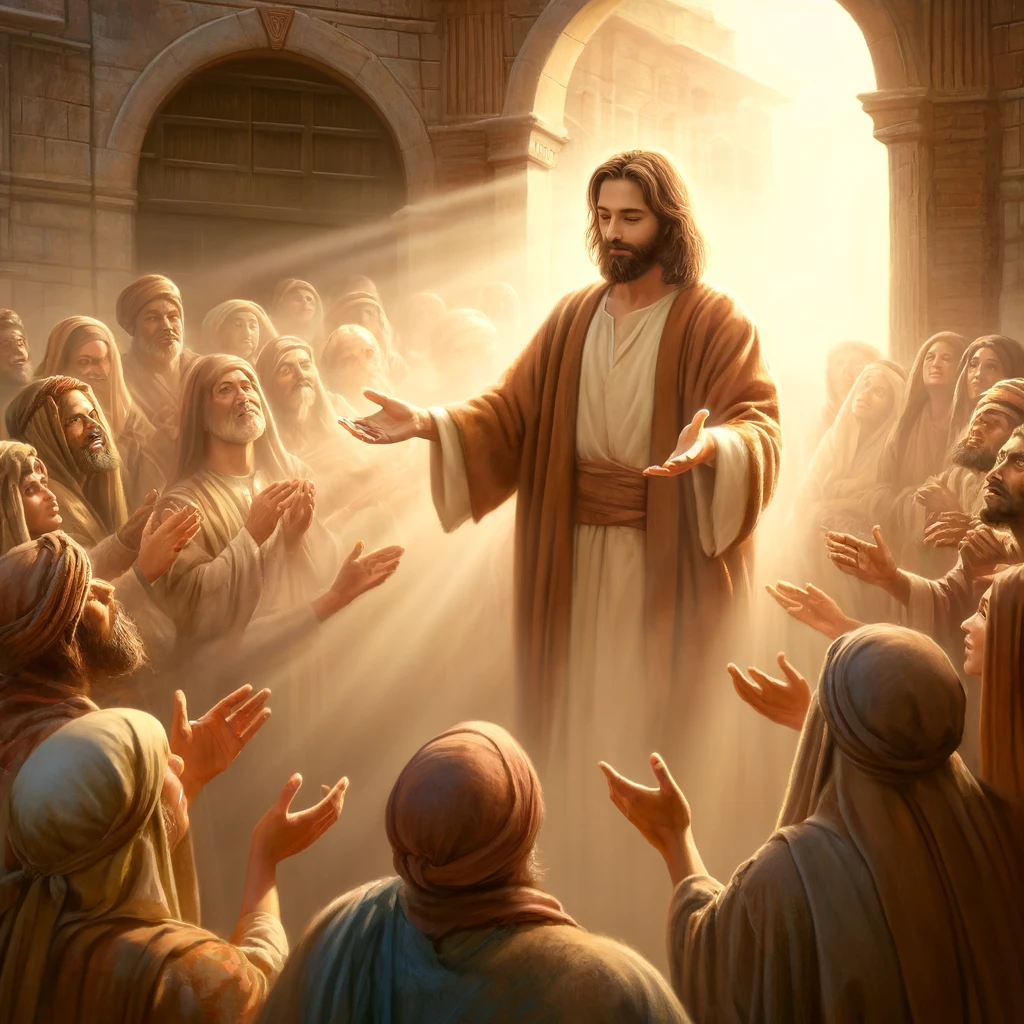
- Matthew 14:13–14 & Mark 6:34: Though grieving the death of John the Baptist and seeking rest with His tired disciples, Jesus sees the huge crowd, has compassion on them like sheep without a shepherd, and heals their sick.
- Matthew 14:15–18 & John 6:5–9: When the disciples urge Jesus to send the crowd away at dusk, Jesus replies, “You give them something to eat.” Andrew brings forward a young boy’s lunch of five small barley loaves and two fish.
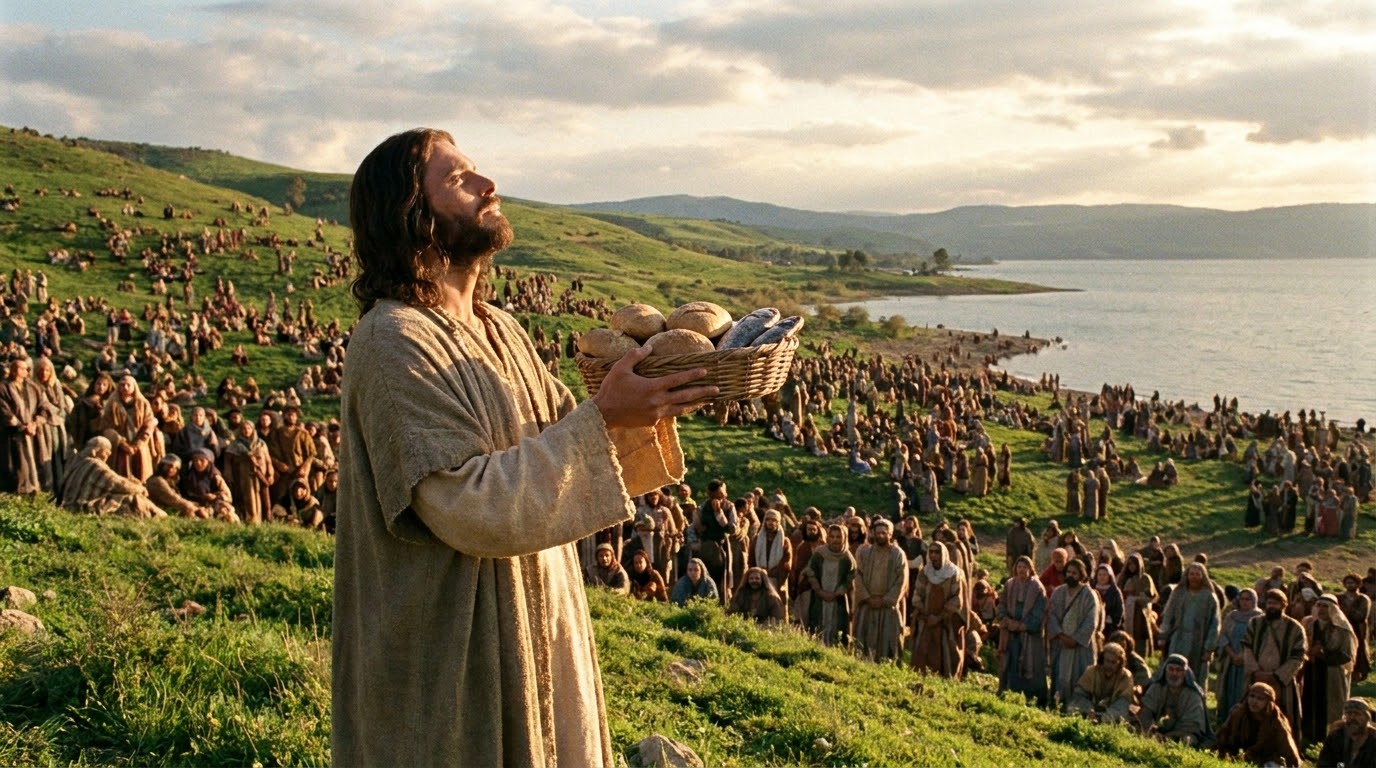
- Mark 6:39–41: Having the people sit down in orderly groups on the green grass, Jesus takes the five loaves and two fish, looks up to heaven, gives thanks, breaks them, and hands them to the disciples to distribute.
- Matthew 14:20–21: Five thousand men—plus women and children—eat until they are completely satisfied, and the disciples gather twelve full wicker baskets of leftover pieces.
4 Transformative Faith Lessons from the Feeding of the 5,000
1. Compassion Interrupted: How Jesus Responds When We Feel Drained (Matthew 14:13–14)
Look at the emotional backdrop of Matthew 14:12–13 and Mark 6:30–31 before the miracle even starts. Jesus had just received the heartbreaking news that His cousin and forerunner, John the Baptist, had been executed by Herod—and Meanwhile, the twelve disciples had just returned from their missionary tour so exhausted that they hadn’t even had time to eat! So Jesus took them by boat to a quiet, solitary place to rest.
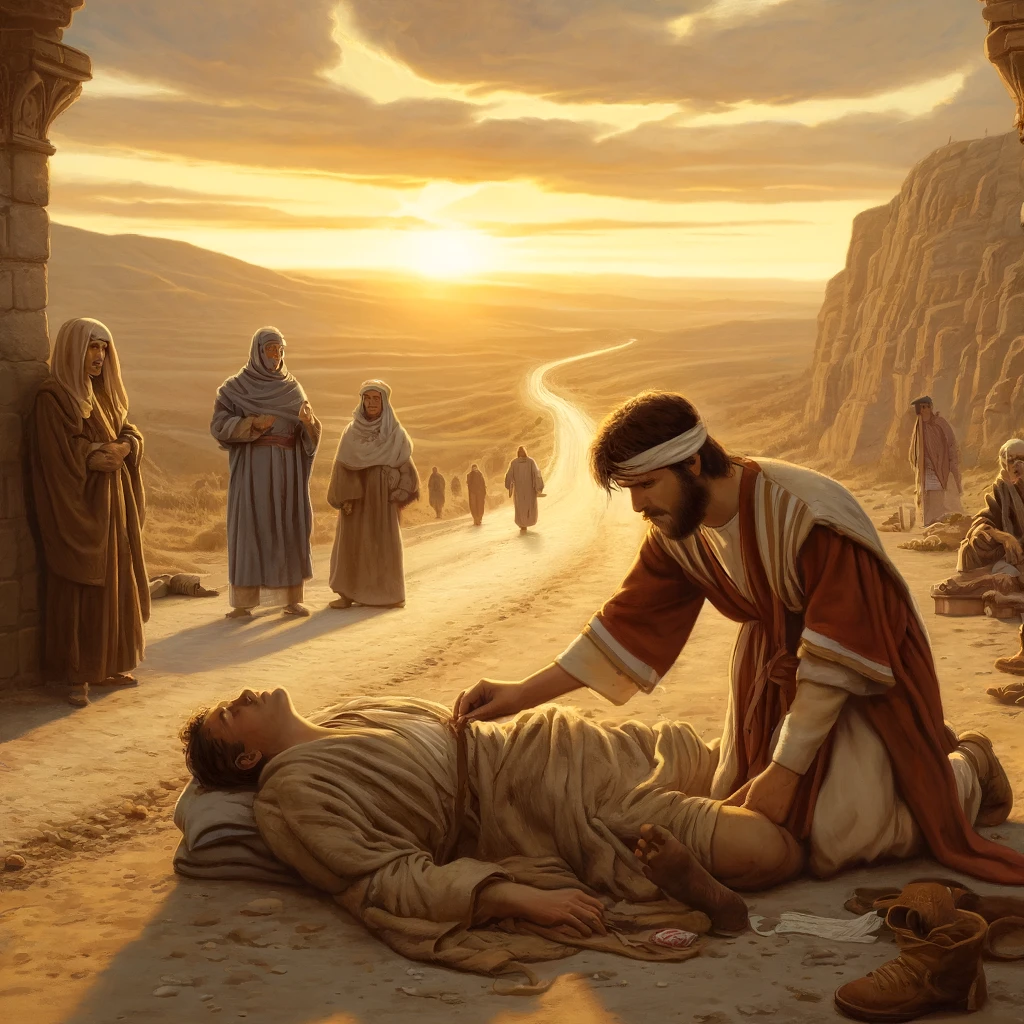
Yet when they landed on the shore, thousands of people had run ahead on foot and were already waiting for them. Instead of feeling annoyed that His quiet retreat was interrupted, Matthew 14:14 says Jesus saw the crowd and “had compassion on them.” Just like the Good Samaritan stopping on the Jericho road, Jesus never sees needy people as an interruption—He sees them as precious sheep in need of a Shepherd.
2. “You Give Them Something to Eat”: Why God Asks Us to Do What We Cannot Do Alone (Matthew 14:16)
As evening approached, the twelve disciples came to Jesus with a very sensible, practical suggestion: dismiss the crowd so they can walk into the surrounding villages and buy their own supper (Matthew 14:15). Look at Jesus’s startling reply in verse 16: they did not need to go away—“You give them something to eat.”
Why would Jesus command twelve tired men with an empty money bag to feed a crowd of fifteen to twenty thousand people (five thousand men plus women and children)? Because until we come face-to-face with the bankruptcy of our own human resources—as Philip quickly calculated in John 6:7—we will keep trying to do ministry in our own strength! Then, in Matthew 14:18, Jesus gave the key that unlocks every impossible assignment: “Bring them here to me.”
3. Taken, Blessed, and Broken: The Pattern of Kingdom Multiplication (Matthew 14:19)
All they had in the entire camp was a young boy’s humble lunch basket: five flat, coarse barley cakes (the inexpensive grain eaten by the poor) and two small pickled fish the size of sardines (John 6:9). Yet the moment that small offering was transferred from the boy’s hands into Jesus’s hands, look at the four verbs in Matthew 14:19:
- He took the five loaves and two fish.
- He looked up to heaven and gave thanks (giving thanks before the food multiplied, while it still looked tiny in His palms!).
- He broke the loaves.
- He kept giving them to the disciples to set before the people.
Notice that those four actions—took, gave thanks, broke, gave—are the exact same four actions Jesus performed with the bread at the Last Supper (Luke 22:19) and on the Road to Emmaus! Practising gratitude in the Christian life while your resources still look small invites the Bread of Life (John 6:35) to multiply what you have surrendered.
4. Twelve Baskets of Leftovers: God’s Grace Never Leaves His Servants Empty (Matthew 14:20)
After every man, woman, and child on that green hillside had eaten not just a polite crumb, but until they were completely satisfied (Matthew 14:20), Jesus instructed the disciples to gather the leftover pieces so nothing would be wasted (John 6:12).
How many baskets of leftovers did they pick up? Twelve full wicker travel baskets (Greek: kophinoi)—one full basket for each of the twelve exhausted disciples who had started the afternoon worried they wouldn’t even have supper for themselves! Just like the poor widow who gave her two mites, you can never out-give Jesus: when you pour out what is in your hands to bless others, He makes sure your own basket finishes fuller than when you started.
🌿 A Quiet-Time Reflection & Breath Prayer for Today
Stop measuring your calling by how small your “five loaves” of energy or talent look in your own hands—place them directly into the hands of the Multiplier today:
- Inhale slowly: “Jesus, I bring my small loaves of time and strength to You…”
- Exhale in thanksgiving: “…I thank You in advance that Your grace is more than enough.”
Cultivate a daily habit of thanksgiving and trust inside our printable 30-Day Christian Prayer Journals or our Walking in Grace 52-Week Devotional.
Read What Happened That Same Night: Peter Walking on Water →Frequently Asked Questions About Feeding the 5,000
What is the difference between the Feeding of the 5,000 and the Feeding of the 4,000?
Jesus actually performed two distinct multiplication miracles in two different regions (which He directly references side by side in Matthew 16:9–10!): first, the Feeding of the 5,000 in Jewish Galilee using five loaves and two fish with twelvekophinoi baskets left over (representing the 12 tribes of Israel); and later, the Feeding of the 4,000 in the Gentile Decapolis (Matthew 15:32–38) using seven loaves and a few fish with seven large spyris hampers left over (representing completeness for the Gentile nations).
Why does Mark 6:39 mention that the grass was “green”?
Mark’s eyewitness detail (passed down from Simon Peter) that the people sat down on green grass matches John 6:4, which notes that the Jewish Passover (early spring, around late March or April, right after the winter rains turn the Galilean hillsides lush green before the summer heat browns them) was near—while also echoing the Good Shepherd of Psalm 23:2 who makes His sheep lie down in green pastures!
Where in your life or family is Jesus inviting you to stop looking at what you lack and simply “bring what you have here to Me”? Share your reflection in the comments below!